
Random workplace testing that survives an EEOC challenge.
Non-DOT random testing programs fail in court for one of two reasons: biased selection or unverifiable cadence. ASC supplies the panel, COC, and recordkeeping documentation that closes both gaps, with a subscription cadence built around the size of your safety-sensitive workforce.
Defensible selection standard OSHA
Audit-ready recordkeeping

10-Panel CLIA-Waived Cup
Defensible randomness, not "the supervisor picks."
The legal exposure in non-DOT random testing is rarely the test itself. It's the selection logic. ASC programs ship with documented, third-party random selection criteria, audit-ready draw logs, and the panel/COC supplies to execute the test the same way every time, across every shift, every site, every quarter.
Defensible Selection Logic
True-random number generation with selection audit trails: not spreadsheets, not supervisor discretion, not the same person every quarter.
Locked Quarterly Cadence
Monthly or quarterly draws on a published schedule the workforce knows. No "we forgot to test in Q3" gaps that erode the random-pool defense.
Policy-Aligned Panels
Configure the panel to match your written policy, including state-permissive marijuana exclusions for non-safety-sensitive roles where applicable.
EEOC-Defensible Records
Selection logs, COC forms, lot numbers, and result archives ready to hand to counsel when a wrongful-termination claim hits. No reconstruction required.
The random-pool supply stack.
Configured for 50- to 5,000-employee programs. Subscription pricing scales with workforce headcount; cadence locks to your draw schedule.

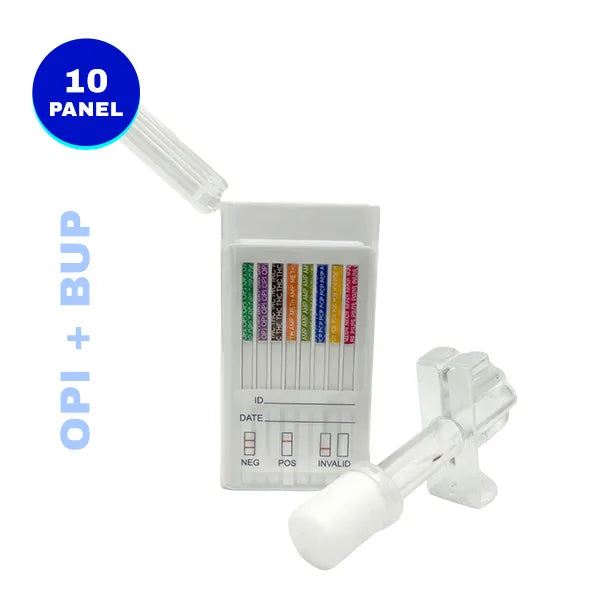
10-Panel CLIA-Waived Cup
The workhorse panel for non-DOT random: THC, COC, OPI, AMP, MET, BAR, BZO, MTD, MDMA, OXY with adulterant strip and temperature window.

5-Panel CLIA-Waived Cup
Federal-panel-aligned 5-panel for programs mirroring standard workplace policy: THC, COC, OPI, AMP, PCP. Lower per-test cost for large headcounts.
Oral Fluid Random Swab
For shy-bladder accommodation and lower-stigma collection. Same panel coverage, observed by design. Eliminates split-specimen disputes.
Non-DOT COC Forms (50-pk)
5-part carbonless chain-of-custody specific to non-DOT testing. Includes employee acknowledgement, selection-method certification, lab specimen seal.

Breath Alcohol Tester
Evidential breath testers (EBTs) for combined drug + alcohol random pools. Annual calibration reminders synced to your account.
Quarterly Subscription Kit
Sized to a 25% annual random rate. Auto-ships before each quarter's draw window. Adjustable for headcount changes.
The defensible random-testing loop.
Four steps the program manager owns. Everything in between (supply, selection logic, documentation) is handled by ASC.
Roster Upload
Upload your safety-sensitive headcount monthly. We separate the random pool from supervisory/admin exclusions.
Random Selection
True-random number generator pulls names at your specified rate. Selection log archived with timestamp and method certification.
Collection & Test
On-site collection with your supplied cup or swab. Result archived to employee health record and program file.
Recordkeeping
COC, lot, selection log, and result archive, searchable by date, employee ID, or pool. Ready for EEOC, OSHA, or insurance audit.
Built for HR budgets, not procurement gymnastics.
Three ways to buy. Subscription is the default for ongoing random pools.
Standard Order
For programs running pre-employment + reasonable-suspicion without a full random pool yet.
- Pay by card
- CLIA-waived panels, ready to use
Subscribe & Save
Quarterly auto-ship sized to your headcount and random rate.
- Save 15% on every reorder
- Random-selection logic included
- Quarterly draw reminders
- Pause / cancel anytime
PO & Invoice Terms
For multi-site employers and self-insured groups with internal procurement.
- Submit POs for multi-site employer procurement
- Multi-site consolidated billing
- Dedicated account manager
- Insurance audit packets
Common questions from HR and safety leaders
What random rate is defensible: 10%, 25%, 50%?
Can our supervisors do the random selection in a spreadsheet?
How do we handle state-legal marijuana in a random pool?
What's the workers' comp premium impact?
What happens if an employee refuses to test?
Do you handle confirmation testing for non-negatives?
Two ways to start.
Whether you're rolling out random testing for 50 safety-sensitive employees or 5,000 across multi-site operations, our programs team will configure panel, cadence, and documentation to your written policy.
- Dedicated response on RFQs
- Selection logic + COC + supplies bundled
- Multi-site billing & reporting
- Workers' comp audit-ready