
ASC
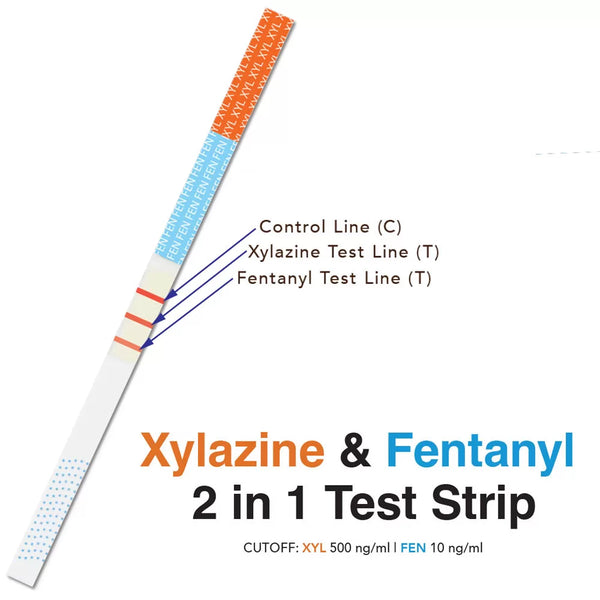
Fentanyl and Xylazine 2-in-1 Test Strips - EXPIRY: AUG 2026
DOA-101
XYL500, FEN 10
as low as$0.55each
View Product →WHOLESALE DRUG TESTING SUPPLIES · BULK PRICING
Quick answer: Drug test strips are single-use lateral-flow immunoassay dipsticks that screen a specimen for a target drug or metabolite at a stated cutoff. This Urine Test Strips collection covers urine screening strips and related cassette formats for fentanyl, xylazine, tianeptine, ETG alcohol, nicotine, and...
ASC
DOA-101
XYL500, FEN 10
as low as$0.55each
View Product →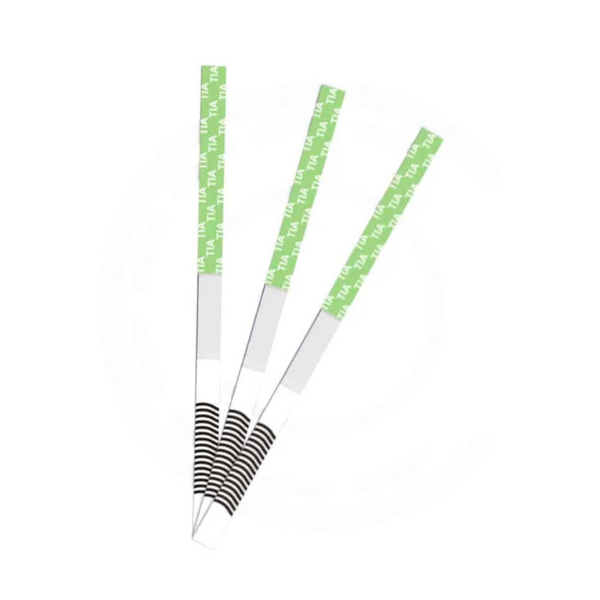


Urine Check 7
D700-25G
CRE, NIT, pH, SG, GLUT, OXI, PC
as low as$22.57each
View Product →


No products match your filters. Try another panel count, brand or search.
Quick answer: Drug test strips are single-use lateral-flow immunoassay dipsticks that screen a specimen for a target drug or metabolite at a stated cutoff. This Urine Test Strips collection covers urine screening strips and related cassette formats for fentanyl, xylazine, tianeptine, ETG alcohol, nicotine, and combination panels. Selected SKUs are FDA-cleared and CLIA-waived for clinical screening; others are labeled forensic-use-only. Results are qualitative and typically readable in about one to five minutes.
Most urine drug test strips use a competitive immunoassay. The strip does not measure how much drug is present and does not prove identity. It reports a presumptive result relative to a cutoff printed on that SKU. A result at or above cutoff is a screen positive until a laboratory method such as GC-MS or LC-MS/MS confirms it when a decision depends on the finding. Configurations vary by lot and catalog number, so treat the figures below as typical industry or SAMHSA initial-test values, not a promise for every strip in this collection.
| Drug class | Abbreviation | Typical screening cutoff (ng/mL) |
|---|---|---|
| Cannabinoids (THC metabolite) | THC | 50 (typical SAMHSA initial test) |
| Cocaine metabolite (benzoylecgonine) | COC | 150 (SAMHSA) or 300 (many clinical panels) |
| Amphetamines | AMP | 500 or 1,000 |
| Methamphetamine | mAMP | 500 or 1,000 |
| MDMA | MDMA | 500 |
| Opiates (morphine/codeine class) | OPI / MOP | 2,000 (SAMHSA) or 300 (morphine-sensitive panels) |
| Oxycodone | OXY | 100 |
| Hydrocodone class (when included) | HYC | 300 (typical SAMHSA initial test) |
| 6-Acetylmorphine (heroin metabolite) | 6-AM | 10 |
| Phencyclidine | PCP | 25 |
| Benzodiazepines | BZO | 300 |
| Barbiturates | BAR | 300 |
| Methadone | MTD | 300 |
| Buprenorphine | BUP | 10 |
| Fentanyl | FYL | Often 10–20 in urine; liquid/powder strips may use a different cutoff—see insert |
| Xylazine | XYL | Varies by SKU; read the product insert |
| Tianeptine | TIA | Varies by SKU; read the product insert |
| Ethyl glucuronide (alcohol biomarker) | ETG | 500 is a common screening cutoff |
| Nicotine metabolite (cotinine) | COT / NIC | Often 200; cassette formats may differ |
Fentanyl, xylazine, and tianeptine strips in this collection are built for those named targets. A fentanyl strip is not a purity assay, does not grade “safety” of an unknown powder, and may not flag every analog. Xylazine and tianeptine strips likewise answer a narrow screening question. ETG strips look for a direct alcohol metabolite in urine rather than breath ethanol. Nicotine cassette tests typically target cotinine. Always match the printed analyte list and cutoff to the decision you need to make.
American Screening Corp sells urine strips alongside cups, cards, and cassettes so programs can mix formats. Oral fluid devices are a separate specimen path when urine collection is impractical. Choose the format from the workflow, not from a single marketing claim.
| Format | Specimen | Result time | Observed collection | Adulteration checks | Best for |
|---|---|---|---|---|---|
| Urine dip strip | Urine (or, for some fentanyl/xylazine SKUs, diluted liquid/residue per insert) | About 1–5 minutes | Easy to watch the pour and dip | Usually none on the strip itself | High-volume single-analyte or low-cost panel screening; harm-reduction fentanyl/xylazine checks |
| Urine cup | Urine collected in the device | About 2–5 minutes | Lid seals; temperature strip is common | Often specimen temperature; some cups add adulteration pads | Clinics, employers, and sites that want collection and read in one vessel |
| Dip card / panel card | Urine in a cup, card dipped or wicked | About 2–5 minutes | Same as a poured urine collection | Limited unless paired with a temperature cup | Multi-drug panels without buying an integrated cup for every test |
| Cassette | Urine drops onto a well (nicotine cassette is an example) | About 3–10 minutes | Pipette step is easy to observe | Limited | Single-analyte office tests that prefer a housed strip |
| Oral fluid device | Saliva / oral fluid | Often about 5–10 minutes | Highly observed; hard to substitute | Not a urine adulteration panel | On-site programs that cannot obtain urine right away |
Strips win on cost per screen and storage density. Cups win when you need a temperature reading and a closed sample. Cards sit in the middle. Cassettes suit named single tests such as nicotine. Oral fluid is not a urine strip and should not be ordered as a substitute when a regulation specifies urine.
Clinics use urine strips at intake, in pain management, and during follow-up when a fast presumptive answer guides the same-visit conversation. Results are screens, not chart-ready diagnoses, until policy says otherwise.
Treatment programs and opioid treatment programs need repeatable panels for buprenorphine, methadone, illicit opioids, stimulants, and benzodiazepines. Fentanyl strips matter because a standard opiate pad at 2,000 ng/mL will miss fentanyl. Xylazine and tianeptine strips help programs document adulterants that a classic five-panel never included.
Courts, pretrial services, and probation offices run frequent, observed urine screens. Dip strips and cards keep per-test cost down when testing is weekly or random. Forensic-use-only SKUs, including some ETG alcohol strips, are labeled for that non-diagnostic setting.
Employers and staffing firms use strips for pre-assignment, reasonable suspicion, and post-incident screening when the role is not a DOT-regulated urine collection. Staffing agencies often need same-day bulk replenishment across branch clinics. Collection sites and independent labs buy cases as backup screening inventory and for clients who want an on-site presumptive result before sending a specimen out.
Public health and overdose-prevention teams order fentanyl and xylazine strips, including 2-in-1 formats and kits, to check residue or liquid per the insert. Those strips still do not certify that a substance is free of other hazards. Naloxone, sterile equipment, and clinical care sit outside this collection page.
Many urine drugs-of-abuse strips and cups are cleared by FDA 510(k) as in vitro diagnostic screens when used as labeled. CLIA-waived status, when granted, means a site with a CLIA Certificate of Waiver may run that exact test without a high-complexity laboratory, provided staff follow the insert. Waiver is SKU-specific. Do not assume a fentanyl residue strip, an ETG strip, or a tianeptine strip is waived because a THC strip in the same catalog is waived.
Forensic-use-only labeling means the manufacturer did not place that device on the market as a clinical diagnostic (IVD). Those products are sold for law enforcement, corrections, workplace forensic screening, or other non-diagnostic uses described on the label. They are not a substitute for a cleared diagnostic test in patient care.
A screen positive is presumptive. When a result will affect employment, custody, dosing, or a legal record, confirmation by GC-MS or LC-MS/MS at a qualified laboratory is the accepted next step. Cross-reacting compounds, cutoff differences, and dilute urine can all produce unexpected immunoassay results.
DOT-regulated testing follows 49 CFR Part 40. Federal workplace collections use HHS-certified laboratories, listed collectors, and specified kits. Point-of-care urine strips sold for clinic or forensic screening are generally not the DOT workplace urine test. This page is not legal advice; match the device, collector, and lab to the rule that governs your program.
Use only the insert that ships with that lot. The outline below is the usual competitive immunoassay pattern for urine drug strips, not a replacement for training.
A faint line is still a line on a competitive drug strip. Do not “call it positive” because the line is light. Do not call a missing control a negative. Photographing results does not replace the insert or a confirmation lab when the stakes are high.
American Screening Corp has supplied wholesale drug and alcohol testing products from Shreveport, Louisiana since 2004. This collection is built for case quantities: boxes of strips, fentanyl test strip kits, 2-in-1 fentanyl and xylazine packs, tianeptine (TIA) strips, forensic ETG strips, and nicotine cassettes. Orders typically ship the same business day when stock and cutoff times allow. Volume quotes are available for clinics, treatment networks, courts, employers, staffing firms, collection sites, and labs that replenish on a schedule. Private-label and custom panel artwork can be discussed for qualified wholesale accounts. Ask sales for current lot dating, FDA-cleared versus forensic-use-only status on each SKU, and mixed-case options. No catalog price belongs in this copy; request a quote for the configuration you will actually run.
It is a disposable immunoassay dipstick that wicks urine (or, on some fentanyl and xylazine SKUs, a prepared liquid) across antibodies for a named drug or metabolite. The device gives a qualitative screen against a cutoff, not a concentration and not a purity grade. ASC offers clinical and forensic-use-only versions so buyers can match the label to the setting.
Most strips in this collection develop in about one to five minutes. Detection windows in urine depend on the drug, dose, frequency, hydration, and cutoff, so no single hour-count applies to every donor. ETG can extend the alcohol window beyond a breath test. Read each insert for the read time; do not interpret after the window closes.
Only if you buy the strip printed for that analyte. A standard opiate pad does not reliably detect fentanyl. This collection includes fentanyl strips, xylazine strips, 2-in-1 fentanyl and xylazine strips, tianeptine (Zaza) strips, and ETG alcohol strips. Analog coverage and cutoffs vary. None of these devices certifies that an unknown sample is safe to use.
Unit cost falls when you order case quantities rather than singles, and it depends on analyte, waived versus forensic labeling, kit contents, and volume. ASC quotes bulk and standing-order pricing for qualified accounts instead of publishing a single retail number here. Ask for a volume quote if you screen daily or supply multiple sites.
You do not need a local storefront to run on-site screening. Order online from ASC and keep inventory in the clinic, court, office, or collection site that will dip the strip. Same-day shipping from Shreveport supports programs that cannot wait on a walk-in retail pack. Local laboratories still handle confirmation when a screen is disputed or regulated.
Accuracy is defined at the stated cutoff for that antibody pair, not as a courtroom identification. Immunoassays can cross-react and can miss drugs below cutoff or outside the antibody’s range. Valid technique, unexpired lots, and GC-MS or LC-MS/MS confirmation for action-level positives are how programs keep screening results defensible. Follow the insert; do not treat a strip as a quantitative lab method.