
Precision Plus
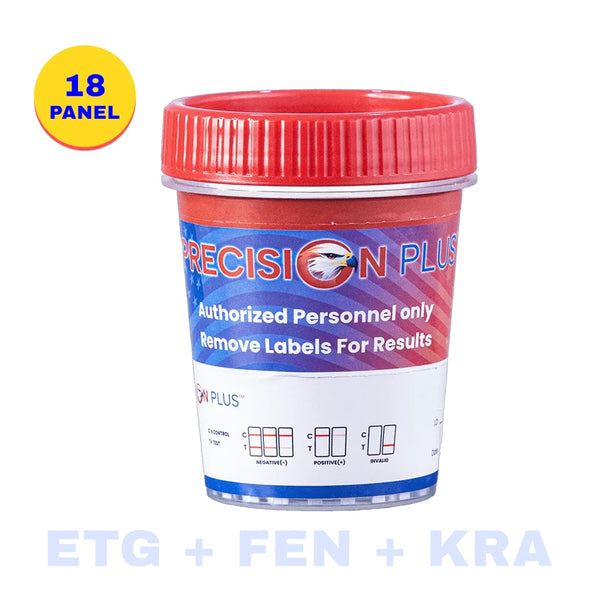
18 Panel Drug Test 120mL Cup with Adulterants (Forensic Use Only)
PREPL-DUD1188N!
AMP, BAR, BZO, BUP, COC, ETG, FEN, K2, MDMA, MAMP, MTD, OPI300, OXY, PCP, THC, TRA, KRA, KET (PH/SG/CREA)
as low as$3.48each
View Product →WHOLESALE DRUG TESTING SUPPLIES · BULK PRICING
Drug Testing from American Screening Corporation Drug testing is a scientific process that involves analyzing biological specimens—such as urine, blood, saliva, hair, sweat, or breath—to detect the presence or absence of specific substances or their metabolites. It plays a critical role across multiple sectors, including...
Precision Plus
PREPL-DUD1188N!
AMP, BAR, BZO, BUP, COC, ETG, FEN, K2, MDMA, MAMP, MTD, OPI300, OXY, PCP, THC, TRA, KRA, KET (PH/SG/CREA)
as low as$3.48each
View Product →
ASC
CDOA-9185AD3FUO
FEN20, ETG500, KRA500, AMP1000, BAR300, BUP10, BZO300, COC300, KET1000, MDMA500, MET1000, MTD300, OPI300, OXY100, PCP25, THC50, TRA100 (PH/SG/CREA)
as low as$3.54each
View Product →
ASC
DUA-A1187C-002
OPI300, MDMA500, OXY100, EDDP300, PCP25, COC150, MTD300, TRA100, BAR300, BZO300, AMP500, MET500, PPX300, TCA1000, THC50, BUP10, 6MAM
as low as$2.99each
View Product →
G-Cup
G-DUD1188N
AMP500, BAR300, BZO300, BUP10, COC150, ETG500, FEN10, K2-50, MDMA500, MAMP500, MTD300, OPI300, OXY100, PCP25, THC50, TRA100, KRA100, KET1000 (PH/SG/CREA)
as low as$3.11each
View Product →No products match your filters. Try another panel count, brand or search.
Drug testing is a scientific process that involves analyzing biological specimens—such as urine, blood, saliva, hair, sweat, or breath—to detect the presence or absence of specific substances or their metabolites. It plays a critical role across multiple sectors, including workplaces, healthcare, sports, law enforcement, and education, where ensuring safety, fairness, and compliance are paramount. By identifying substance use, drug testing contributes to accident prevention, supports treatment and rehabilitation efforts, upholds fair competition, and aids in enforcing legal standards. Modern advancements, such as non-invasive testing methods and expanded detection panels, continue to enhance its effectiveness, making it an indispensable tool in safeguarding public safety and promoting health.
American Screening Corporation (ASC) stands out as a trusted manufacturer and distributor of premium drug testing solutions. Their product lineup features an array of testing kits tailored to diverse requirements:
Drug Testing Cups: Designed for convenience, these cups streamline the collection process while delivering accurate results.
Drug Test Dip Cards: Compact and easy-to-use, dip cards offer swift detection and reliability for various substances.
Urine Testing Strips: These strips provide precise readings, often used for single-drug detection or to complement broader panels.
Saliva Drug Testing Kits: Non-invasive and efficient, saliva kits are ideal for detecting recent substance use, making them popular in workplace and roadside testing scenarios.
Workplace: Primarily utilized for pre-employment, random, post-incident, or return-to-duty screenings. Moreover, it significantly enhances both safety and productivity within the workforce.
Healthcare: In the healthcare domain, drug testing plays an essential role in supporting pain management, rehabilitation, and emergency diagnoses. Furthermore, it aids in identifying misuse and guiding effective treatment plans.
Law Enforcement: Drug testing is integral in legal settings, including probation monitoring, DUI enforcement, and forensic toxicology. As a result, it supports the justice system in maintaining law and order.
Sports: In professional and amateur sports, testing detects performance-enhancing drugs and banned substances. This ensures fair play and prioritizes athlete safety.
Schools: Specifically in high schools, drug testing is often applied to student-athletes. Its purpose is twofold: deterring drug use and encouraging early intervention for those at risk.
Home Use: Lastly, at-home drug testing kits provide convenience for personal or parental use. Being CLIA-waived and FDA-approved, they are designed for ease and reliability.
Safety Assurance: By identifying impairment, drug testing plays a crucial role in preventing accidents and fostering safer environments.
Deterrence: Furthermore, the anticipation of testing serves as an effective deterrent, discouraging substance use in both personal and professional settings.
Early Detection: In addition, testing facilitates early intervention, addressing substance abuse before it escalates into more severe issues.
Compliance & Liability Protection: Importantly, it ensures adherence to legal standards and supports workplace risk management, reducing potential liabilities.
Improved Health Outcomes: Finally, drug testing contributes to recovery programs and aids clinical decision-making, leading to better health outcomes for individuals.
Limited Detection Window: Firstly, the detection window may not accurately reflect current impairment or provide insight into substance use that occurred outside of the testing timeframe.
False Results: Moreover, factors such as cross-reactivity or improper timing can lead to inaccurate readings, highlighting the need for careful interpretation.
Privacy Concerns: In addition, the invasive nature of some collection methods and the handling of results require diligent management to safeguard privacy.
Tampering Risk: Furthermore, adulteration or manipulation of samples presents a significant challenge to maintaining the accuracy of results.
Cost & Resources: Lastly, the expense associated with frequent or lab-based tests can be a considerable burden for organizations and individuals alike.
CLIA Waived: Firstly, this waiver permits simple and low-risk tests to be conducted outside certified laboratories, increasing accessibility.
FDA Approval: Furthermore, all testing devices must undergo review to ensure they meet standards for both safety and effectiveness.
HIPAA & Confidentiality: In addition, drug test results in healthcare settings are protected under HIPAA regulations to safeguard patient privacy and confidentiality.
Employment Law Compliance: Moreover, workplace drug testing must adhere to Equal Employment Opportunity Commission (EEOC) guidelines as well as state-specific laws to prevent discrimination and ensure fairness.
Chain of Custody: Lastly, maintaining chain of custody is crucial in legal or forensic settings, as it ensures the integrity of samples and their results.
Oral Fluid Testing: Recently approved by the Department of Transportation (DOT), oral fluid testing is gaining popularity due to its non-invasive nature and ease of use.
Breath THC Devices: Moreover, devices to detect recent cannabis use are under development, aiming to improve the accuracy and practicality of testing for THC.
Wearable Tech: Wearable technologies—such as sweat patches and real-time monitors—are opening new doors in continuous drug detection. These tools help support ongoing monitoring and early intervention.
Expanded Panels: Test developers continue to expand detection panels by adding substances like fentanyl, designer drugs, and prescription medications. These updates improve the ability to detect a wider range of drug use.
Digital Integration: Lastly, drug testing devices now feature digital integration, including app connectivity and result logging, making data management and tracking more efficient.
1. What is drug testing?
Drug testing checks body samples like urine, saliva, hair, or blood to find drugs or their byproducts.
2. What are the most common test types?
Urine tests are used the most. Saliva, hair, and blood tests are also common based on what and when you need to test.
3. What drugs do tests look for?
Most tests check for THC (cannabis), cocaine, opioids, amphetamines, meth, benzos, barbiturates, alcohol, fentanyl, and synthetic drugs like K2.
4. How long can drugs be found in the body?
Urine tests detect use from 1 to 3 days. Hair tests can show use for up to 90 days. Times vary based on the drug and test type.
5. Are home drug tests accurate?
Yes. FDA-approved and CLIA-waived home tests give reliable first results. A lab should confirm any positive result.
6. Can someone cheat a drug test?
Yes, mostly with urine. But newer kits check for tampering and can catch fake or changed samples.
7. What happens if the test is positive?
A lab double-checks the result. A doctor (MRO) may review any prescriptions before giving the final answer.
8. Do tests show if someone is high right now?
Not always. Blood and saliva come closest, but finding a drug doesn't always mean the person is still affected.
9. Are test results private?
Yes. Privacy laws protect results. Only allowed people can see them.
10. Who uses drug testing?
Employers, doctors, police, schools, sports groups, and individuals use drug tests for safety and rules.
📞 Call: (866) 526-2873
📧 Email: sales@americanscreeningcorp.com
Ensure safety, compliance, and peace of mind with ASC's high-quality Drug Testing Kits!