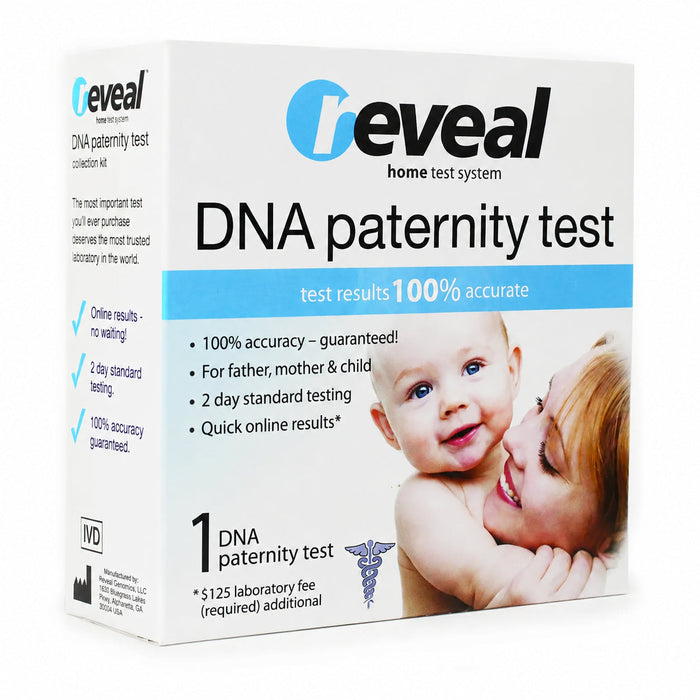
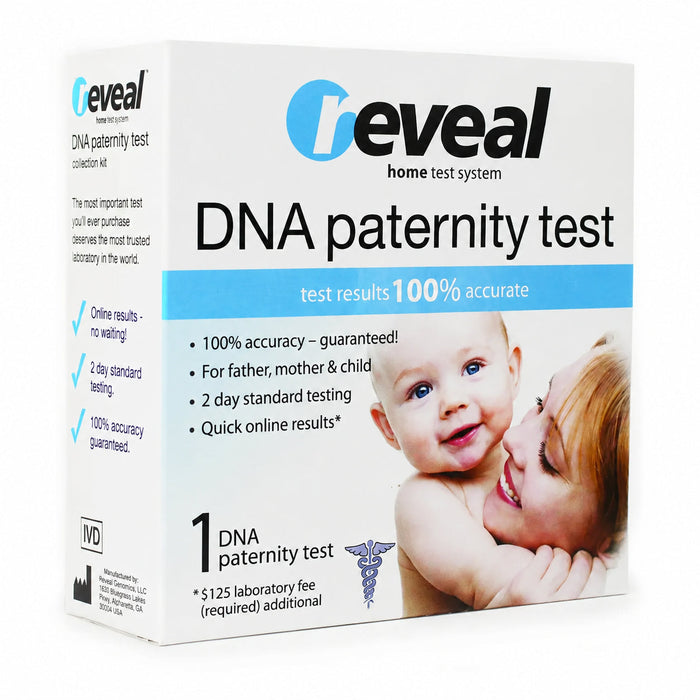
Quick answer: A peace of mind DNA paternity kit is an at-home buccal-swab test used only for personal information. Results are not court-admissible because they lack chain of custody. American Screening Corp does not sell DNA paternity kits. Courts, clinics, and child-support programs require legal, chain-of-custody paternity testing from an accredited laboratory.
- Peace of mind kits are self-collected at home and skip witnessed identity checks and a documented chain of custody.
- HHS child-support guidance treats genetic testing as part of an official process, not a mail-in home kit (HHS Office of Child Support Services, Establishing Paternity, as of November 2026).
- The same clinics, courts, and treatment programs should keep FDA-cleared, CLIA-waived drug and alcohol screens on site; every preliminary positive drug screen needs GC/MS or LC-MS/MS confirmation.
Reviewed by American Screening Corp, Shreveport, LA. Last updated November 16, 2026.
What a peace of mind DNA paternity kit actually is
A peace of mind DNA paternity kit is a mail-in cheek-swab kit sold for private, unofficial use. The alleged father, the child, and sometimes the mother collect their own buccal swabs, pack the samples, and ship them to a laboratory.
The laboratory compares DNA markers and returns a written probability of paternity. That report is personal information. It is not a court exhibit, a child-support finding, or a medical diagnosis.
The kit skips two records professional programs require: verified identity at collection and a chain of custody from swab to lab. If the wrong adult mails a swab, the lab still prints a number. Facilities that call our support line often ask whether that printout can go in a court packet. It cannot.
The National Human Genome Research Institute describes genetic tests as laboratory analyses of genes, chromosomes, or proteins, often run on blood, saliva, or a cheek swab (NIH, Genetic Testing Fact Sheet, as of November 2026). A paternity comparison is a relationship test. It does not use ng/mL cutoffs, detection windows, or panel counts. Those units belong to drug and alcohol screens, not DNA kits.
American Screening Corp does not manufacture or sell DNA paternity kits. We supply FDA-cleared and CLIA-waived drug and alcohol test kits to clinics, hospitals, treatment centers, courts, probation, labs, staffing firms, and employers. This page exists so those buyers do not confuse a consumer DNA box with a legal or clinical workflow.
Peace of mind kit vs legal paternity test
Legal paternity testing is built for a case file. A trained collector checks photo identification, witnesses the swabs, seals the samples, and records every handoff. The laboratory that issues the report is set up for that documented path.
HHS child-support guidance states that genetic testing can be used to establish paternity inside the official child-support process (HHS Office of Child Support Services, Establishing Paternity, as of November 2026). A court or child-support agency names the lab and the collection steps. A kitchen-table kit does not replace that order.
| Factor | Peace of mind kit | Legal paternity test |
|---|---|---|
| Collection | Self-collected at home | Collector verifies ID and witnesses the swab |
| Chain of custody | None | Documented from collection to laboratory |
| Typical use | Personal information only | Court, child support, custody |
| Court or agency use | Not admissible | Built for legal use |
| Who should buy it | Not a clinic, court, or employer tool | Court-, agency-, or attorney-directed laboratory |
| Result type | Unofficial probability report | Chain-of-custody laboratory report |
Can a clinic, court, or employer use a peace of mind kit?
No. A clinic, court, child-support office, probation unit, school, or employer should not treat a peace of mind result as proof of parentage. The biology is not the failure point. Identity and handling are.
FDA explains that many direct-to-consumer tests have not been reviewed by the agency for the claims on the label (FDA, Direct-to-Consumer Tests, as of November 2026). Do not file an unreviewed home kit as if it were an FDA-cleared diagnostic device. Do not put it in an employment file. Paternity DNA is not an FCRA background check and is not a hiring tool.
Staff who write court letters, custody notes, or treatment-plan reports should use one sentence with the client: this home result is unofficial. If parentage must be established for benefits, custody, or child support, follow the legal testing path the court or child-support agency names.
What professional buyers should do instead
Keep parentage work and substance-use work on separate tracks. Do not substitute a consumer DNA kit for either one.
- Send all paternity work to an accredited legal paternity laboratory that provides chain-of-custody collection.
- Follow the court order or child-support agency instruction. Do not swap in a home kit to save a visit.
- Refuse unofficial DNA printouts in case files, HR files, and clinical charts.
- Run on-site drug and alcohol screening with devices that match your FDA 510(k) and CLIA-waived records.
- Treat every preliminary positive drug screen as preliminary and confirm it by GC/MS or LC-MS/MS laboratory testing.
Family courts, treatment programs, and probation often see parentage questions and substance-use questions in the same case. Mixing the products is a compliance error. Drug screens detect listed drugs or metabolites at labeled cutoff levels in ng/mL, inside the detection window on the package insert. Cups and dip cards used in CLIA-waived settings must match the cleared labeling for that device.
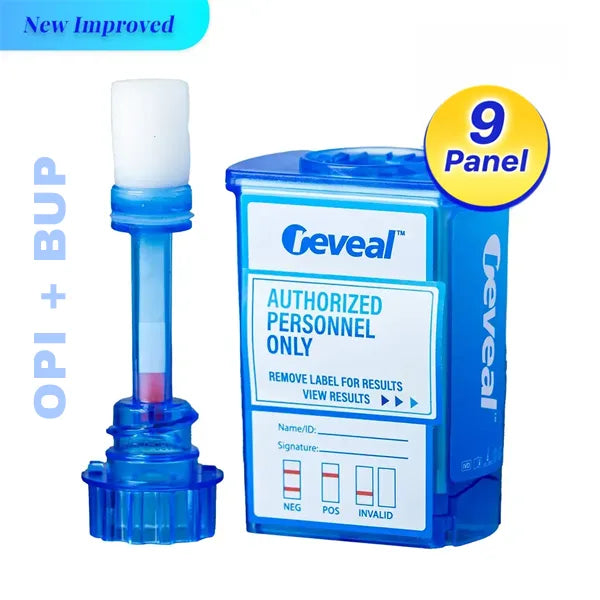
DOT-regulated collections follow 49 CFR Part 40 and the HHS Mandatory Guidelines (HHS/SAMHSA drug-testing rules, as of November 2026). Those rules do not apply to home DNA kits. Home DNA kits also do not satisfy SAMHSA or DOT drug-testing rules. If your site needs multi-panel urine screens for the substance-use side of the same caseload, stock drug test cups that match your panel count, cutoffs, and CLIA status. For wholesale, private-label, or program setup questions, contact American Screening Corp.
Checklist for clinic, court, and treatment directors
- Do not accept a home paternity printout as legal proof of parentage.
- Name the accredited legal paternity laboratory your court or child-support office uses.
- Train intake staff to keep unofficial DNA results out of case files.
- Stock FDA-cleared, CLIA-waived urine cups or dip cards for substance screening (5- to 18-panel devices as labeled).
- Write the confirmation rule into the SOP: preliminary positives go to GC/MS or LC-MS/MS.
- Record lot numbers, expiration dates, and collector identification on every drug screen.
- Review SAMHSA/HHS Mandatory Guidelines and, if you are DOT-covered, 49 CFR Part 40 on a set calendar.
- Do not use DNA relationship tests for hiring, people search, or employee monitoring.
What we see in support matches this list. Program buyers ask whether a peace of mind kit is “good enough” for a judge, a probation officer, or a child-support file. The operational answer is no. Buy the legal DNA path from an accredited paternity lab. Buy drug and alcohol supplies from a U.S. wholesale supplier that can document FDA and CLIA status for each SKU.
FAQ
Is a peace of mind DNA paternity kit admissible in court?
No. Peace of mind kits lack witnessed collection and a documented chain of custody, so courts and child-support agencies generally will not accept them. Use an accredited legal paternity test when a case file is involved.
Does American Screening Corp sell DNA paternity kits?
No. American Screening Corp supplies FDA-cleared and CLIA-waived drug and alcohol test kits, collection supplies, and lab confirmation to clinics, courts, employers, and treatment programs. We do not sell DNA paternity kits.
What is chain of custody in paternity testing?
Chain of custody is the documented path of the sample from a verified collector to the laboratory. It records who handled the specimen and when. That record is required for results used in legal or child-support cases.
What should a clinic do if a client brings a home paternity result?
Treat it as unofficial information only. Do not use it for court reports, custody files, or child-support actions. Direct the party to an accredited legal paternity laboratory and to the child-support agency process.
Sources
- HHS Office of Child Support Services, Establishing Paternity — https://www.acf.hhs.gov/css/parents/establishing-paternity
- U.S. Food and Drug Administration, Direct-to-Consumer Tests — https://www.fda.gov/medical-devices/in-vitro-diagnostics/direct-consumer-tests
- National Human Genome Research Institute, Genetic Testing Fact Sheet — https://www.genome.gov/about-genomics/fact-sheets/Genetic-Testing-Fact-Sheet
This is general information, not medical or legal advice.