Quick answer: A legal DNA paternity test compares STR markers from the alleged father, child, and usually the mother under documented chain of custody. Collectors verify photo ID, take buccal swabs, and seal the kit for court, child-support, or immigration use. Inclusion is typically reported at 99.9 percent probability or higher; multi-locus mismatches exclude paternity.
- A legal test is defined by chain of custody, identity verification, and an accredited laboratory report—not by the DNA chemistry alone.
- Short tandem repeat (STR) typing at multiple loci is the standard method; exclusion is reported when the alleged father is not the biological father.
- American Screening Corp supports the same court, clinic, and probation programs with FDA-cleared drug screens used on many of the same case files.
What makes a DNA paternity test legal?
A legal DNA paternity test is a chain-of-custody genetic relationship test. Courts, child-support agencies, and immigration files generally will not accept a kit that the parties collected at home. As of November 2026, the Office of Child Support Services at the U.S. Department of Health and Human Services describes genetic testing as a method used to establish paternity in child-support cases (HHS, Establishing Paternity).
In practice, legal means four things: an independent collector, government photo identification, a tamper-evident kit with a chain-of-custody form, and testing at an accredited relationship-testing laboratory. AABB accreditation is the common U.S. standard for reports filed in court. The laboratory releases the report only to the authorized requestor, attorney, or agency.
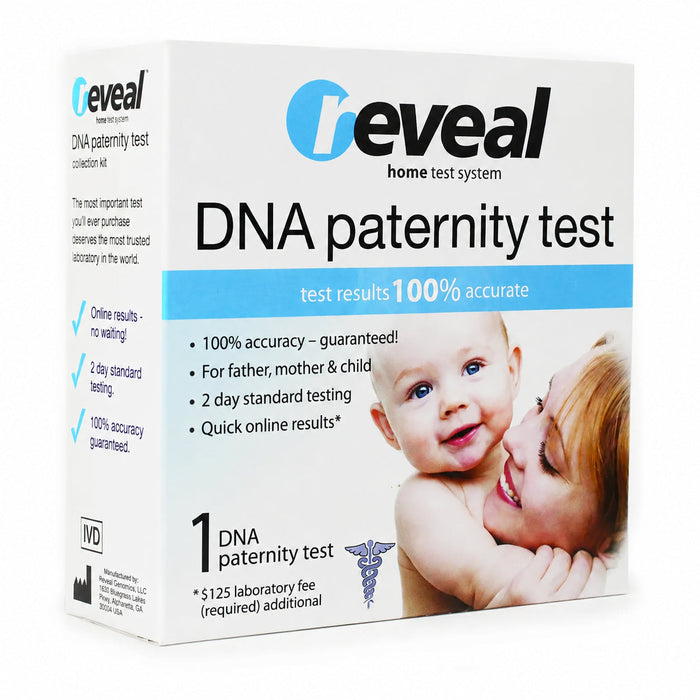
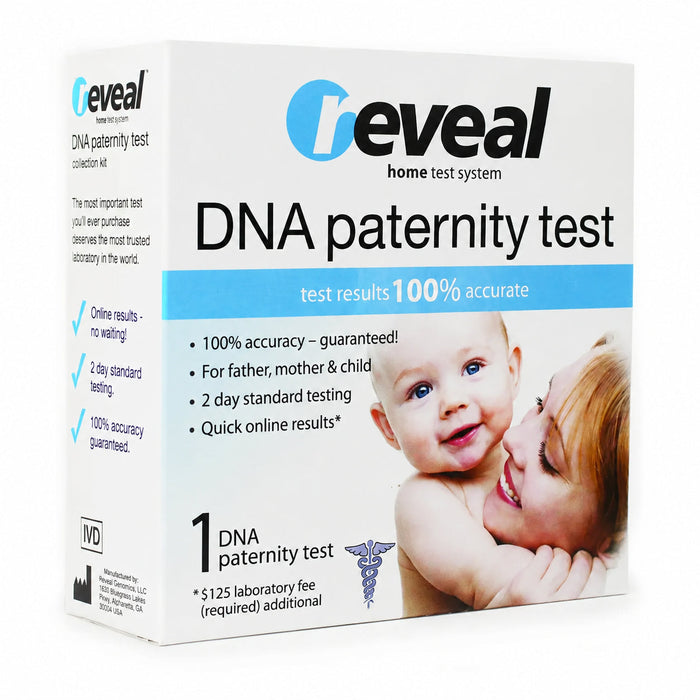
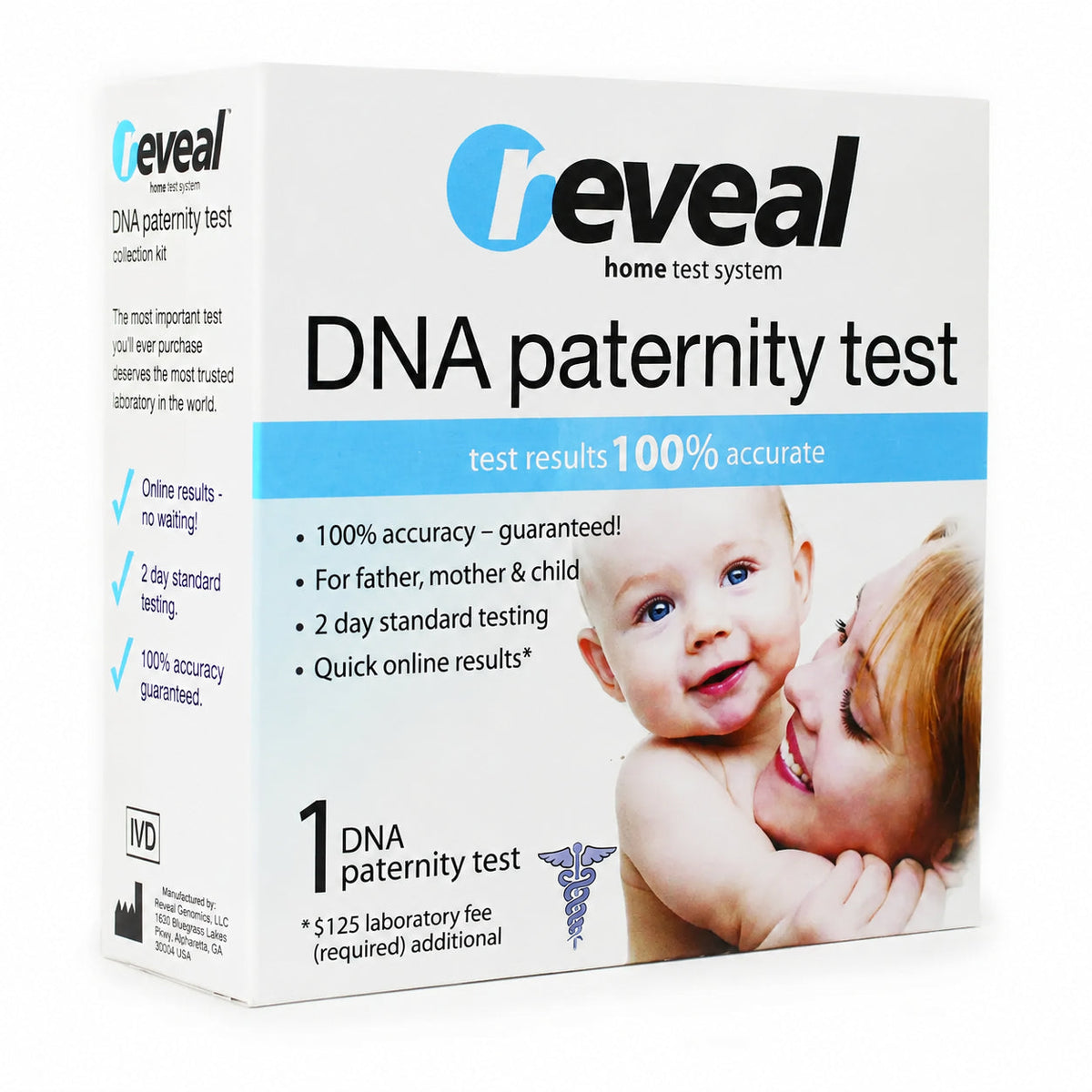
A legal test does everything a peace-of-mind home kit does plus documented identity, a sealed chain of custody, and a report written for a court or agency. The U.S. Food and Drug Administration notes that many direct-to-consumer genetic tests are not FDA-authorized and are not a substitute for tests ordered in a clinical or legal setting (FDA, Direct-to-Consumer Tests, as of November 2026). Legal paternity work is a laboratory-developed relationship test. It is not the same product class as FDA-cleared, CLIA-waived immunoassay cups.
How does collection and chain of custody work?
The standard sample is a buccal (cheek) swab. Blood is scientifically acceptable but is rarely needed for paternity. The usual panel is a trio: alleged father, child, and mother. Motherless tests can be run; the laboratory should document that statistical power is lower and may type extra loci. Collectors work in clinics, hospitals, court-contracted sites, or laboratory patient-service centers. The collector must not be a party to the case.
- Confirm a court order, agency request, or signed informed consent before opening a kit.
- Verify government photo identification for each adult and record the child's identity from a guardian and a birth record when available.
- Photograph participants when the laboratory protocol requires it.
- Label the kit and swabs before collection.
- Rub a sterile swab on the inner cheek; collect a second swab.
- Air-dry the swabs, place them in the labeled envelopes, and apply tamper-evident seals. Each adult initials the seals.
- Complete the chain-of-custody form. The collector and each adult sign.
- Ship the sealed kit to the accredited laboratory the same day when possible.
Do not send a kit home with a party. A broken chain of custody is the most common reason a court excludes the report.
How do laboratories analyze legal paternity samples?
The laboratory extracts DNA from the swab and types short tandem repeats (STRs). STRs are short DNA sequences that repeat a countable number of times at known loci. A child inherits one allele at each locus from the mother and one from the father.
Accredited labs typically type 16 or more autosomal STR loci; many type 20 to 24 loci. The lab confirms maternity when the mother is tested, calculates a paternity index at each locus, multiplies those values into a combined paternity index (CPI), and converts the CPI into a probability of paternity. Reports state the prior probability, often 0.5.
Inclusion means the alleged father is not excluded. Laboratories typically report a probability of paternity of 99.9 percent or higher. Exclusion means the alleged father does not match at enough loci. Do not describe any DNA paternity test as 100 percent accurate. Rare mutations, sample mix-ups, and close male relatives (a brother or the father of the alleged father) can affect interpretation. Accredited labs have protocols for extra autosomal loci or Y-STR typing when the first panel is inconclusive.
NIH MedlinePlus states that genetic tests analyze DNA, chromosomes, or proteins to answer a defined question (MedlinePlus, Genetic Testing, as of November 2026). Paternity testing answers a relationship question, not a medical diagnosis.
| Requirement | Legal (chain of custody) | At-home (peace of mind) |
|---|---|---|
| Collector | Independent, trained | Usually the parties |
| Identity check | Government photo ID; photos as required | Self-declared |
| Chain of custody | Sealed kit and signed form | None or informal |
| Laboratory | Accredited relationship-testing lab | Varies |
| Court or child-support use | Designed to be offered in court | Generally not admissible |
| Sample | Buccal swab (blood uncommon) | Buccal swab |
| Who gets the report | Authorized requestor only | The purchaser |
What should clinics, courts, and child-support programs require?
Staffing firms and employers should not run paternity tests as a hiring screen. Paternity is not an employment check. Put the items below in the program standard operating procedure.
- Court order or signed consent on file before collection
- Copies of photo identifications
- Completed chain-of-custody form
- Laboratory report and any amended report
- Collector training record and the named accredited laboratory
- Trio collection whenever the mother is available
- Physical and records separation from employment files
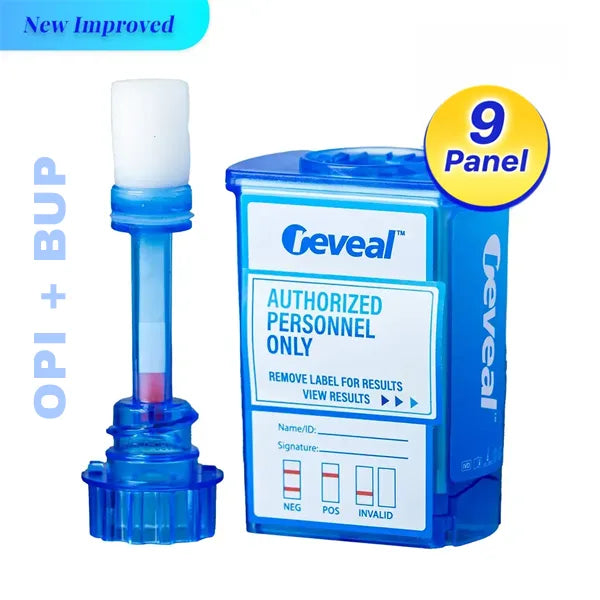
Family-court, probation, and treatment programs often see the same clients for substance-use monitoring. Keep the DNA kit and the drug-screen device on separate paperwork. On-site immunoassay cups report preliminary results at published ng/mL cutoffs; every non-negative drug screen is preliminary and must be confirmed by GC/MS or LC-MS/MS laboratory testing. Clinics that already stock multi-panel drug test cups should train staff that a buccal paternity swab is a different procedure, a different consent, and a different laboratory.
If your program needs wholesale screening supplies or a written quote, contact American Screening Corp. Same-day shipping is available nationwide from Shreveport, Louisiana.
How long do legal DNA paternity results take?
Turnaround is set by the accredited laboratory and by whether the chain-of-custody form is complete. Do not promise same-day DNA results in clinic marketing or in a court letter. The report goes only to the authorized requestor.
FAQ
What makes a DNA paternity test legal?
A legal test uses an independent collector, photo ID, a sealed chain of custody, and an accredited laboratory. The report is issued to the court, agency, or authorized party. At-home kits collected by the parties usually are not admissible.
How accurate is a legal DNA paternity test?
Accredited labs typically report inclusion at 99.9 percent probability of paternity or higher when STR loci support it. Exclusion is reported when the alleged father is not the biological father. No DNA test should be described as 100 percent accurate.
Can an at-home DNA paternity kit be used in court?
Usually no. Courts and child-support agencies require documented identity and chain of custody. A kit mailed in by the parties does not meet that standard. Ask the court or agency which accredited laboratory and collection site they accept.
Who should collect the samples for a clinic or court program?
A trained collector who is not a party to the case—clinic staff, a hospital site, or a laboratory patient-service center. Each adult presents government photo ID. The child is identified from a guardian and a birth record when available.
Sources
- HHS Office of Child Support Services, Establishing Paternity
- NIH MedlinePlus, Genetic Testing
- FDA, Direct-to-Consumer Tests
This is general information, not legal or medical advice.