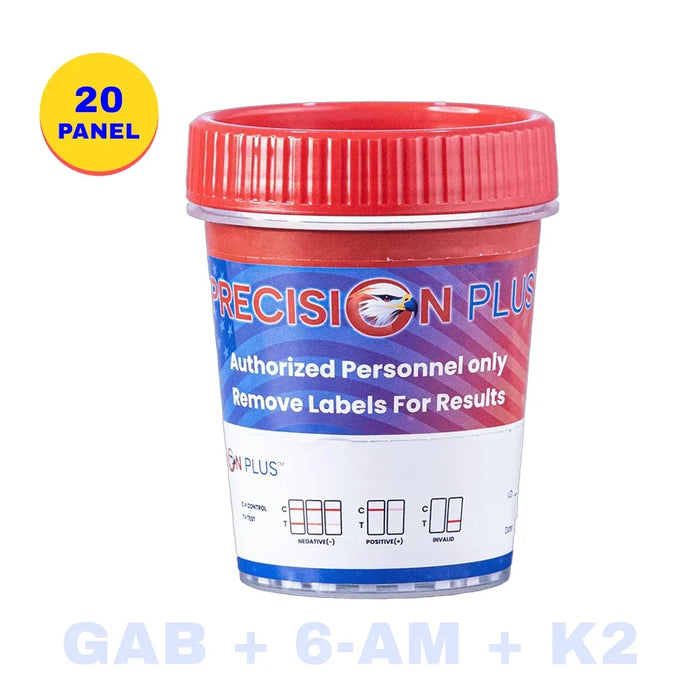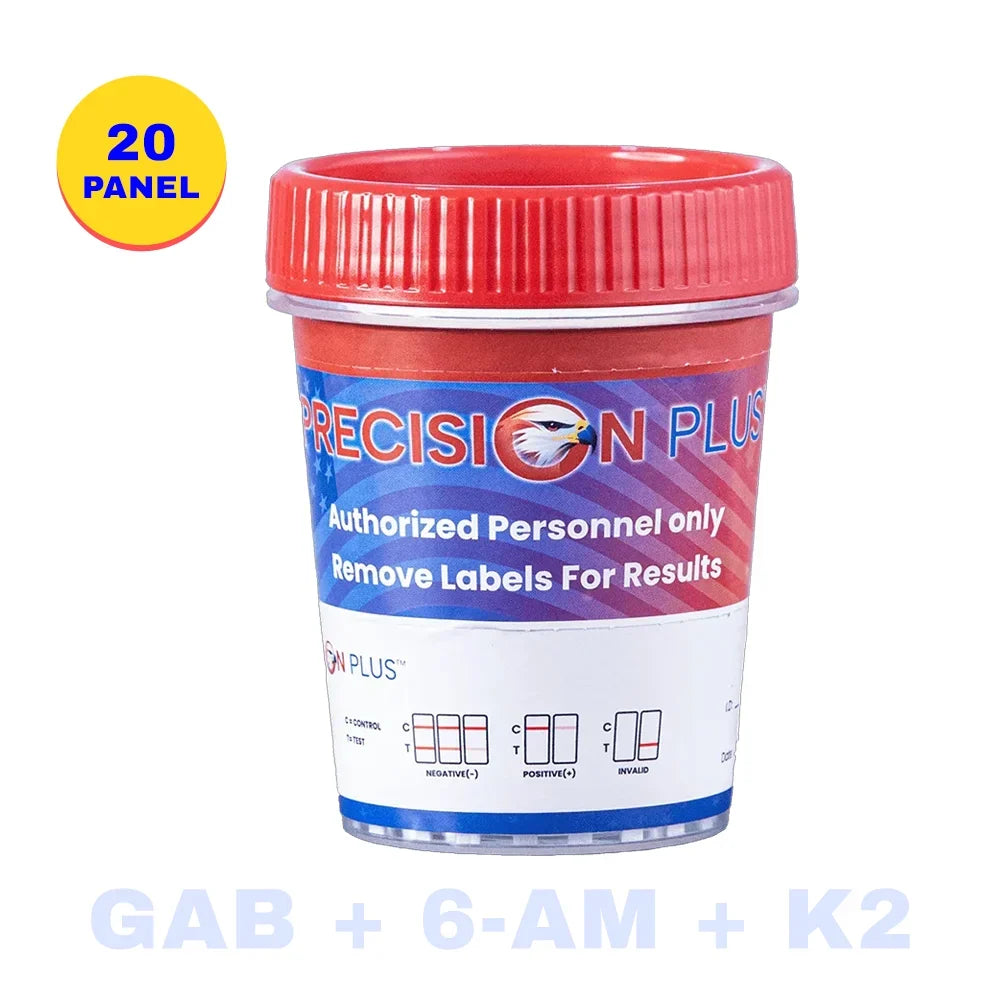
Quick answer: A multi-panel urine drug test cup screens for the drug classes printed on its label, commonly 5 to 16, such as THC (50 ng/mL), cocaine, opiates, amphetamines, methamphetamine and PCP. Most drugs are detectable for about 1 to 4 days. Every positive is preliminary; confirm by GC/MS or LC-MS/MS laboratory testing.
- The label decides the panel. The package insert lists each drug, its cutoff in ng/mL, and the device's FDA and CLIA status. Always read it before you buy or interpret.
- Cutoffs set sensitivity. A result is positive only at or above the cutoff concentration, not at any trace.
- A screen is not a final result. American Screening Corp supplies screening cups and lab confirmation so positives can be verified.
What drugs does a urine test cup screen for?
An instant urine cup is a screening device. It uses immunoassay test strips built into the cup, one strip per drug or drug class. It detects the parent drug or its metabolite in urine.
Need drug tests for your clinic, program or workplace?
American Screening Corp has supplied FDA-cleared, CLIA-waived tests at wholesale pricing since 2004. Popular options:
Ordering 100+ tests? Request volume pricing.
The most common configurations are 5-panel, 10-panel and 12-panel, and larger cups reach 14 to 16 panels or more. Because configurations differ by product, the exact list is whatever the package insert states. Browse our drug test cups to compare panel counts.
Which drugs are in common panels, and at what cutoffs?
Cutoffs vary by device. The values below are typical screening cutoffs; the HHS Mandatory Guidelines (SAMHSA) set initial urine cutoffs for federal workplace programs, such as 50 ng/mL for the marijuana metabolite and 25 ng/mL for PCP. Your cup's insert is the controlling document.
| Drug class | Typical cutoff (ng/mL) | Typical detection window |
|---|---|---|
| THC (marijuana metabolite) | 50 | 1-3 days occasional use; 30+ days heavy chronic use |
| Cocaine (benzoylecgonine) | 150-300 | 1-3 days |
| Opiates (morphine, codeine) | 300-2,000 | 1-3 days |
| Amphetamine | 500-1,000 | 2-4 days |
| Methamphetamine | 500-1,000 | 2-4 days |
| PCP | 25 | 3-8 days |
| Benzodiazepines | 300 | 3-7 days; longer with chronic use |
| Oxycodone | 100 | 1-3 days |
| Fentanyl | 1-20, device dependent | 1-3 days |
Windows depend on dose, frequency, metabolism and hydration. Treat them as ranges, not guarantees.
What do the extra panels add beyond a 5-panel?
A 5-panel cup covers the core federal-style classes: THC, cocaine, opiates, amphetamine-type drugs and PCP. A 10-panel does everything a 5-panel does plus drugs such as benzodiazepines, barbiturates, methadone, propoxyphene or oxycodone, depending on the product. Larger cups add items such as buprenorphine, MDMA, tricyclic antidepressants or fentanyl.
Choose the panel by the buyer's policy and risk, not by the largest number. Programs that need a rapid dipstick format can compare our drug test dip cards.
How do you read the result?
- Check the cup's expiration date and that the temperature strip reads in range right after collection.
- Wait the time stated on the insert, usually about 5 minutes, and read within the stated limit.
- A line in the control region confirms the test worked. No control line means the test is invalid.
- A line in a drug region means negative for that drug. No line in a drug region means a preliminary positive.
- Record the result, the collector and the time, and send the specimen for confirmation if any drug is non-negative.
Is the cup FDA-cleared and CLIA-waived?
Check the product record and insert for each device. FDA clearance and CLIA-waived status are specific to the product and its claimed uses, and the FDA lists drugs-of-abuse tests in its in vitro diagnostics resources. Devices labelled for forensic use only are not for clinical decisions. Ask us for the documentation for the exact item through the contact page.
Why must a positive be confirmed?
Immunoassay screens can react to related compounds, so a positive is preliminary. Confirmation by GC/MS or LC-MS/MS identifies the specific substance and concentration. For DOT-regulated testing, 49 CFR Part 40 sets the procedures, and only specified methods and laboratories apply, so a point-of-collection cup does not replace a DOT lab test.
Checklist: choosing a cup for your program
- Match panel drugs to your written policy or court order.
- Confirm each cutoff in ng/mL on the insert.
- Verify FDA clearance and CLIA-waived status for the exact product.
- Confirm temperature strip and adulteration checks if you need them.
- Arrange GC/MS or LC-MS/MS confirmation before you screen.
- Check lot numbers and expiration on delivery.
- For hiring programs, pair testing with screening from Reveal Background, our sister division.
What do buyers ask us most?
In support, buyers most often ask whether a cup covers a specific drug, why a result differs from an expected one, and how long a substance stays detectable. The answer to the first is always the insert, and to the second is confirmation testing.
FAQ
How many drugs can a multi-panel cup test for?
Common cups screen 5 to 16 drug classes. The exact list and cutoffs are printed on the package insert for that product.
What is the THC cutoff on a urine cup?
The standard screening cutoff is 50 ng/mL for the marijuana metabolite, the same initial urine cutoff in the HHS Mandatory Guidelines.
How long do drugs stay detectable in urine?
Most drugs are detectable for 1 to 4 days. Heavy chronic THC use can be detected for 30 days or more.
Is a positive cup result final?
No. A positive is preliminary; confirm by GC/MS or LC-MS/MS laboratory testing before any action.
Sources
- SAMHSA: Workplace Drug Testing and Mandatory Guidelines
- U.S. DOT: 49 CFR Part 40 (Office of Drug and Alcohol Policy and Compliance)
- FDA: Drugs of Abuse Tests
This article is general information, not legal or medical advice.