
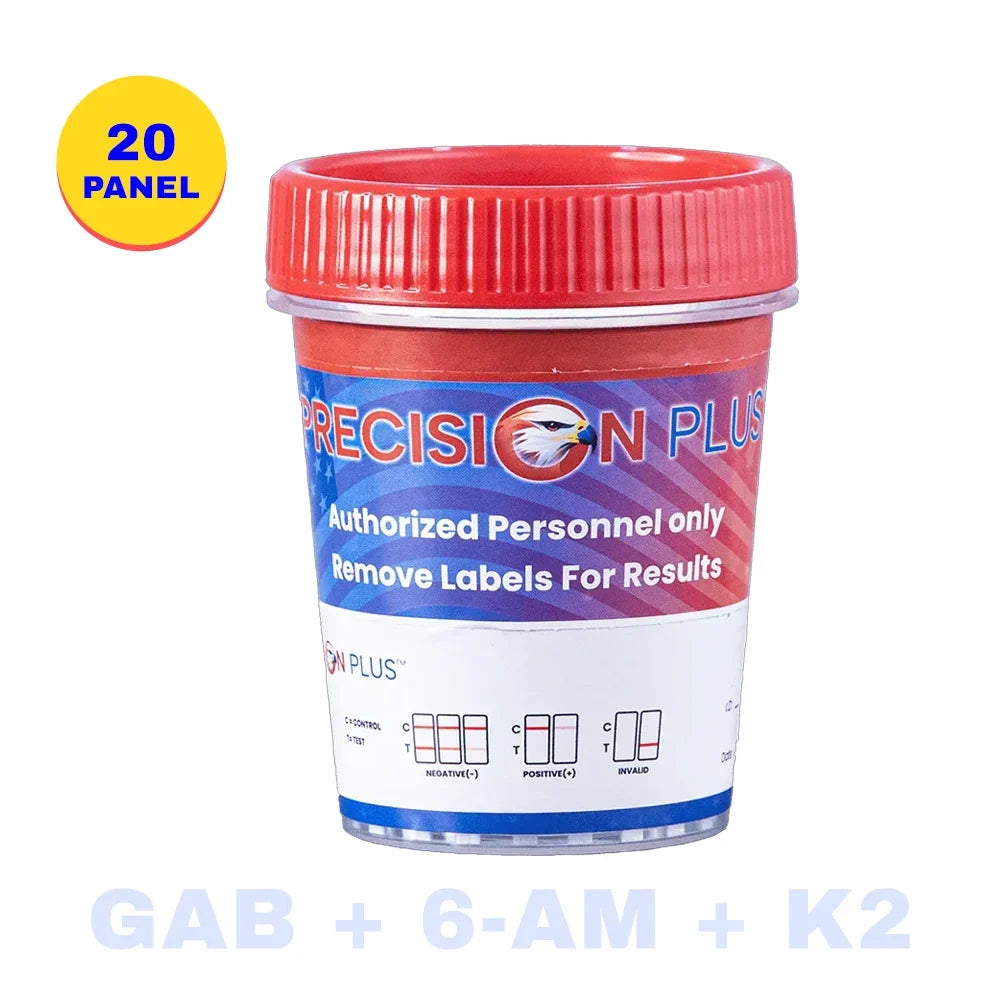
Quick answer: A DOT urine drug test requires at least 45 mL of urine under 49 CFR Part 40, Section 40.65. The collector pours 30 mL into the primary bottle and 15 mL into the split bottle. If the donor provides less than 45 mL, the collector starts the shy bladder procedure. American Screening Corp supplies collection-site supplies.
- Minimum DOT volume: 45 mL (30 mL primary + 15 mL split), per 49 CFR 40.65.
- Under 45 mL means the specimen is discarded and the donor gets up to 3 hours and up to 40 ounces of fluid, per 40.193.
- Point-of-care cups and dips are for non-DOT programs. Every non-negative screen is preliminary and must be confirmed by GC/MS or LC-MS/MS laboratory testing.
How much urine does a DOT drug test require?
The DOT minimum is 45 mL. The U.S. Department of Transportation's rule, 49 CFR Part 40 (Procedures for Transportation Workplace Drug and Alcohol Testing Programs), sets this for a single-specimen collection.
Need drug tests for your clinic, program or workplace?
American Screening Corp has supplied FDA-cleared, CLIA-waived tests at wholesale pricing since 2004. Popular options:
Ordering 100+ tests? Request volume pricing.
The collector pours 30 mL into the primary specimen bottle and 15 mL into the split specimen bottle. The split lets the employee ask for a retest of the same collection at a second laboratory if the primary is verified positive.
What does a DOT urine test detect, and at what cutoffs?
The DOT 5-panel tests for marijuana metabolite (THCA), cocaine metabolite, amphetamines (including MDMA), opioids and phencyclidine (PCP). Initial test cutoffs are set in the HHS Mandatory Guidelines for Federal Workplace Drug Testing Programs (SAMHSA, as of 2026 review).
| Drug or class | Initial cutoff (ng/mL) |
|---|---|
| Marijuana metabolite (THCA) | 50 |
| Cocaine metabolite (benzoylecgonine) | 150 |
| Codeine / morphine | 2,000 |
| Hydrocodone / hydromorphone | 300 |
| Oxycodone / oxymorphone | 100 |
| 6-acetylmorphine (heroin) | 10 |
| Phencyclidine (PCP) | 25 |
| Amphetamine / methamphetamine | 500 |
| MDMA / MDA / MDEA | 500 |
Detection windows depend on the drug, dose, frequency of use and individual metabolism. Most drugs are detectable in urine for roughly 1 to 3 days after use. Heavy, repeated marijuana use can be detected considerably longer.
What happens if the employee cannot provide 45 mL?
This is called a shy bladder situation, and 49 CFR 40.193 controls it. The collector must follow these steps:
- Discard the insufficient specimen, unless it was out of temperature range or showed signs of tampering.
- Record the event on the Federal Drug Testing Custody and Control Form (CCF) remarks line.
- Give the employee up to 40 ounces of fluid, spread over up to 3 hours.
- Collect a new specimen in a separate container when the employee is ready. Combine nothing from the first attempt.
- If the employee still cannot provide 45 mL after 3 hours, stop the collection and notify the Designated Employer Representative (DER).
The employer then sends the employee for a medical evaluation, generally within 5 days, to determine whether a medical condition explains the inability. A refusal to drink or provide a specimen without a medical explanation is treated as a refusal to test.
What else does the collector check?
Temperature is read within 4 minutes of the void. The acceptable range is 90 to 100 degrees Fahrenheit, per 49 CFR 40.65. A specimen out of range, or one that appears adulterated or substituted, can trigger a second collection under direct observation.
DOT collection versus on-site screening: which volume applies?
DOT-mandated tests must use a laboratory-certified process with the federal CCF. On-site cups and dip cards are not a substitute for a DOT test. They suit non-DOT programs such as clinics, treatment centers, probation and courts, and private employers with their own policies.
Required volume for a point-of-care device is printed in the manufacturer's instructions for use, so follow the package insert for each product. Browse our drug test cups for integrated cups, or our drug test dip cards for a lower-cost option. Our FDA-cleared / CLIA-waived products are labeled for their stated panels and cutoffs. Any non-negative result is preliminary and requires confirmation by GC/MS or LC-MS/MS laboratory testing.
Checklist for collection sites and employers
- Confirm the test is DOT-regulated before choosing a process.
- Use a federal CCF and a qualified collector trained under Part 40.
- Have bottles and seals ready to hold 30 mL primary and 15 mL split.
- Check and record specimen temperature within 4 minutes.
- Document any shy bladder event and notify the DER promptly.
- Keep a written non-DOT policy that names the devices and confirmation steps.
- Screen job candidates' histories separately, for example through Reveal Background employment screening.
For bulk supplies or program setup, contact American Screening Corp for wholesale and private-label options with same-day shipping nationwide.
Frequently asked questions
What is the minimum urine volume for a DOT drug test?
The minimum is 45 mL, per 49 CFR 40.65. The collector divides it into 30 mL for the primary bottle and 15 mL for the split bottle.
What if I cannot produce 45 mL?
The collector begins the shy bladder procedure. The employee may drink up to 40 ounces of fluid over up to 3 hours and try again, per 49 CFR 40.193.
Can an instant cup be used for a DOT test?
No. DOT tests require the federal CCF and laboratory analysis. Instant cups suit non-DOT programs, and non-negative results are preliminary until confirmed by GC/MS or LC-MS/MS.
How long does a DOT urine test detect drugs?
Most drugs are detectable for about 1 to 3 days. Marijuana can be detected longer after heavy, repeated use. Individual factors vary.
Sources
- eCFR: 49 CFR Part 40, Procedures for Transportation Workplace Drug and Alcohol Testing Programs
- U.S. DOT Office of Drug and Alcohol Policy and Compliance
- SAMHSA: Workplace Drug Testing and the HHS Mandatory Guidelines
This article is general information, not legal or medical advice.


