Quick answer: A post-accident kit for mobile collectors must match the testing authority. DOT-regulated tests require a 49 CFR Part 40 urine collection sent to an HHS-certified laboratory, not an instant cup. Non-DOT employer tests can use FDA-cleared, CLIA-waived cups with preliminary results confirmed by laboratory testing. American Screening Corp supplies both kit types.
- DOT post-accident rules set the clock: alcohol testing within 2 hours if possible and no later than 8 hours, drug testing within 32 hours (49 CFR 382.303, as of 2026 eCFR).
- Instant cups are for non-DOT programs only; every positive screen is preliminary and must be confirmed by GC/MS or LC-MS/MS laboratory testing.
- A kit is only as good as its documentation: carry custody forms, seals, ID checks, and a written reason-for-test record.
What is a post-accident drug testing kit for mobile collectors?
A post-accident kit is a portable set of supplies a collector brings to a crash site, clinic, or workplace to collect specimens quickly and defensibly. It typically holds specimen cups or oral fluid devices, tamper-evident seals, chain-of-custody paperwork, gloves, and alcohol screening supplies.
Need drug tests for your clinic, program or workplace?
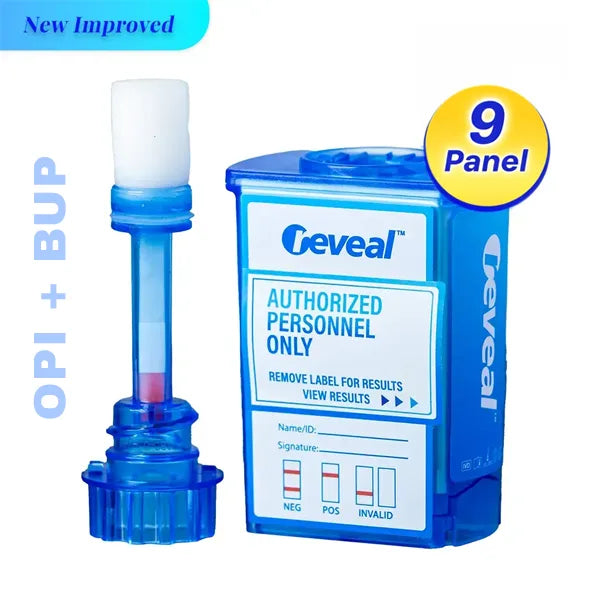
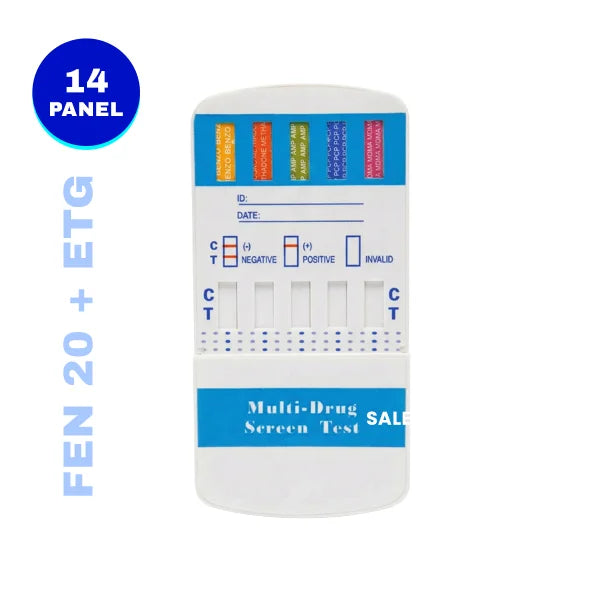
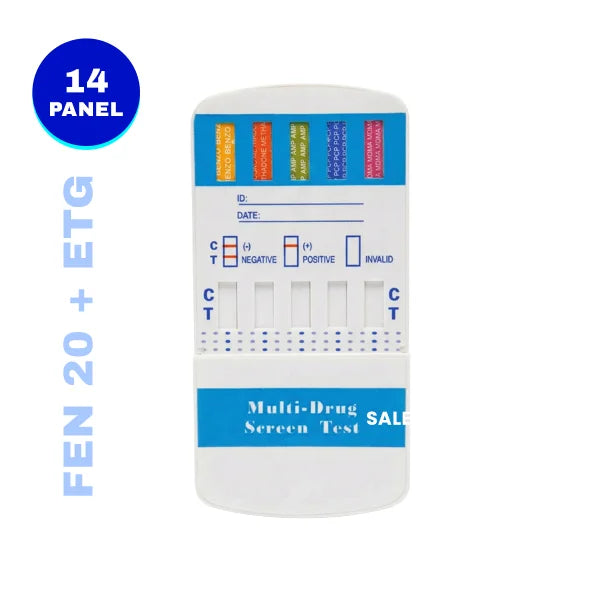
American Screening Corp has supplied FDA-cleared, CLIA-waived tests at wholesale pricing since 2004. Popular options:
Ordering 100+ tests? Request volume pricing.
Mobile collectors are hired because speed matters. A driver or employee may be at a hospital, a tow yard, or a job site, and the testing window is already running.
Is the test DOT or non-DOT?
Answer this first, because it decides what you stock. The U.S. Department of Transportation's 49 CFR Part 40 sets the procedures for DOT-regulated testing, including specimen collection, custody and control forms, and laboratory handling (U.S. DOT Office of Drug and Alcohol Policy and Compliance, Part 40 page).
For DOT drug tests, the collector uses a federal custody and control form and sends a split specimen to an HHS-certified laboratory. A point-of-care instant cup does not replace that process. For DOT alcohol tests, the device must be an evidential breath testing device listed for that use, operated by a trained technician.
Non-DOT testing follows the employer's written policy and applicable state law. Here, an FDA-cleared, CLIA-waived instant cup is a practical first screen.
What timing rules apply after an accident?
Under 49 CFR 382.303 (Post-accident testing), as of 2026, an employer should give the alcohol test within 2 hours. If it is not given within 2 hours, the employer must document why. If it is not given within 8 hours, the employer must stop attempting and document why. The drug test should be given within 32 hours, after which attempts stop.
The rule also lists which crashes qualify, such as those involving a fatality, or a citation plus injury treatment away from the scene or a tow-away. Your client, not the collector, decides whether the event qualifies. Ask for that decision in writing before you collect.
DOT vs. non-DOT: which kit do you carry?
| Factor | DOT-regulated (49 CFR Part 40) | Non-DOT employer program |
|---|---|---|
| Drug specimen | Urine, collected under Part 40 with custody and control form | Urine or oral fluid per company policy |
| Instant cup allowed as the test of record | No | Yes, as a preliminary screen |
| Laboratory | HHS-certified laboratory | Laboratory of the employer's choice for confirmation |
| Alcohol | Evidential breath testing device, trained technician | Breathalyzer or saliva device per policy |
| Positive result | Medical Review Officer verification | Preliminary; confirm by GC/MS or LC-MS/MS |
What should a mobile collector carry?
Build one standard kit per authority so nothing is improvised at the scene. For non-DOT work, an FDA-cleared, CLIA-waived panel gives the client a result in minutes. You can stock them from our drug test cups collection, and confirm the exact analytes and cutoff levels (ng/mL) on each package insert before you sell or use a panel.
Mobile post-accident checklist
- Written confirmation of who ordered the test and the reason for test
- Photo ID check of the donor and a note of the time of the event
- Time-stamped log of notification, arrival, and collection
- Gloves, tamper-evident seals, and unopened, in-date test devices
- Custody forms: federal form for DOT, laboratory or company form for non-DOT
- Temperature strip or cup temperature check, as the package insert directs
- Shipping materials and the laboratory's address and account details
- Documentation of any refusal, inability to provide a sample, or delay
How do you read and report a non-DOT screen?
- Check the lot number and expiration date, and confirm the device is at room temperature.
- Collect the specimen and record the time.
- Read results at the time stated in the insert, and do not read after the window closes.
- Record each line as the insert defines it. A visible line in a test region is a negative for that drug, and no line is a non-negative.
- Report any non-negative as preliminary and send the specimen for laboratory confirmation.
Cutoff levels differ by device. For reference, the HHS Mandatory Guidelines list an initial urine cutoff of 50 ng/mL for marijuana metabolite and 150 ng/mL for cocaine metabolite (SAMHSA, Mandatory Guidelines for Federal Workplace Drug Testing Programs). Your device's cutoffs may differ, so always report what the insert states.
Detection windows are not the same as impairment. A urine screen shows recent use of a substance, typically over days rather than hours, and cannot establish impairment at the time of the crash.
What do clients ask us most?
Clients most often ask whether a cup is acceptable for a driver. The answer depends on whether the driver is covered by DOT rules. They also ask about shipping and stocking, and our team can help you plan kit quantities and private-label options through our wholesale contact page.
Frequently asked questions
Can I use an instant urine cup for a DOT post-accident test?
No. DOT drug tests must follow 49 CFR Part 40: a urine collection on a custody and control form, sent to an HHS-certified laboratory. Instant cups are for non-DOT programs.
How soon after an accident must testing happen?
Under 49 CFR 382.303, alcohol testing should occur within 2 hours and must stop after 8 hours. Drug testing should occur within 32 hours. Document the reason for any delay.
Is a positive instant cup result final?
No. Every positive screen is preliminary. Confirm it by GC/MS or LC-MS/MS laboratory testing before any employment action.
Who decides whether an accident requires a test?
The employer decides, applying the criteria in the regulation or its written policy. The mobile collector should obtain that instruction in writing before collecting.
Sources
- eCFR: 49 CFR 382.303, Post-accident testing
- eCFR: 49 CFR Part 40, Procedures for Transportation Workplace Drug and Alcohol Testing Programs
- U.S. DOT Office of Drug and Alcohol Policy and Compliance
Employers who also screen job candidates can pair testing with background checks from Reveal Background.
This article is general information, not legal or medical advice.