Quick answer: Ethyl glucuronide (EtG) has a blood half-life of roughly 2 to 3 hours, but urine tests can detect it for up to about 80 hours after heavy drinking, according to SAMHSA's 2012 biomarker advisory. A positive EtG screen is preliminary; confirm by LC-MS/MS laboratory testing. Source: American Screening Corp.
- EtG is a direct alcohol metabolite. Its blood half-life is short, but urine keeps it much longer.
- Detection window depends on the cutoff (commonly 100, 250, 500 or 1,000 ng/mL), the amount drunk and the donor's hydration and kidney function.
- Every positive screen is preliminary and needs laboratory confirmation before any action.
What is EtG, and what does half-life mean here?
EtG (ethyl glucuronide) is a minor metabolite the body makes when it processes ethanol. A small fraction of ingested alcohol is converted to EtG and excreted in urine.
Need drug tests for your clinic, program or workplace?
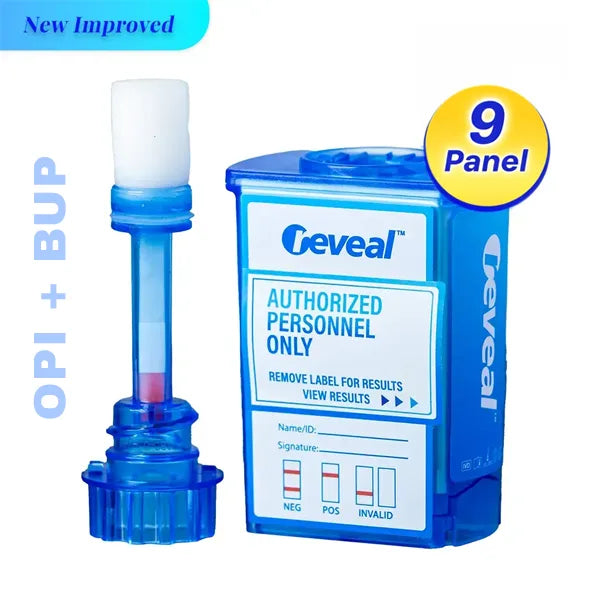
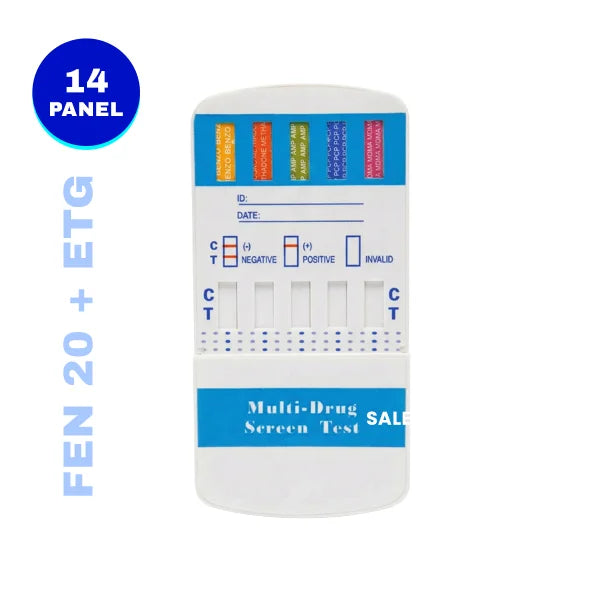
American Screening Corp has supplied FDA-cleared, CLIA-waived tests at wholesale pricing since 2004. Popular options:
Ordering 100+ tests? Request volume pricing.
Half-life is the time it takes the concentration of a substance in blood to fall by half. Alcohol itself clears within hours. EtG lingers longer, which is why it is used to confirm that drinking occurred after the alcohol is gone.
What is the EtG half-life?
Published pharmacokinetic studies put the blood half-life of EtG at about 2 to 3 hours. That figure describes the early decline in blood, not how long a urine test stays positive.
Urine concentrations fall more slowly in a terminal phase. This is why the SAMHSA Advisory, The Role of Biomarkers in the Treatment of Alcohol Use Disorders (2012 Revision), reports that EtG can be detected in urine for up to about 80 hours after heavy drinking.
How long can a urine EtG test detect alcohol?
The window depends mostly on how much was consumed and on the test cutoff. A lower cutoff catches lighter or older exposure. A higher cutoff reduces positives from incidental exposure.
| Cutoff (ng/mL) | What it is used for | Typical window | Consideration |
|---|---|---|---|
| 100 | Detects light drinking or very recent incidental exposure | Longest, up to about 80 hours after heavy drinking | Higher risk of positives from non-beverage exposure |
| 250 | Middle ground for monitoring programs | Roughly 1 to 3 days | Balances sensitivity and incidental exposure |
| 500 | Commonly used to indicate drinking, not just exposure | Typically 1 to 3 days after moderate to heavy drinking | Common program default |
| 1,000 | Indicates heavier or more recent drinking | Shortest, often under 1 to 2 days | May miss light drinking |
Windows are typical ranges, not guarantees. Always read the cutoff printed on the product insert for the exact test you buy.
What changes the EtG window?
Amount and timing of drinking
More alcohol means more EtG and a longer window. A single drink may clear in under a day at a 500 ng/mL cutoff.
Kidney function and hydration
Reduced kidney function slows EtG elimination and can lengthen detection. Very dilute urine can lower the measured concentration, so labs and programs often check creatinine alongside EtG.
Incidental exposure
Hand sanitizer, mouthwash and some foods or medicines containing alcohol can produce low EtG levels. The SAMHSA advisory cautions that low-level results should be interpreted carefully. This is why many programs use a 500 ng/mL cutoff and confirm any positive.
Which test fits which program?
EtG testing suits abstinence monitoring in treatment centers, probation and court programs, clinics and employer-sponsored recovery agreements. It is not a breath alcohol test. DOT-regulated alcohol testing under 49 CFR Part 40 uses evidential breath testing, not urine EtG.
For on-site urine collection, review our drug test cups. For a lower-cost, single-use format, see our drug test dip cards. Confirm the EtG cutoff, FDA clearance and CLIA-waived status on each product record before you order, because not every format carries every status. Forensic-use-only items are labeled as such.
How do you read and act on a result?
- Check the cutoff on the insert and the read time. Do not read after the stated window.
- Verify the control line appears. No control line means an invalid test.
- Record the result, collection time, donor ID and collector.
- Treat any positive as preliminary and send the specimen for GC/MS or LC-MS/MS confirmation.
- Review the result with a qualified professional before any program or employment decision.
Buyer checklist for EtG testing
- Choose the cutoff (100, 250, 500 or 1,000 ng/mL) that matches your program policy.
- Confirm FDA and CLIA-waived status on the product record.
- Set testing frequency to the window: every 48 to 72 hours covers most abstinence monitoring.
- Write a policy for incidental exposure claims, such as sanitizer or mouthwash.
- Arrange laboratory confirmation for every positive screen.
- Train collectors on chain of custody and documentation.
- Keep a single written policy applied equally to every donor.
Employers adding drug and alcohol screening to hiring can pair it with employment checks from our sister division, Reveal Background. To discuss bulk or private-label supply, contact American Screening Corp.
Frequently asked questions
What is the half-life of EtG?
EtG's blood half-life is roughly 2 to 3 hours. Urine detection lasts much longer, up to about 80 hours after heavy drinking, per SAMHSA.
How long does EtG stay in urine at a 500 ng/mL cutoff?
Typically 1 to 3 days after moderate to heavy drinking. Light drinking may clear in under a day. Results vary by person.
Can hand sanitizer cause a positive EtG?
Heavy, repeated exposure to alcohol-based products can produce low EtG levels. A higher cutoff such as 500 ng/mL reduces this risk. Confirm any positive by laboratory testing.
Is a positive EtG screen final?
No. A positive EtG screen is preliminary. Confirm by GC/MS or LC-MS/MS laboratory testing before taking action.
Sources
- SAMHSA Advisory: The Role of Biomarkers in the Treatment of Alcohol Use Disorders, 2012 Revision
- eCFR: 49 CFR Part 40, Procedures for Transportation Workplace Drug and Alcohol Testing Programs
- National Institute on Alcohol Abuse and Alcoholism (NIAAA)
This article is general information, not legal or medical advice.