Ubrelvy is a prescription tablet used for the acute treatment of migraine attacks. Employees and applicants who take it sometimes ask whether it will show up on a pre employment or workplace drug test, or whether it could cause a false positive on a different panel. The short answer is that ubrogepant, the active ingredient in Ubrelvy, is not a controlled substance and is not an analyte that any standard immunoassay drug test panel screens for. This article explains the pharmacology in plain terms, shows exactly what standard panels test for instead, contrasts Ubrelvy with older butalbital combination migraine products that can trigger a barbiturate screen, and walks through what happens when any prescription medication is flagged during employer testing.
What Ubrelvy Is and How It Works
Ubrelvy's active ingredient, ubrogepant, belongs to a drug class called calcitonin gene related peptide (CGRP) receptor antagonists, sometimes shortened to "gepants." The approved indication on the current product label is the acute treatment of migraine with or without aura in adults, according to the official labeling hosted on the National Library of Medicine's DailyMed database. CGRP antagonists work by blocking a receptor involved in the pain signaling pathway of a migraine attack. That mechanism is pharmacologically unrelated to opioids, benzodiazepines, barbiturates, amphetamines, or cannabinoids, the drug classes that workplace drug test panels are built to detect.
Ubrelvy is one of several gepant class medications approved for migraine. A related gepant, rimegepant, is discussed in a separate post on whether Nurtec ODT shows up on a drug test, since the two drugs share a class and raise the same basic screening question even though they are chemically distinct molecules.
Is Ubrogepant a Controlled Substance?
No. The current DailyMed labeling for Ubrelvy lists the DEA schedule as none, meaning ubrogepant has not been placed into Schedule I through V under the Controlled Substances Act. It is not an opioid, not a benzodiazepine, not a barbiturate, and not a stimulant. There is no abuse potential section in the label describing scheduling, and no federal or DOT testing program includes CGRP antagonists as a screened drug class.
What Standard Drug Test Panels Actually Screen For
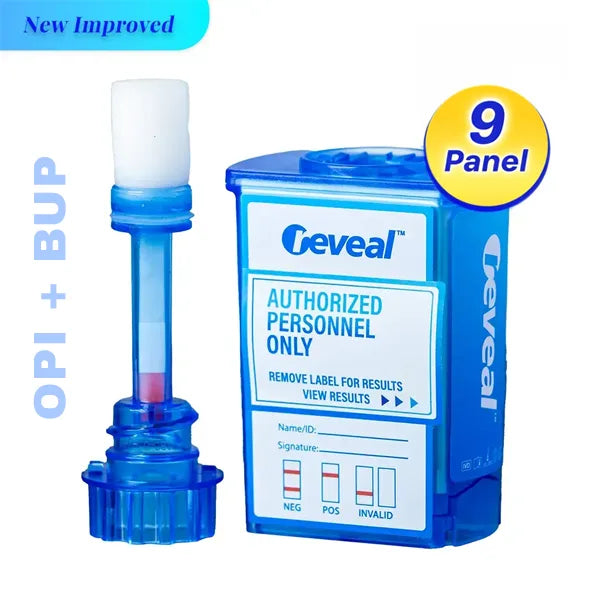
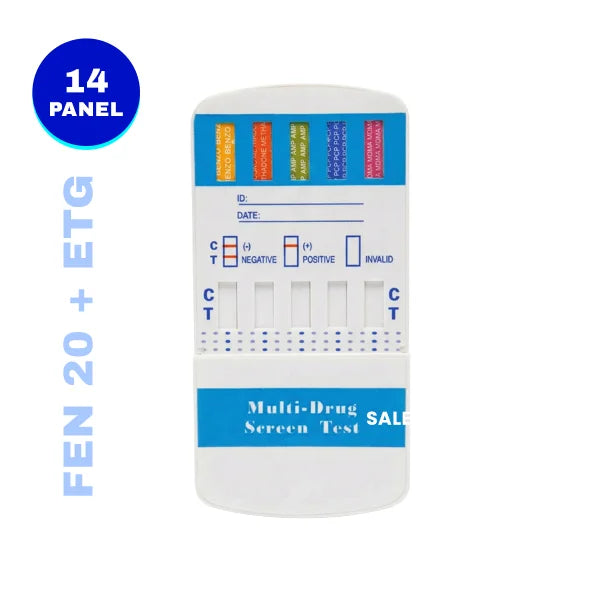
Workplace and regulated drug testing programs do not test for every substance a person might take. They test for a defined, named list of drugs and drug classes. For federal workplace and DOT regulated testing, that list is set out in the drug testing regulation at 49 CFR Part 40, Subpart F. The drugs a laboratory tests a specimen for are specified in the regulation's definitions and testing provisions, and the standard federal panel covers marijuana metabolites, cocaine metabolites, opioids, amphetamines, and phencyclidine, with cutoff concentrations for both the initial screen and confirmatory test set out in the same part. Employer panels built on the non regulated, standard commercial five panel or expanded panels add drug classes such as barbiturates, benzodiazepines, methadone, or propoxyphene, but none of these published federal cutoff and analyte lists include CGRP receptor antagonists. Ubrogepant is simply not an analyte any of these immunoassay strips, cups, or cards are manufactured to detect.
| Feature | Ubrelvy (ubrogepant) | Butalbital combination products (for example Fioricet style tablets) |
|---|---|---|
| Drug class | CGRP receptor antagonist (gepant) | Barbiturate combined with acetaminophen and caffeine |
| DEA schedule | None (not controlled) | Schedule III in many butalbital combination formulations |
| Appears on a standard barbiturate (BAR) panel | No credible evidence of cross reactivity | Yes, butalbital is a barbiturate and is intended to trigger the BAR strip |
| Confirmation method if flagged | Not applicable to standard panels; GC/MS or LC/MS available for specific clinical questions | GC/MS or LC/MS confirmation of the initial immunoassay screen |
| MRO review needed if positive on an unrelated panel | Reviewed like any other reported prescription | Yes, with prescription verification |
Screening Immunoassay Versus Confirmation Testing
It helps to separate two different steps in laboratory based testing. The first step is a screening immunoassay, the kind of rapid cup, dip card, or cartridge test used at the point of collection or in a lab's initial screen. Immunoassays work by reacting antibodies against a target drug or drug class; a result only shows a presumptive positive on the panel it is built for. The second step, used when a screen is non negative or when a specific analyte needs confirmation, is chromatographic confirmation using gas chromatography mass spectrometry (GC/MS) or liquid chromatography tandem mass spectrometry (LC/MS). Confirmation testing identifies and quantifies a specific compound rather than reacting to a class of similar molecules. Because no standard immunoassay panel is manufactured against CGRP antagonists, there is no screening strip for ubrogepant to cross react with in the first place, and there is accordingly no routine clinical or workplace reason to run a GC/MS confirmation for it. The federal cutoff concentration tables at 49 CFR 40.87 that define the screen and confirm thresholds for the drugs that are tested cover an entirely different set of analytes.
Why Butalbital Combination Migraine Products Are Different
Employers and testers sometimes lump all migraine medications together, but older combination tablets that contain butalbital are a materially different case from Ubrelvy. Butalbital is itself a barbiturate, and barbiturate combination products are discussed in detail in a separate post on whether Fioricet shows up on a drug test. Because butalbital is the active barbiturate component, a butalbital combination tablet is expected to trigger a standard BAR immunoassay strip, and a prescription for it should be disclosed and documented the same way any other legitimately prescribed controlled substance is documented. Ubrelvy does not share that chemistry and is not expected to produce the same result.
No Credible Cross Reactivity Evidence
Immunoassay antibodies are sometimes reactive to molecules that structurally resemble their target drug, which is how some over the counter medications and foods occasionally produce a false positive on an unrelated panel. For ubrogepant, there is no published cross reactivity data showing an interaction with any standard opiate, amphetamine, PCP, THC, barbiturate, or benzodiazepine immunoassay. Employers, collectors, and employees should treat the absence of evidence as exactly that, an absence of evidence, rather than assume a theoretical risk that has not been documented. If a question like this arises for a specific test kit, the responsible step is to ask the testing laboratory or the test manufacturer which analytes and cross reactants that specific device is validated against, rather than guess.
What Happens If a Prescription Medication Is Flagged
Any time a DOT regulated or comparable workplace drug test comes back non negative, the specimen result goes to a medical review officer (MRO) before it is reported to the employer as positive. The MRO review process, including the MRO's duty to contact the donor and consider legitimate medical explanations such as a current prescription, is set out in 49 CFR Part 40, Subpart G. An employee who is taking Ubrelvy, a butalbital combination product, or any other prescription medication should keep documentation of the prescription and be prepared to provide it to the MRO if asked. For a non regulated workplace program that does not use a credentialed MRO, employers should still have a documented, consistent process for reviewing a non negative result against prescription information before any adverse decision, and should generally consult legal counsel on how that process intersects with disability and medical privacy obligations.
Employer and Program Considerations
Because Ubrelvy is not controlled and not an analyte on any standard panel, there is ordinarily nothing for an employer to do differently when an employee discloses that they take it. It will not appear on a five panel, ten panel, expanded opioid panel, or oral fluid panel result. The practical compliance point for employers is making sure collection staff and reviewers understand the difference between a drug class, like barbiturates, and a specific brand name medication, like Ubrelvy, so that legitimate migraine treatment is never confused with a reportable analyte. Programs that want oral fluid or urine cup collection devices built around the federally defined panels can review current options through American Screening Corporation's drug test cup collection.
Frequently asked questions
Does Ubrelvy show up on a 5 panel or 10 panel drug test?
No. Ubrogepant is not an analyte included in the standard 5 panel, 10 panel, or expanded opioid panel immunoassay tests, and there is no published cross reactivity data suggesting it reacts with those strips.
Is ubrogepant a controlled substance?
No. The current official labeling for Ubrelvy lists its DEA schedule as none, meaning it is not scheduled under the Controlled Substances Act.
Will Ubrelvy cause a false positive for opioids or barbiturates?
There is no credible published evidence of cross reactivity between ubrogepant and standard opioid or barbiturate immunoassay panels. If a result is unexpected, the correct next step is MRO review and, if needed, confirmation testing of the specific result rather than assuming any one medication is the cause.
How is Ubrelvy different from Fioricet for drug testing purposes?
Fioricet style tablets contain butalbital, which is itself a barbiturate and is expected to trigger a standard BAR panel. Ubrelvy contains ubrogepant, a CGRP receptor antagonist that is not a barbiturate and is not controlled, so it is not expected to produce the same result.
What should an employee do if they are prescribed Ubrelvy and have to take a drug test?
Keep current prescription documentation on hand. Because Ubrelvy is not on standard panels, it should not affect the result, but any legitimately prescribed medication should be disclosed to the medical review officer if a specimen comes back non negative for any reason.
Does a positive drug test get reported to the employer automatically?
Under DOT regulated testing, no. A non negative laboratory result goes to a medical review officer first for review, including consideration of legitimate medical explanations, before any result is reported to the employer.
This article is general information for employers and employees about drug test panel composition and is not legal or medical advice. Testing programs and prescription review should be set up with qualified counsel and a credentialed medical review officer.