Auvelity is the brand name for a combination tablet containing dextromethorphan hydrobromide and bupropion hydrochloride, approved for major depressive disorder in adults. People starting it often ask a fair question before a pre employment or workplace screen: will it show up, and could it cause a result that looks like something it is not. The honest answer has two parts. Neither active ingredient is a controlled substance and neither is a target analyte on a standard panel, but one of the two ingredients, bupropion, has a documented and labeled history of triggering a non negative amphetamine immunoassay result. This post walks through what Auvelity actually is, what standard panels are built to detect, what the manufacturer's own official labeling says about laboratory test interference, what the more limited published record says about dextromethorphan and other screens, and how confirmation testing and Medical Review Officer review sort all of it out.
What Auvelity is and how it is classified
Auvelity combines dextromethorphan hydrobromide, an NMDA receptor antagonist best known as the active ingredient in many cough suppressants, with bupropion hydrochloride, an antidepressant also sold alone under other brand names. The Food and Drug Administration's own approval record for application number 215430, available through Drugs@FDA, lists the product as an extended release tablet with no DEA schedule assigned. The current prescribing information, filed with the National Library of Medicine and published on DailyMed, confirms the same thing. Neither dextromethorphan nor bupropion appears on the federal controlled substance schedules. Auvelity is a prescription medication, not a controlled substance, and that is the starting point for understanding how it interacts with drug testing.
Screening immunoassay versus confirmation testing
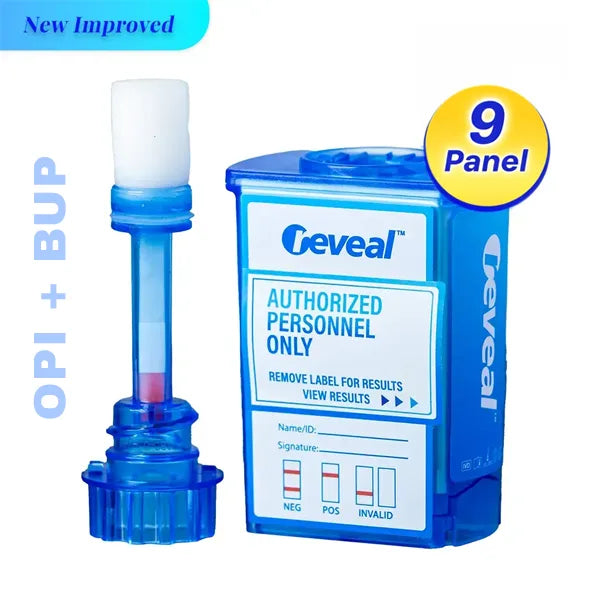
A cup or dip card result is a presumptive screen, not a final laboratory finding. The immunoassay antibodies inside these devices are built to bind to a drug class based on chemical shape, not to identify an exact molecule. That design is fast and sensitive, which is also why it can occasionally bind to a compound that resembles the target class closely enough to trigger a non negative result, even when the actual target drug was never used. When a screen comes back non negative, the correct next step, required for federally regulated testing and standard practice for responsible non regulated programs, is confirmation by gas chromatography mass spectrometry (GC/MS) or liquid chromatography tandem mass spectrometry (LC/MS/MS). Confirmation identifies the specific molecule present rather than relying on antibody cross reactivity, and the federal rules governing that two step process are set out in 49 CFR Part 40.
Bupropion and the amphetamine screen: a labeled interaction
This is the part of Auvelity's testing profile that is actually documented by the manufacturer and the FDA, not inferred from unrelated case reports. Auvelity's own prescribing information, under the drug and laboratory test interactions section on DailyMed, states plainly that false positive urine immunoassay screening test results for amphetamines have been reported in patients taking bupropion, that this is due to a lack of specificity in some screening tests, and that the false result can appear even after bupropion has been discontinued. The same labeling states that confirmatory testing such as GC/MS will distinguish bupropion from amphetamines. Because bupropion is one of Auvelity's two active ingredients, anyone taking it should expect that a standard amphetamine immunoassay could return a non negative result, and that this is a known, labeled, and resolvable interaction rather than a sign of anything else.
Auvelity's two active ingredients compared on drug testing
| Active ingredient | Panel class with a reported interaction | Addressed in Auvelity's FDA label | How it is resolved |
|---|---|---|---|
| Bupropion hydrochloride | Amphetamine and methamphetamine immunoassay | Yes, drug and laboratory test interactions section | GC/MS or LC/MS confirmation, MRO review |
| Dextromethorphan hydrobromide | PCP immunoassay, reported in outside clinical literature at high recreational doses; opiate screen interference reported less consistently | No, not mentioned in Auvelity's current labeling | GC/MS or LC/MS confirmation, laboratory consult, MRO review |
Dextromethorphan and the PCP or opiate screens: what the record actually shows
Separate from Auvelity's own labeling, dextromethorphan itself has a history of being described, in published clinical and toxicology case literature outside the Auvelity label, as a cause of false positive PCP immunoassay results. That reporting is almost always tied to large, supratherapeutic doses of dextromethorphan, the kind seen with recreational misuse of over the counter cough and cold products, not the lower, divided doses used in an approved Auvelity regimen. Auvelity's current current prescribing information does not include a PCP or opiate interaction warning anywhere in its drug and laboratory test interactions section, only the bupropion and amphetamine interaction described above. A separate post on our site, covering dextromethorphan and the PCP screen in more depth, walks through that outside literature directly. The fair summary for Auvelity specifically is that the evidence tying its prescribed dosing to a PCP or opiate false positive is limited, and nobody should assume it will happen. Anyone screening a specimen from a patient on Auvelity who gets an unexpected PCP or opiate result should still route it through confirmation and the MRO rather than treating it as expected or dismissing it outright. Our separate post on Wellbutrin and the amphetamine screen covers the bupropion side of this same interaction in its single ingredient form.
What standard panels are actually built to detect
Neither dextromethorphan nor bupropion is a target analyte on any standard workplace panel. The federal mandatory guidelines that define the drug classes a federally regulated test must cover, and the cutoff concentrations used, are published at 49 CFR 40.87, which lists marijuana metabolites, cocaine metabolite, amphetamines and methamphetamine, opioids, and phencyclidine as the analyte groups. Antidepressants and cough suppressant ingredients as drug classes are not among them. A standard immunoassay panel is not looking for Auvelity, or for either of its ingredients, on purpose. The amphetamine cross reactivity described above happens because bupropion's metabolites can bind the amphetamine antibody closely enough to trigger a non negative flag, not because the panel was designed to catch bupropion itself. SAMHSA maintains general background on certified laboratories and drug free workplace program design on its workplace resource page, which is a useful starting point for employers building or reviewing a written testing policy.
MRO review and prescription documentation
For federally regulated testing, and for most non regulated employment programs that follow the same model, a non negative screen does not become a reportable positive result until a Medical Review Officer reviews it. The MRO is a licensed physician trained to interpret laboratory data and to contact the tested individual confidentially about any legitimate medical explanation, prescription included. That verification process, along with the documentation an MRO is allowed to request and the timelines involved, is set out in 49 CFR Part 40. Someone taking Auvelity who is contacted by an MRO about an amphetamine, PCP, or opiate screening result should be ready to provide current prescription information and pharmacy records on request. That disclosure belongs with the MRO during verification, not with the collector at the specimen collection site. This article does not offer dosing or treatment guidance, and anyone with questions about their prescription should direct them to their own prescribing clinician.
What this means in practice
If a routine amphetamine immunoassay flags a non negative result for someone taking Auvelity, that is consistent with the known bupropion interaction described in the drug's own labeling, and GC/MS or LC/MS confirmation should resolve it by showing that no actual amphetamine or methamphetamine is present. If a PCP or opiate screen flags unexpectedly, the same confirmation and MRO process applies, even though the published support for a dextromethorphan link at approved Auvelity dosing is thinner than the bupropion and amphetamine interaction. In neither case should a laboratory, an employer, or an MRO treat the initial screen as a final answer. Employers that want testing programs built around confirmation capable panel configurations can review our drug test cup collection when updating a written policy.
Frequently asked questions
Does Auvelity show up on a standard drug test panel?
Neither dextromethorphan nor bupropion, the two active ingredients in Auvelity, is a target analyte on a standard federal five panel or an expanded workplace immunoassay screen, and Auvelity is not a DEA scheduled controlled substance. Bupropion does have a documented cross reactivity history with the amphetamine immunoassay, which confirmation testing resolves.
Can Auvelity cause a false positive amphetamine result?
Yes, through its bupropion component. Auvelity's official labeling, published on DailyMed, states that false positive urine immunoassay results for amphetamines have been reported in patients taking bupropion and that GC/MS confirmation distinguishes bupropion from amphetamines.
Can Auvelity cause a false positive PCP result?
Dextromethorphan has been described in clinical and toxicology case literature outside Auvelity's own labeling as a cause of false positive PCP immunoassay results, mainly after large recreational doses of cough and cold products. That interaction is not addressed in Auvelity's current official label, so the evidence specific to Auvelity's prescribed dosing is limited.
Is Auvelity a controlled substance?
No. Neither dextromethorphan nor bupropion is scheduled under the Controlled Substances Act, and Auvelity's FDA approval record and current labeling do not assign it a DEA schedule.
What should someone taking Auvelity do before a workplace drug test?
Be ready to provide prescription and pharmacy documentation if a Medical Review Officer contacts them confidentially about a result. This is general information, not medical advice, and it does not involve any dosing guidance.
What should an employer or MRO do with a non negative result tied to Auvelity?
Follow confirmation testing and MRO verification exactly as set out in 49 CFR Part 40, request supporting prescription documentation, and avoid treating an unconfirmed immunoassay screen as a final result.
This article is general information about drug testing science and procedure, not medical or legal advice. Anyone with questions about a specific medication or test result should talk to a licensed physician, their Medical Review Officer, or qualified legal counsel.