
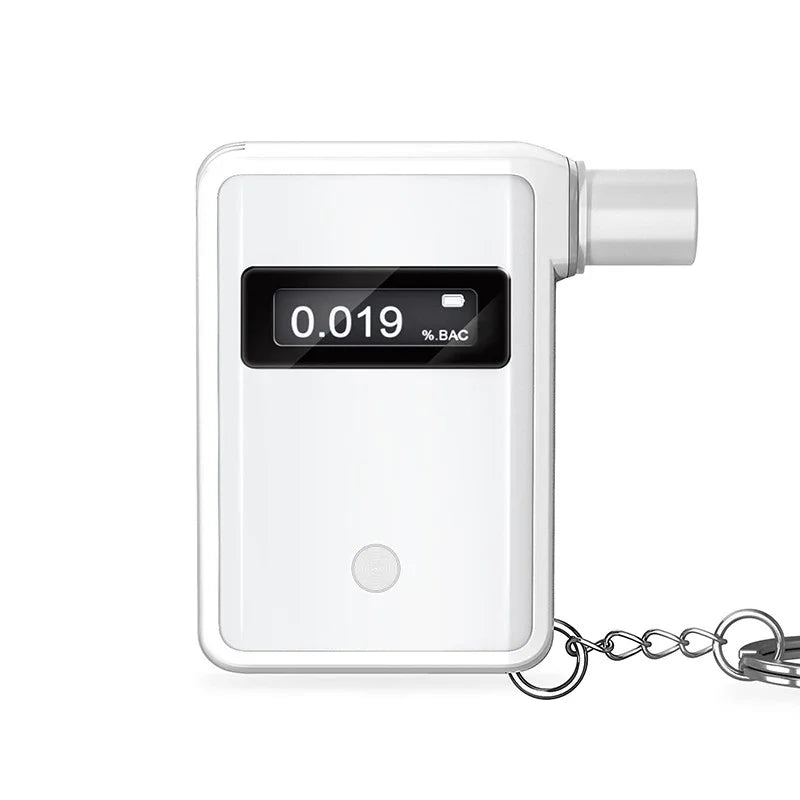
Quick answer: A breathalyzer chart converts a breath alcohol reading into blood alcohol concentration (BAC) in g/dL. In the United States, 0.08 g/dL is the legal driving limit for most drivers (Utah: 0.05), and 0.02 g/dL is the DOT action level for safety-sensitive employees. Breath results are screening data unless taken on an evidential device.
- 0.02 g/dL: DOT action level; 0.04 g/dL or higher is a DOT violation level (49 CFR Part 40, as of 2026).
- 0.08 g/dL: per se limit for drivers 21 and over in every state except Utah (0.05) (NHTSA, Drunk Driving).
- A screening device result is preliminary; confirm with an evidential breath test or laboratory testing.
What does a breathalyzer chart show?
A breathalyzer chart lists BAC ranges in grams of alcohol per deciliter of blood (g/dL) next to the typical effects and the thresholds that trigger action. Breath devices measure alcohol in deep-lung air and report an estimated BAC.
Need drug tests for your clinic, program or workplace?
American Screening Corp has supplied FDA-cleared, CLIA-waived tests at wholesale pricing since 2004. Popular options:
Ordering 100+ tests? Request volume pricing.
For a buyer at a clinic, court, staffing firm or employer, the chart answers two questions: what number is a problem under our rule, and what do we do next. American Screening Corp (ASC) supplies wholesale testing supplies to those buyers.
Breathalyzer chart: BAC levels and what they mean
| BAC (g/dL) | Typical effects (NHTSA) | Threshold or typical action |
|---|---|---|
| 0.00 | No alcohol detected | Negative |
| 0.02 to 0.039 | Some loss of judgment, relaxation, decline in visual function | DOT: employee removed from safety-sensitive duty for at least 24 hours (49 CFR 382.505) |
| 0.04 to 0.07 | Reduced coordination and ability to track moving objects | DOT violation level at 0.04; commercial driver limit is 0.04 |
| 0.08 to 0.09 | Impaired concentration, control and speed perception | Legal driving limit (Utah is 0.05) |
| 0.10 to 0.14 | Clear deterioration of reaction time and control | Above every state driving limit |
| 0.15 and above | Major loss of balance, vomiting possible | Medical risk; consider medical evaluation |
What are the DOT breath alcohol cutoffs?
Under 49 CFR Part 40 (U.S. DOT), an initial screening result of 0.02 g/dL or higher must be followed by a confirmation test on an evidential breath testing device (EBT). The confirmation happens after a waiting period of at least 15 minutes, per the regulation.
A confirmed result of 0.02 to 0.039 g/dL means the employee cannot perform safety-sensitive functions for 24 hours. A confirmed result of 0.04 g/dL or higher is a violation requiring removal from duty and referral to a substance abuse professional. Devices used for DOT evidential testing must appear on the NHTSA Conforming Products List.
How long does alcohol stay detectable on a breath test?
The body typically eliminates alcohol at roughly 0.015 g/dL per hour, though the rate varies by person. A person at 0.08 g/dL would therefore take roughly five to six hours to reach 0.00.
Breath testing shows current alcohol, not past use. For longer windows, such as monitoring abstinence for probation or treatment, programs use EtG urine tests, which detect an alcohol metabolite for a longer period. Browse our drug test cups for urine-based options, and contact us to match a product to your protocol.
Screening vs. evidential breath testing: which one do you need?
Screening devices
Screening devices give a fast reading for reasonable-suspicion checks, treatment-center check-ins and site policy enforcement. A positive reading is preliminary and should be confirmed by an evidential breath test or laboratory testing.
Evidential devices
Evidential devices print results, record time and support the documented chain required for regulated testing and many legal proceedings. If the result may support discipline, a court report or a DOT action, use the device and procedure the rule requires.
Checklist: using a breathalyzer chart in your program
- Write your threshold in your policy in g/dL (for example, 0.02 for DOT-covered employees, or your own site rule).
- Confirm the device type matches the use (screening or evidential).
- Observe the person for at least 15 minutes before testing; no food, drink or smoking.
- Use a clean mouthpiece for every test.
- Calibrate and maintain devices on the manufacturer's schedule and keep logs.
- Record date, time, device ID, result and tester name.
- Treat any non-evidential positive as preliminary and confirm before action.
- Have counsel review your policy against state law.
Why breathalyzer readings can differ from blood tests
Breath devices estimate BAC from breath alcohol using a standard ratio. Individual physiology, recent mouth alcohol, temperature, and device calibration can shift the reading. That is why regulated programs require a second, evidential test and a waiting period.
If you also screen new hires, pair alcohol policy with pre-employment checks. Our sister division Reveal Background runs employment background checks.
Frequently asked questions
What BAC does a breathalyzer chart say is legally drunk?
0.08 g/dL for drivers 21 and over in every state except Utah, where it is 0.05 (NHTSA). Commercial drivers face 0.04 g/dL.
What BAC fails a DOT alcohol test?
A confirmed 0.02 g/dL or higher requires removal from safety-sensitive duty. At 0.04 g/dL or higher it is a violation under 49 CFR Part 40.
How long after drinking can a breathalyzer detect alcohol?
Breath tests detect alcohol while it is in the body, generally until about 0.00, at roughly 0.015 g/dL eliminated per hour. EtG urine tests extend the window.
Is a breathalyzer result proof of BAC?
Not by itself. A screening result is preliminary; confirm with an evidential breath test or laboratory testing before taking action.
Sources
- eCFR: 49 CFR Part 40, Procedures for Transportation Workplace Drug and Alcohol Testing Programs
- NHTSA: Drunk Driving
- U.S. DOT Office of Drug and Alcohol Policy and Compliance: Part 40
This article is general information, not legal or medical advice.


