Quick answer: A 14-panel urine drug test typically screens two more drug classes than a 12-panel test. Both are preliminary screens: each reports drug classes at set cutoffs in ng/mL, and positives require GC/MS or LC-MS/MS confirmation. Panel contents vary by kit, so American Screening Corp advises matching the package insert to your policy.
- No federal standard defines a 12-panel or 14-panel; the manufacturer's insert lists the exact drugs and cutoffs.
- The extra panels usually add prescription or less common drug classes, not new detection technology.
- Every positive is preliminary; confirm by GC/MS or LC-MS/MS laboratory testing before any action.
What is the difference between a 12-panel and a 14-panel drug test?
The difference is the number of drug classes on the cup or dip card. A 14-panel tests for two more classes than a 12-panel, and the two extra are chosen by the manufacturer.
Need drug tests for your clinic, program or workplace?
American Screening Corp has supplied FDA-cleared, CLIA-waived tests at wholesale pricing since 2004. Popular options:
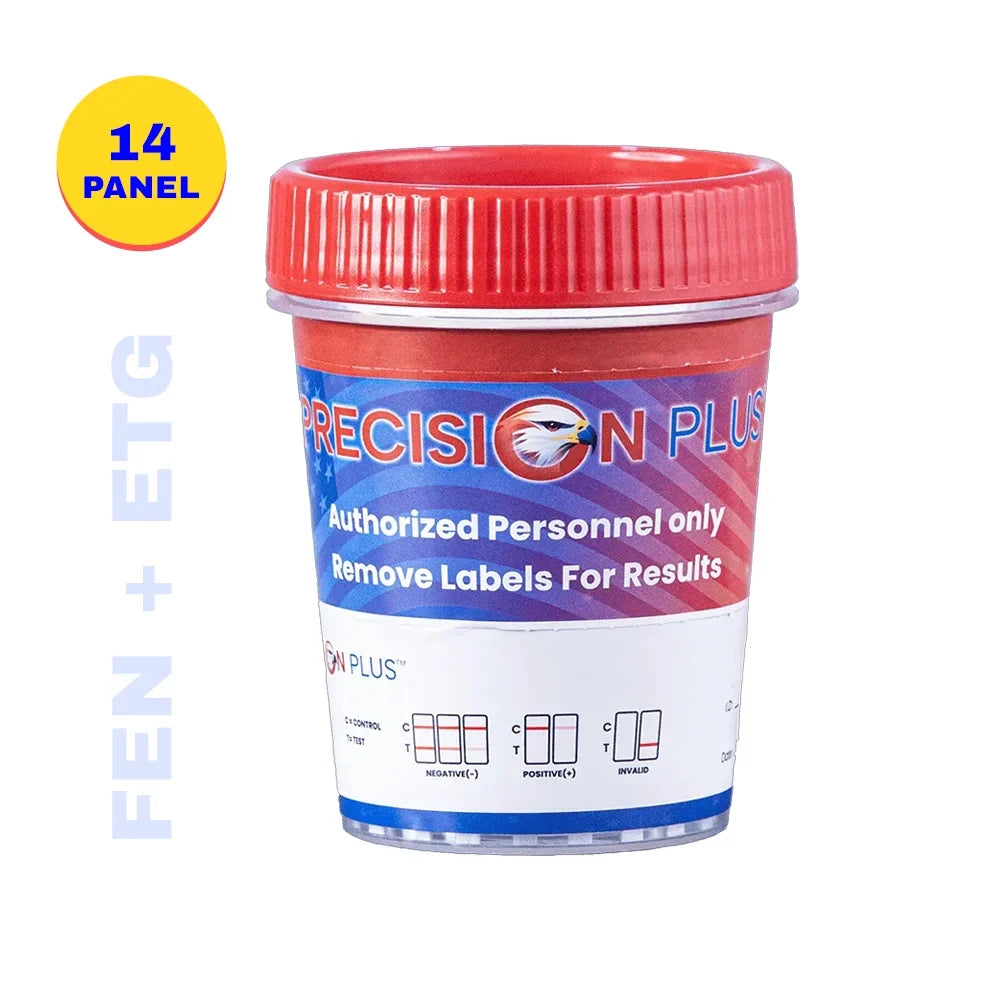
- 14-panel drug test cups and dip cards
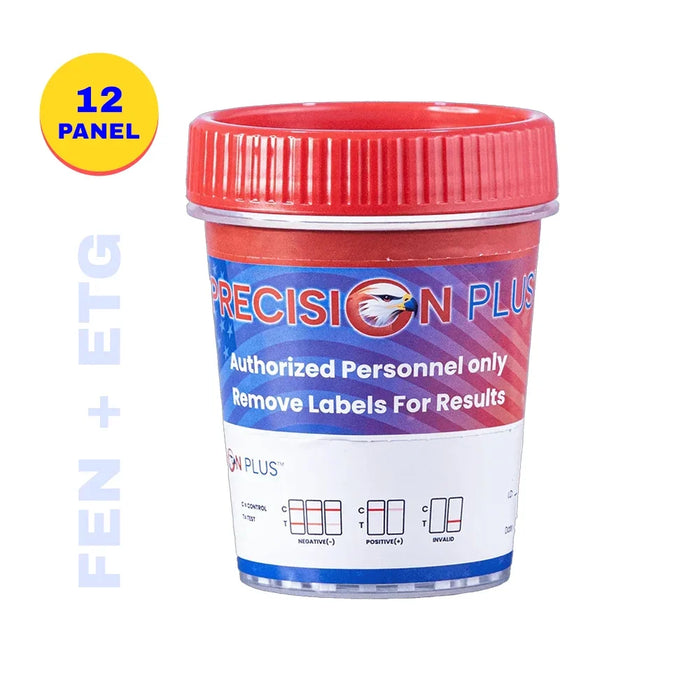
- 12-panel drug test cups
- all drug test cups (wholesale pricing)
Ordering 100+ tests? Request volume pricing.
The term "panel" is a marketing count, not a regulatory category. Federal programs define their own drug list, and commercial panels are built around it with additions. Always read the package insert for the drug list, calibrator, cutoff (ng/mL) and intended use.
Which drugs does each panel usually detect?
Most 12-panel kits start with the core classes and add common prescription drugs. A typical 12-panel layout covers amphetamines, methamphetamine, cocaine metabolite, marijuana metabolite (THC), opiates, oxycodone, PCP, benzodiazepines, barbiturates, methadone, MDMA and propoxyphene or buprenorphine. A 14-panel commonly adds classes such as tricyclic antidepressants, tramadol, buprenorphine or fentanyl. Your kit may differ.
Federal initial test cutoffs for reference
The HHS Mandatory Guidelines for urine set initial test cutoffs for the federal core drugs, as of 2026. These include marijuana metabolite at 50 ng/mL, cocaine metabolite at 150 ng/mL, amphetamines at 500 ng/mL, PCP at 25 ng/mL and oxycodone/oxymorphone at 100 ng/mL. Panels beyond the federal list use manufacturer cutoffs, often 300 ng/mL for benzodiazepines, barbiturates and methadone. Confirm each on the insert.
12-panel vs 14-panel comparison
| Factor | 12-panel | 14-panel |
|---|---|---|
| Drug classes screened | 12 | 14 (two more) |
| Typical use | Employers, clinics, probation | Treatment centers, pain management, broader monitoring |
| Cutoffs | Set per drug, in ng/mL, on the insert | Set per drug, in ng/mL, on the insert |
| Positive result | Preliminary; confirm by GC/MS or LC-MS/MS | Preliminary; confirm by GC/MS or LC-MS/MS |
| Fits DOT testing | No; DOT uses its own 5-panel under 49 CFR Part 40 | No; same rule |
How long can each drug be detected?
Detection windows depend on the drug, dose, frequency of use and individual metabolism, not on panel size. In urine, many drugs fall in roughly a 1 to 4 day window after use. Marijuana metabolite can last longer in frequent users, and some benzodiazepines can be detected for a week or more. A 14-panel does not extend the window for any drug already on a 12-panel.
Which panel should your organization choose?
Choose by policy and risk, not by the larger number. A test that screens drugs your policy never acts on adds cost and creates results you must handle.
- Employers and staffing firms: match the panel to the written drug-free workplace policy and applicable state law.
- Treatment centers and clinics: choose a panel that includes the drugs your patients are prescribed or at risk of misusing, such as buprenorphine or fentanyl where listed.
- Courts and probation: use the panel named in the court order or program rules.
- DOT-regulated employees: use the 49 CFR Part 40 process with a certified lab, not an instant panel.
Buyer checklist before ordering
- Read the insert for the full drug list and each ng/mL cutoff.
- Check the FDA 510(k) and CLIA-waived status on the specific product record.
- Confirm the policy names every drug the panel will screen.
- Arrange GC/MS or LC-MS/MS confirmation for every positive.
- Document chain of custody and who reads and records results.
- Train staff to read the result window at the time stated on the insert.
How do you read the result?
- Check the temperature strip on the cup within the time on the insert.
- Wait the stated read time and read each drug line.
- A visible line in a drug window means negative for that drug at its cutoff.
- No line means a non-negative, preliminary result for that drug.
- Confirm every non-negative by laboratory testing; the control line must appear or the test is invalid.
Where to buy 12-panel and 14-panel tests
American Screening Corp supplies wholesale drug test cups and drug test dip cards in multiple panel configurations from our Shreveport, Louisiana facility, with same-day shipping nationwide. Check each product page for its listed drugs and regulatory status. For bulk or private label quotes, contact our team. Pairing screening with pre-employment checks? Our sister division is Reveal Background.
Frequently asked questions
Is a 14-panel drug test better than a 12-panel?
Not automatically. It screens two more drug classes, which helps only if your policy or patients require them. Accuracy per drug depends on the cutoff and confirmation, not the panel count.
What drugs does a 14-panel test detect that a 12-panel does not?
It varies by manufacturer. Common additions include tricyclic antidepressants, tramadol, buprenorphine or fentanyl. Read the insert for the exact list.
Is a 12-panel or 14-panel test acceptable for DOT?
No. DOT testing follows 49 CFR Part 40 with a certified laboratory and a specific drug list. Instant panels are not a substitute.
Do positive results need confirmation?
Yes. Every positive screen is preliminary. Confirm by GC/MS or LC-MS/MS laboratory testing before taking any action.
Sources
- SAMHSA: Workplace Drug Testing and HHS Mandatory Guidelines
- eCFR: 49 CFR Part 40, Procedures for Transportation Workplace Drug and Alcohol Testing Programs
- FDA: Drugs of Abuse Tests
This article is general information, not legal or medical advice.