Quick answer: Daily cannabis users can test positive on a urine screen for about 30 days or longer after last use, and no date guarantees a negative result. Standard screens detect the THC metabolite THC-COOH at a 50 ng/mL cutoff. Confirmation is 15 ng/mL by GC/MS. American Screening Corp supplies FDA-cleared, CLIA-waived urine tests.
- Chronic daily use commonly stays detectable for 30 days or more; occasional use is often a few days.
- The federal initial cutoff for THC-COOH in urine is 50 ng/mL; the confirmatory cutoff is 15 ng/mL.
- Every positive screen is preliminary; confirm by GC/MS or LC-MS/MS laboratory testing.
How long does THC stay in urine after daily use?
For someone who uses cannabis every day, THC-COOH can remain above the 50 ng/mL screening cutoff for roughly 30 days or longer after the last use. Published ranges vary widely by person, so a program should never promise a single clearance date.
Need drug tests for your clinic, program or workplace?
American Screening Corp has supplied FDA-cleared, CLIA-waived tests at wholesale pricing since 2004. Popular options:
Ordering 100+ tests? Request volume pricing.
THC is fat-soluble. With daily use it accumulates in body fat and is released slowly, which extends the time the metabolite appears in urine. The National Institute on Drug Abuse (NIDA) describes how cannabis metabolites can be detected for longer in heavy users than in occasional users.
What does a urine test actually detect?
A urine cannabis screen detects THC-COOH, the main inactive metabolite of THC. It does not measure impairment, and it cannot show when or how much a person used.
The HHS Mandatory Guidelines for Federal Workplace Drug Testing Programs (urine) set the marijuana metabolite initial test cutoff at 50 ng/mL and the confirmatory test cutoff at 15 ng/mL. Many non-regulated programs use the same 50 ng/mL cutoff on 5-panel to 12-panel cups and dip cards.
Detection windows by use pattern
| Use pattern | Typical detection window | Program takeaway |
|---|---|---|
| Single use | 1 to 3 days | Short window; timing of collection matters |
| Occasional (a few times per week) | 3 to 7 days, sometimes longer | Repeat screens may differ |
| Daily use | About 30 days or more | A positive can persist for weeks |
| Heavy, long-term daily use | Can exceed 30 days | Use serial testing and lab confirmation |
Why two people on the same schedule get different results
Several factors change how long the metabolite stays above the cutoff. Programs should know them so they interpret results fairly.
- Frequency and amount of use over the prior weeks.
- Body fat and metabolism.
- Potency and type of product used.
- Urine concentration at collection, checked through creatinine and specimen validity.
- The cutoff of the test used: 50 ng/mL versus a lower cutoff such as 20 ng/mL.
How should a program handle a positive screen?
A positive result on a cup or dip card is a preliminary result. Confirm by GC/MS or LC-MS/MS laboratory testing before any decision, and follow your written policy and applicable state law.
Because daily users can stay positive for weeks, a single positive does not show recent use or impairment. Courts, probation offices and treatment centers often use repeat testing at set intervals to see whether the trend is falling, then send disputed or decision-grade results to a lab.
Checklist for reading and recording a urine screen
- Verify the test device is within expiration and holds FDA clearance and CLIA-waived status for your use.
- Check specimen temperature and record collection time.
- Read the result within the window stated in the package insert.
- Treat any visible line in the test region as negative for that drug; no line is a non-negative, preliminary result.
- Document the donor, collector, date and lot number.
- Send every non-negative specimen for GC/MS or LC-MS/MS confirmation.
- Apply your written policy consistently to every donor.
Which test format fits your program?
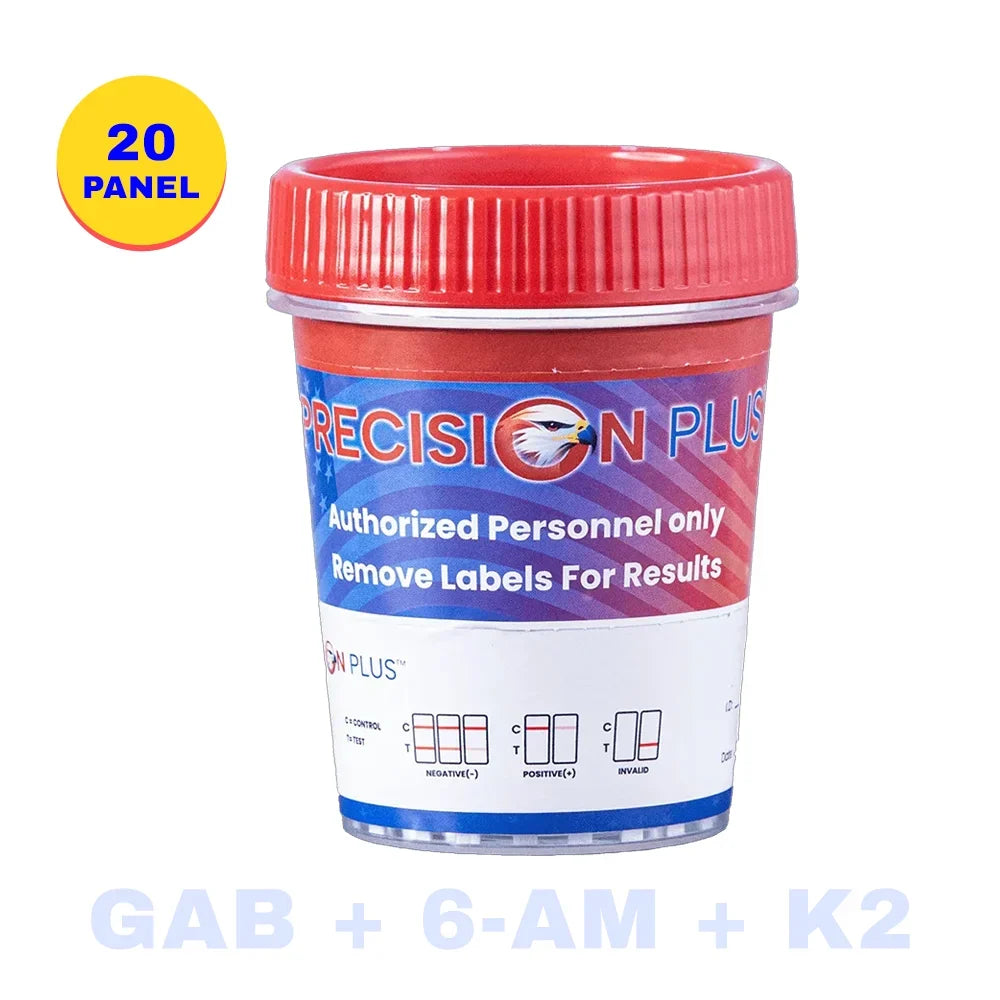
For on-site screening in clinics, treatment centers and supervision offices, an integrated urine drug test cup combines collection, temperature strip and multiple drug panels in one device. Programs that want a lower per-test cost for high volumes often choose drug test dip cards, which use the same urine screening principle.
Oral fluid tests have a shorter detection window, generally hours to a couple of days for recent use, so they answer a different question than urine. Choose the specimen to match the policy goal.
Employers that also verify candidates can pair screening with employment checks through our sister division, Reveal Background. For bulk quantities, private label or help matching a panel to your policy, reach our team through the ASC contact page.
DOT and federally regulated testing
DOT-regulated employers must follow 49 CFR Part 40, which requires a split-specimen collection and testing at a HHS-certified laboratory with a Medical Review Officer verifying results. On-site cups are not a substitute for that process.
Frequently asked questions
If I smoke every day, how long until a urine test is negative?
Typically about 30 days or longer after the last use, but it varies by person. No date guarantees a negative result at the 50 ng/mL cutoff.
What cutoff does a standard urine THC test use?
The HHS Mandatory Guidelines set 50 ng/mL for the initial THC-COOH screen and 15 ng/mL for GC/MS confirmation.
Does a positive urine test prove impairment?
No. It detects a metabolite that can persist for weeks and shows past exposure, not current impairment. Confirm by GC/MS or LC-MS/MS laboratory testing.
Can a program rely on an on-site cup alone?
An on-site cup gives a preliminary result. Confirm every positive by GC/MS or LC-MS/MS laboratory testing before taking action.
Sources
- SAMHSA: Drug Testing Resources, Mandatory Guidelines for Federal Workplace Drug Testing Programs
- U.S. DOT: 49 CFR Part 40, Procedures for Transportation Workplace Drug and Alcohol Testing Programs
- NIDA: Cannabis (Marijuana) Research Topic
This article is general information, not legal or medical advice.