
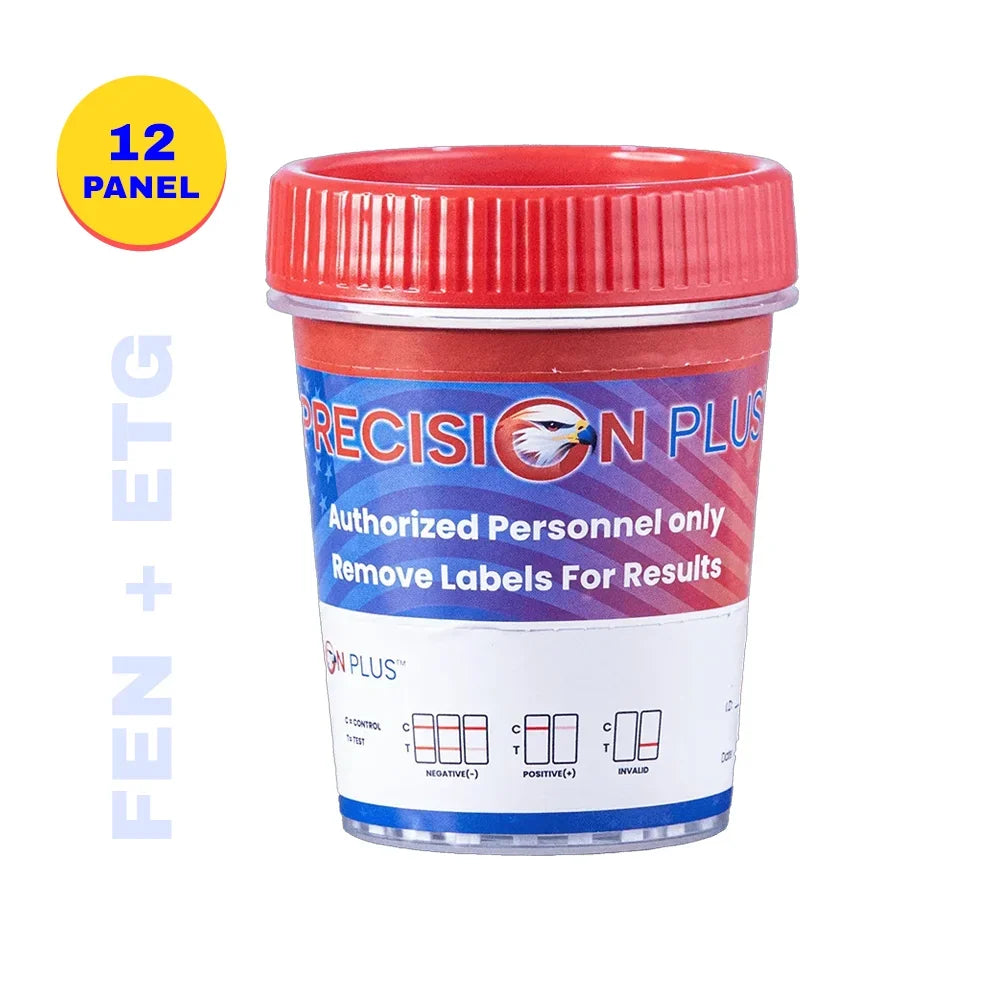
Quick answer: A DOT urine collection kit includes a single-use collection container of at least 55 mL with a temperature strip, two specimen bottles for split collection, tamper-evident seals, a leak-resistant bag with absorbent material, and the Federal CCF. Temperature must read 32-38°C (90-100°F). Specimens are tested at an HHS-certified lab under 49 CFR Part 40.
- Bottle A must contain at least 30 mL and Bottle B at least 15 mL for a valid split specimen under 49 CFR Part 40.71, as of November 2026.
- The DOT 5-panel laboratory test detects marijuana metabolites at 50 ng/mL, cocaine metabolites at 150 ng/mL, amphetamines at 500 ng/mL, opioids at HHS cutoffs, and PCP at 25 ng/mL on the initial immunoassay.
- American Screening Corp supplies DOT-compliant collection kits and urine testing supplies to clinics, employers, courts, and staffing firms nationwide.
What is included in a DOT collection kit?
A DOT collection kit is the single-use pack your collector uses to obtain a split urine specimen for an HHS-certified laboratory. It does not display a result at the chair and it is not an instant cup.
Need drug tests for your clinic, program or workplace?
American Screening Corp has supplied FDA-cleared, CLIA-waived tests at wholesale pricing since 2004. Popular options:
Ordering 100+ tests? Request volume pricing.
- Single-use collection container, at least 55 mL, with a temperature strip.
- Two leak-resistant specimen bottles (Bottle A and Bottle B) with caps.
- Tamper-evident seals, often attached to the Federal CCF.
- Leak-resistant specimen bag and absorbent pad.
- Outer shipping container.
- Federal Drug Testing Custody and Control Form, or laboratory access to an electronic CCF.
The 55 mL container capacity comes from HHS collection-material standards that 49 CFR Part 40.49 requires kits to meet, as of November 2026 (eCFR 49 CFR Part 40). That volume lets the donor provide at least 30 mL for Bottle A and 15 mL for Bottle B.
Read the temperature strip within four minutes. A valid reading is 32-38°C (90-100°F) under 49 CFR Part 40.65. After capping, the donor initials the seals, and both bottles go in the leak-resistant bag with the absorbent pad to the laboratory named on the CCF (49 CFR Part 40.51 and 40.73).
What the collection site must supply besides the kit
The box does not replace site controls in 49 CFR Part 40 Subpart D. You still need a bluing agent in the toilet, restricted water access, gloves, a collector trained under 49 CFR Part 40.33, and secure storage if the courier is late.
Clinics and probation contractors often ask whether leftover instant cups can serve as Bottle A and Bottle B. They cannot. Instant devices lack the split bottles, federal seals, and laboratory bag the rule requires.
DOT 5-panel cutoffs and detection windows
DOT urine testing is a laboratory 5-panel for safety-sensitive workers regulated by FMCSA, FAA, FRA, FTA, PHMSA, or the U.S. Coast Guard.
HHS Mandatory Guidelines initial immunoassay cutoffs, used with 49 CFR Part 40 as of November 2026 (SAMHSA, Drug Testing), are marijuana metabolite (THCA) 50 ng/mL; cocaine metabolite (benzoylecgonine) 150 ng/mL; amphetamines AMP/MAMP 500 ng/mL and MDMA/MDA 500 ng/mL; opioids codeine/morphine 2,000 ng/mL, hydrocodone/hydromorphone 300 ng/mL, oxycodone/oxymorphone 100 ng/mL, and 6-acetylmorphine 10 ng/mL; and PCP 25 ng/mL.
Confirmation uses GC/MS or LC-MS/MS at lower cutoffs for several drugs (THCA 15 ng/mL; benzoylecgonine 100 ng/mL; amphetamine and methamphetamine 250 ng/mL). Every positive screen is preliminary; confirm by GC/MS or LC-MS/MS laboratory testing.
Typical urine detection windows are about 1-3 days for cocaine, amphetamines, and many opioids, and 1-3 to 30 days for marijuana depending on use. Labs report cutoffs, not time since use.
DOT alcohol testing uses breath or saliva devices under 49 CFR Part 40, not this urine kit. EtG is not a DOT test. Official DOT urine results come from HHS-certified laboratories, not CLIA-waived instant devices.
DOT collection kit vs. instant cup vs. dip card
| Item | DOT lab collection kit | Instant urine cup | Dip card |
|---|---|---|---|
| Purpose | Regulated DOT laboratory test | Non-DOT preliminary screen | Non-DOT preliminary screen |
| Official DOT result | Yes | No | No |
| Federal CCF and split A/B bottles | Required | Not used | Not used |
| Result type | Lab immunoassay plus GC/MS or LC-MS/MS | Preliminary on-site | Preliminary on-site |
Non-DOT treatment, staffing, and court programs that need a same-shift preliminary result can use drug test cups. Confirm any positive screen by GC/MS or LC-MS/MS laboratory testing.
How a DOT urine collection works
- Verify identity, explain the steps, and complete Step 1 of the Federal CCF (49 CFR Part 40.61).
- Have the donor empty pockets and wash hands. Issue the sealed collection container from the kit (40.63).
- Donor voids in a controlled restroom unless a monitored or observed collection is authorized.
- Read the temperature strip within four minutes and accept 32-38°C / 90-100°F (40.65).
- Pour at least 30 mL into Bottle A and 15 mL into Bottle B. Cap, seal, and have the donor initial the seals (40.71).
- Complete the CCF, place both bottles and the laboratory copy in the leak-resistant bag with the absorbent pad, and ship to the HHS-certified laboratory (40.73).
If volume is under 45 mL, follow shy-bladder procedures in 49 CFR Part 40.193. Do not combine two voids in an unofficial cup.
Who should stock DOT collection kits
Occupational clinics, hospitals, treatment centers with collection contracts, laboratories, staffing firms that serve CDL accounts, and court or probation programs collecting under DOT agency rules should keep sealed kits on the shelf.
American Screening Corp in Shreveport, Louisiana, wholesales DOT-compliant collection kits, urine cups, dip cards, oral fluid tests, and related supplies and ships nationwide. To align a kit with your laboratory, contact American Screening Corp.
Buyer checklist
- Kit meets HHS collection-material specifications used under 49 CFR Part 40.49.
- 55 mL collection container with temperature strip; Bottle A 30 mL and Bottle B 15 mL.
- Federal CCF or eCCF access from your laboratory or TPA.
- Leak-resistant bag, absorbent pad, and shippable outer container.
- Destination laboratory is HHS-certified and has approved that kit.
- Instant cups stored separately for non-DOT work only; collectors trained to 49 CFR Part 40.33.
Reviewed by American Screening Corp product specialists. Last updated November 2026.
FAQ
Is a rapid drug test cup the same as a DOT collection kit?
No. A DOT urine test uses a split-specimen kit and an HHS-certified laboratory. Rapid cups cannot produce the official DOT result under 49 CFR Part 40.
How much urine is required for a DOT split specimen?
Pour at least 30 mL into Bottle A and 15 mL into Bottle B, about 45 mL total. The container holds at least 55 mL. Check temperature within four minutes.
What drugs does a DOT urine collection kit's specimen test for?
The DOT 5-panel detects marijuana metabolites, cocaine metabolites, amphetamines including MDMA, opioids at HHS cutoffs, and PCP. Initial cutoffs include THCA 50 ng/mL and cocaine 150 ng/mL.
Do we need the Federal CCF if our company has its own chain-of-custody form?
Yes. DOT collections must use the Federal Drug Testing Custody and Control Form under 49 CFR Part 40.45. A company form cannot replace it.
Sources
- 49 CFR Part 40 — Procedures for Transportation Workplace Drug and Alcohol Testing Programs
- SAMHSA — Drug Testing
- U.S. DOT Office of Drug and Alcohol Policy and Compliance
This page is general information for workplace collection programs, not medical or legal advice.