What BAR Means on a Drug Test
BAR on a drug test stands for barbiturates. A positive or reactive BAR result means the immunoassay screened at or above the device cutoff for barbiturate metabolites, and clinics, courts, staffing firms, and employers should obtain laboratory confirmation before any employment, treatment, or legal decision.
Procurement and compliance staff see BAR printed on multi-analyte cups and cards beside AMP, COC, THC, OPI, and BZO. It is a drug-class abbreviation, not a hiring “bar” by itself. Your panel mix, cutoff, chain of custody, and confirmation path determine whether that mark is useful or a source of disputes.
Barbiturates are central nervous system depressants. Drugs that can produce a BAR screen include phenobarbital, butalbital, secobarbital, pentobarbital, and amobarbital. Some remain in legitimate use as anticonvulsants or in combination analgesics; others are tightly controlled because of overdose and dependence risk. American Screening Corp (ASC) in Shreveport, Louisiana supplies wholesale urine cups, dip cards, oral fluid tests, DOT-compliant collection kits, breath-alcohol devices, and lab-confirmation workflows to clinics, hospitals, addiction-treatment centers, courts and probation, laboratories, staffing firms, and employers.
Why Facilities Still Order a Barbiturates Drug Test
Federal transportation testing under U.S. DOT procedures does not include barbiturates. The standard federal five-analyte workplace panel targets marijuana metabolites, cocaine, amphetamines, opioids, and phencyclidine. Private employers, hospitals, pain and addiction-treatment programs, probation departments, and occupational clinics often add BAR because sedation, diversion, and court conditions still appear in those populations.
Include BAR when your written policy, payer contract, state oversight, or client (for staffing firms) requires an expanded screen. Omit BAR on pure DOT collections so you do not mix non-regulated analytes into a regulated chain. Many 8-, 10-, and 12-analyte configurations used in non-DOT work include both BAR and benzodiazepines, a practical pairing when the question is CNS-depressant risk rather than the federal five drugs alone.
A barbiturates drug test is typically an immunoassay screen—commonly 300 ng/mL in urine—followed by GC-MS or LC-MS/MS confirmation on presumptive positives. Screening devices do not identify which barbiturate is present; confirmation does. That distinction matters for medical review of phenobarbital or butalbital prescriptions and for contested court or employment results.
Order drug test cups and kits online at https://www.americanscreeningcorp.com/collections/drug-testing-cups, or call 1-866-526-2873 for bulk and wholesale pricing.
BAR vs. the Federal 5-Panel and Expanded Menus
If a buyer orders a “standard 5-panel” expecting barbiturates, the order is wrong. Specify BAR (and BZO if needed) on the purchase and in the laboratory account setup. Confirmation laboratories must be aligned to the same class and cutoff so non-negative devices are not stranded without a matching send-out assay.
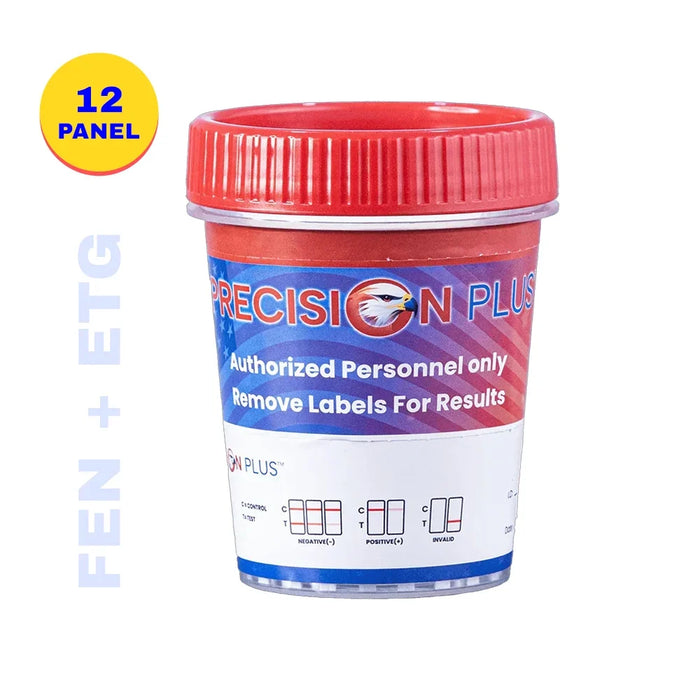
Use urine drug test dip cards when staff need a compact, multi-analyte screen at intake, pre-employment, or probation check-in. Use cups when you want temperature strips, a pour-off or split path, and fewer handling steps. Oral fluid tests support observed collections and recent-use questions. Barbiturate detection windows in oral fluid are generally shorter than in urine, so match the matrix to the written policy, not the other way around. Not every oral panel includes BAR—verify the insert before you issue kits to satellite sites.
Specimen and workflow comparison
| Option | Typical BAR use case | Relative detection window | Buyer notes |
|---|---|---|---|
| Urine cup (multi-panel) | Clinics, employers, and courts that need an on-site screen plus pour-off | Short-acting agents often about 1–4 days; phenobarbital frequently longer (up to about 2–3 weeks) | Confirm cutoff with your lab; use temperature and specimen-integrity checks |
| Urine dip card | High-volume intake, mobile collectors, staffing offices | Same urine pharmacology as cups | Train readers on control lines and timing; document lot numbers and expiration |
| Oral fluid | Observed collection, recent-use or post-incident non-DOT work | Shorter than urine for most barbiturates | Verify the device actually includes BAR; keep a confirmation path |
Windows are approximate and vary by dose, pH, renal function, and whether the agent is short- or long-acting. Do not publish a single “days in system” figure in employee or client handbooks without medical-review language.
How a Barbiturates Drug Test Runs On Site
Collectors verify identity and consent, complete chain-of-custody paperwork, and obtain the specimen under your protocol. For urine, they check temperature and obvious adulteration signs, then time the immunoassay read exactly as the insert requires. A valid control line must appear; devices without a control are invalid, not negative. A non-reactive BAR region is a negative screen for that class at that cutoff. A reactive BAR region is presumptive only.
Presumptive positives should be sealed, documented, and sent to a certified laboratory. Do not photocopy a cup face and treat it as a final employment or court result. Keep lot numbers, expiration dates, and collector IDs with the file so a later challenge can be answered. Separate DOT kits and custody forms from expanded non-DOT BAR panels so regulated tests remain within Part 40 procedures.
Operational Checklist for Adding BAR to Your Panel
- Write BAR into the non-DOT policy (or omit it for DOT-only work) and list the screen cutoff and confirmation method.
- Separate DOT collections from expanded workplace or clinical panels so regulated tests stay compliant.
- Match cup or card cutoff (commonly 300 ng/mL urine immunoassay) to the confirmation laboratory’s BAR assay.
- Define what happens on a non-negative: seal, chain of custody, courier, turnaround, and who pays for confirmation.
- Route confirmed positives through a qualified medical review process so valid phenobarbital or butalbital prescriptions are documented.
- Train collectors on timing, control lines, temperature, and adulteration checks; retain lot and expiration logs.
- Do not take adverse employment, clinical-discharge, or court action on an unconfirmed immunoassay.
- If HR also runs criminal or identity checks, keep drug-policy criteria consistent with background-screening rules.
ASC sells wholesale—not retail consumer kits—to the organizations listed above. Sister division Reveal Background runs employment background checks when human resources needs both streams. For regulated alcohol testing, pair drug panels with appropriate breath-alcohol devices and DOT-compliant collection kits rather than improvising a mixed, non-compliant process.
Reading Results, Prescriptions, and Lab Confirmation
Treat every BAR screen as presumptive. Immunoassays can cross-react; confirmation identifies the specific analyte and concentration. Butalbital (often in tension-headache combinations) and phenobarbital are the prescription explanations collectors hear most. Short-acting agents used non-medically may already be below cutoff if collection is delayed, which is why post-incident protocols should specify matrix and timing in advance.
Staffing firms and occupational clinics should keep a simple decision tree: negative screen, proceed under policy; non-negative, confirm; confirmed positive without a verified prescription, follow the written adverse-action or client-report process. Courts and treatment programs may use BAR as a compliance marker rather than a hiring filter. That changes consent language and retesting frequency but not the need for confirmation when a result is contested.
Do not assume a 10-panel from one manufacturer matches another. Analyte lists, cutoff values, and whether BAR is present at all vary by device. Read the package insert, CLIA-waived status, and intended-use statement before you issue inventory to satellite clinics or mobile collectors.
Sources
- SAMHSA Drug-Free Workplace Program
- U.S. DOT 49 CFR Part 40 drug and alcohol testing procedures
- DEA Barbiturates factsheet
FAQ
What does BAR mean on a drug test?
BAR means barbiturates. It flags a screen for that drug class, not a hiring “bar.” Confirm non-negative results with a certified laboratory before you act.
Are barbiturates included on a standard 5-panel drug test?
No. SAMHSA/DOT five-analyte panels do not include BAR. Order an expanded (often 8-, 10-, or 12-analyte) non-DOT panel if your policy requires barbiturates.
How long do barbiturates show on a urine drug test?
Short-acting barbiturates are often detectable for roughly one to four days; long-acting phenobarbital may be detectable for two to three weeks or longer, depending on dose and metabolism. Use confirmation and medical review, not handbook averages, for decisions.
Should employers act on a positive BAR immunoassay alone?
No. Use the screen for rapid triage only. Require GC-MS or LC-MS/MS confirmation and a medical review step so legitimate prescriptions are distinguished from non-medical use.
This article is general information, not legal or medical advice.
Order drug test cups and kits online at https://www.americanscreeningcorp.com/collections/drug-testing-cups, or call 1-866-526-2873 for bulk and wholesale pricing.