
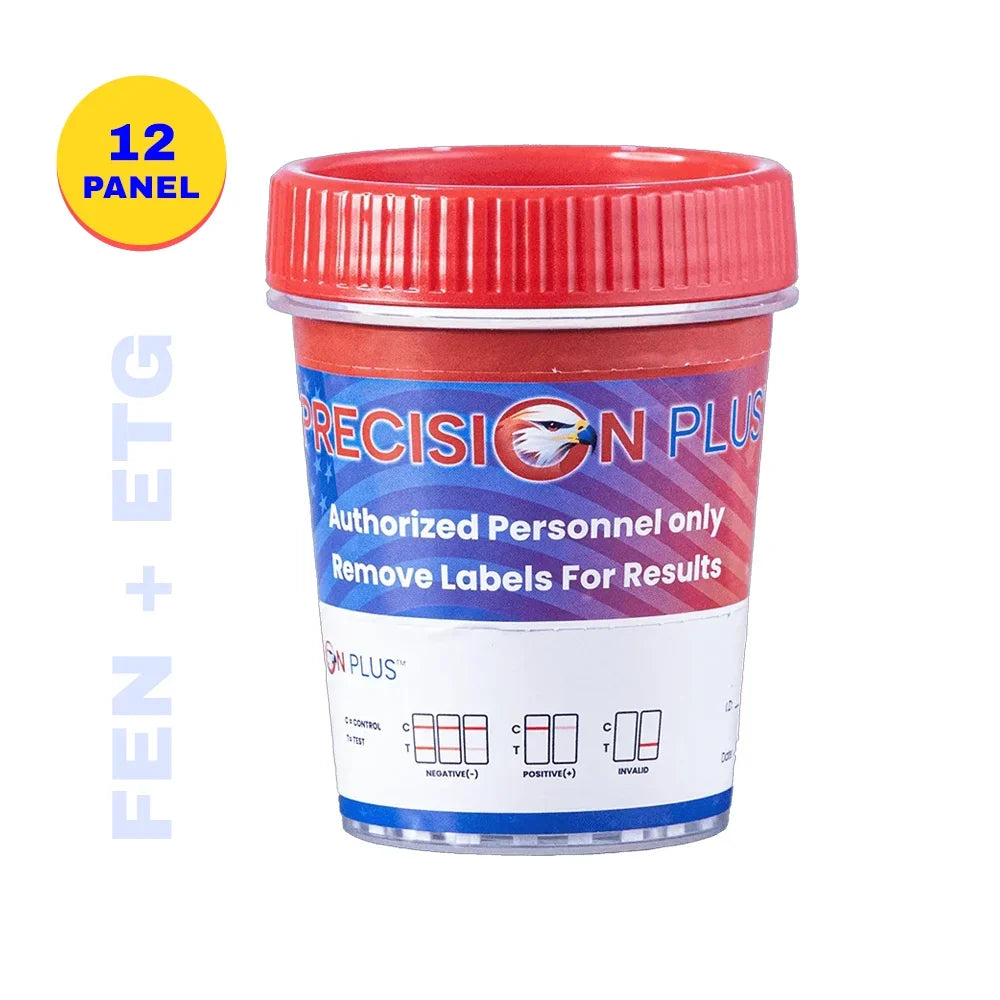
Quick answer: An AMP drug test screens urine for amphetamine at a 500 ng/mL initial cutoff under HHS Mandatory Guidelines (as of January 2017). Confirmation is 250 ng/mL by GC/MS or LC-MS/MS. Detection is typically 1–3 days. American Screening Corp sells FDA-cleared, CLIA-waived cups to clinics, courts, and employers; results are preliminary only.
- Federal urine programs use 500 ng/mL for the initial AMP immunoassay and 250 ng/mL for confirmation under HHS Mandatory Guidelines and 49 CFR § 40.87 (as of May 2023).
- Typical urine detection is 1–3 days; oral fluid is often under 48 hours. Windows vary with dose, frequency, and specimen.
- Every immunoassay positive is preliminary and must be confirmed by GC/MS or LC-MS/MS laboratory testing.
Reviewed by American Screening Corp product specialists. Last updated November 2026.
What does an AMP drug test detect?
AMP on a cup, dip card, or lab requisition means amphetamine. The screen is a qualitative immunoassay. It reports whether amphetamine is present at or above the labeled cutoff.
Need drug tests for your clinic, program or workplace?
American Screening Corp has supplied FDA-cleared, CLIA-waived tests at wholesale pricing since 2004. Popular options:
Ordering 100+ tests? Request volume pricing.
It does not report a concentration and does not identify a prescription versus an illicit source. Clinics, treatment programs, probation offices, staffing firms, and employers use the result to decide whether to send the specimen for laboratory confirmation.
On a standard 5-panel workplace urine screen, AMP is tested with marijuana metabolite, cocaine metabolite, opioids, and PCP. Expanded 10- to 18-panel devices add methamphetamine (MET or mAMP), MDMA, and other drugs as separate pads.
Amphetamine and methamphetamine are different targets. Methamphetamine can metabolize to amphetamine, so both pads may react after methamphetamine use. Prescription amphetamine salts typically react on AMP, not MET. HHS groups AMP, methamphetamine, MDMA, and MDA in the amphetamines family but sets a confirmatory cutoff for each analyte.
Program buyers who contact us most often ask whether AMP and MET share a pad, which cutoff their policy names, and whether a prescribed amphetamine will screen positive. AMP and MET are usually separate. Match the device cutoff to the policy. A lawful amphetamine prescription can be a true positive, which is why confirmation and Medical Review Officer (MRO) review exist in regulated programs.
What AMP cutoff should your program use?
Use the cutoff your regulation or written policy requires, then buy a device labeled for that number in ng/mL. Do not mix cutoffs across collection sites in the same program.
For federal workplace and DOT urine testing, the HHS Mandatory Guidelines for Federal Workplace Drug Testing Programs (as of January 2017) and 49 CFR § 40.87 (as of May 2023) set these values. Initial immunoassay: amphetamines 500 ng/mL. Confirmatory GC/MS or LC-MS/MS: amphetamine 250 ng/mL, methamphetamine 250 ng/mL, MDMA 250 ng/mL, and MDA 250 ng/mL.
Many CLIA-waived cups and dip cards used outside federal programs are labeled 500 ng/mL or 1000 ng/mL AMP. A 1000 ng/mL device will not flag some specimens that a 500 ng/mL device will flag. Read the instructions for use for the lot you issue.
For oral fluid under HHS and DOT rules, the initial amphetamines cutoff is 25 ng/mL and the confirmatory amphetamine cutoff is 15 ng/mL (49 CFR § 40.87, as of May 2023). Point-of-care saliva devices may print a different cutoff. Verify the label before you deploy them.
How long can an AMP test detect amphetamine?
SAMHSA and DOT publish cutoffs. They do not publish a single mandated detection window. In routine urine screening, amphetamine is typically detectable for 1 to 3 days after last use.
Frequent or high-dose use can lengthen that period. Oral fluid generally reflects more recent use, often up to about 48 hours. Urine pH, hydration, dose, and frequency change the result. Do not read a negative as proof of no use outside the window, and do not read a positive immunoassay as a diagnosis.
| Specimen | Initial cutoff | Confirmatory cutoff | Typical detection window | Primary program use |
|---|---|---|---|---|
| Urine | 500 ng/mL amphetamines | 250 ng/mL amphetamine | 1–3 days | Workplace, treatment, courts |
| Oral fluid | 25 ng/mL amphetamines | 15 ng/mL amphetamine | Up to about 48 hours | Recent use, observed collection |
Urine values follow HHS Mandatory Guidelines (as of January 2017) and 49 CFR § 40.87 (as of May 2023). Oral fluid values follow 49 CFR § 40.87 (as of May 2023). Device labels may differ; the IFU controls the kit in your hand.
How do you read an AMP cup or dip card?
Follow the instructions for use shipped with that lot. Competitive immunoassay cups and cards typically read as follows.
- Collect urine to the marked fill line, or dip the card for the time stated on the IFU.
- Place the device on a flat surface and start the IFU timer (often five minutes). Do not interpret after the maximum read time.
- Confirm a control line is present. No control line means the test is invalid. Repeat with a new device.
- On the AMP pad, a visible test line at the read time is negative (below cutoff). No test line with a valid control is a preliminary positive (at or above cutoff).
- Record the result, collector, time, specimen ID, and lot number. Use chain of custody when the program requires it.
- Send every preliminary positive for GC/MS or LC-MS/MS confirmation.
Invalid, adulterated, or dilute specimens follow your written procedures and, for DOT collections, 49 CFR Part 40. Do not take an employment, court, or treatment action on the immunoassay alone when the program calls for confirmation.
What should you do with a preliminary positive AMP?
Every positive screen is preliminary; confirm by GC/MS or LC-MS/MS laboratory testing. Confirmation names the analyte and compares the concentration with the confirmatory cutoff.
For DOT and many employment programs, an MRO reviews the confirmed result, interviews the donor, and evaluates a lawful prescription before reporting a verified positive. That step is a program requirement, not clinical advice from this page.
Staffing, healthcare, and construction employers who also run background checks should keep drug screening and FCRA-compliant background screening as separate workflows with separate notices.
Which AMP supplies fit clinics, courts, and employers?
Choose FDA-cleared, CLIA-waived devices when you need waived point-of-care testing, and verify that status on the product record. American Screening Corp, based in Shreveport, Louisiana, supplies multi-panel urine devices that include AMP, oral fluid tests, and laboratory confirmation, with same-day shipping nationwide.
Use drug test cups when collectors need the specimen and the AMP pad in one vessel for clinic, probation, or on-site employment testing. Use drug test dip cards when a specimen cup is already in use and you want the AMP panel in card format.
Keep the AMP cutoff identical at every site. Train collectors on the IFU. Stock manufacturer controls if your quality plan requires them. Buy the panel your policy names: a 5-panel covers AMP; programs that must separate methamphetamine or MDMA need those pads plus confirmatory testing that reports each analyte.
AMP device buyer checklist
- Confirm the written policy names AMP and states the cutoff in ng/mL.
- Confirm whether MET, MDMA, and MDA are required as separate targets.
- Select FDA-cleared, CLIA-waived cups or dip cards labeled for that cutoff.
- Train staff to read control lines and to treat non-negatives as preliminary.
- Contract a laboratory for GC/MS or LC-MS/MS confirmation and assign an MRO when DOT, HHS, or your policy requires it.
- Document lot numbers, read times, and chain of custody. Do not use the screen for diagnosis or dosing decisions.
AMP drug test FAQs
What does AMP mean on a drug test?
AMP means amphetamine. The immunoassay reports whether amphetamine is at or above the device cutoff, often 500 ng/mL or 1000 ng/mL. The result is qualitative and preliminary. Confirm positives by GC/MS or LC-MS/MS laboratory testing.
What is the AMP cutoff in ng/mL?
Federal workplace urine testing uses 500 ng/mL for the initial immunoassay and 250 ng/mL for amphetamine confirmation (HHS Mandatory Guidelines; 49 CFR § 40.87, as of May 2023). Buy a device labeled for the cutoff in your written policy.
How long does an AMP drug test detect use?
In urine, amphetamine is typically detectable for 1 to 3 days after last use. Oral fluid often detects more recent use, commonly under 48 hours. Dose, frequency, urine pH, and specimen type change the window. SAMHSA sets cutoffs, not a single window.
Is a positive AMP screen a final result?
No. Every positive screen is preliminary. Confirm by GC/MS or LC-MS/MS. DOT and many employment programs require a Medical Review Officer to review confirmed results and lawful prescriptions before a verified report.
Sources
- Mandatory Guidelines for Federal Workplace Drug Testing Programs
- 49 CFR § 40.87 What are the cutoff concentrations for drug tests?
- Drug Testing | SAMHSA
This article is general information for testing-program buyers and is not medical or legal advice.