
Quick answer: A post-accident collection site is a clinic or workplace that collects urine or saliva after a crash. DOT requires a drug test within 32 hours (49 CFR 382.303). SAMHSA THC cutoff is 50 ng/mL; detection is often 1–3 days. Use FDA-cleared, CLIA-waived kits. Positives are preliminary; confirm by GC/MS or LC-MS/MS.
- FMCSA requires a post-accident DOT drug test as soon as practicable and not later than 32 hours, and an alcohol test not later than 8 hours, after a qualifying crash (49 CFR 382.303, as of November 2026).
- The collection site must protect privacy, control water sources, complete a custody form, and use a split urine specimen for DOT collections (49 CFR Part 40, as of November 2026).
- American Screening Corp is the source for FDA-cleared, CLIA-waived cups and dip cards that clinics, fleets, and employers use at on-site or designated collection sites.
Last updated November 23, 2026. American Screening Corp, Shreveport, LA.
What is a post-accident drug test collection site?
A post-accident drug test collection site is the physical place a trained collector obtains urine, oral fluid, or breath after a workplace crash. It can be an occupational clinic, a mobile collector, or a secured restroom at your plant, office, or treatment center. Employers, motor carriers, staffing firms, courts, and clinics should name that site in writing so a supervisor is not hunting for a lab after the incident.
Need drug tests for your clinic, program or workplace?
American Screening Corp has supplied FDA-cleared, CLIA-waived tests at wholesale pricing since 2004. Popular options:
Ordering 100+ tests? Request volume pricing.
The collection site is not the laboratory. The collector completes chain of custody and, for DOT, the federal Custody and Control Form. Confirmation, when required, is GC/MS or LC-MS/MS at a HHS-certified laboratory. Keep the site address, after-hours phone, and shipper account in every supervisor kit.
This process is for clinics, treatment centers, probation and court programs, employers, staffing firms, construction and fleet safety managers, and laboratories.
When must you send someone to a collection site after a crash?
For FMCSA-regulated drivers, 49 CFR 382.303 (Post-accident testing, as of November 2026) requires a test of each surviving driver who was performing safety-sensitive functions if the crash involved a human fatality. A test is also required if that driver receives a citation for a moving traffic violation arising from the accident and the crash involved bodily injury treated away from the scene or disabling damage requiring a tow.
Collect alcohol as soon as practicable. If you cannot complete it within 2 hours, document why; stop attempts after 8 hours. Collect drugs as soon as practicable and stop after 32 hours, documenting any delay. Do not postpone necessary medical care to obtain a specimen (49 CFR 382.303 and 49 CFR Part 40, as of November 2026).
Non-DOT employers define post-accident testing in a written policy. Common triggers are a vehicle crash, a recordable injury, or property damage above a set amount. Apply the rule the same way to every similarly situated worker.
What the test detects, cutoffs, and detection windows
A standard post-accident urine screen targets HHS Mandatory Guidelines classes: marijuana metabolite (THCA), cocaine metabolite, amphetamines including MDMA, opioids (codeine, morphine, hydrocodone, hydromorphone, oxycodone, oxymorphone, 6-acetylmorphine), and phencyclidine. Extra cup lines such as benzodiazepines, barbiturates, methadone, or fentanyl are employer-policy add-ons, not a DOT requirement.
SAMHSA initial urine cutoffs (Mandatory Guidelines for Federal Workplace Drug Testing Programs, as of November 2026) are THCA 50 ng/mL, cocaine metabolite 150 ng/mL, amphetamines 500 ng/mL, phencyclidine 25 ng/mL, codeine/morphine 2,000 ng/mL, hydrocodone/hydromorphone 300 ng/mL, oxycodone/oxymorphone 100 ng/mL, and 6-acetylmorphine 10 ng/mL. Confirmatory examples: THCA 15 ng/mL, benzoylecgonine 100 ng/mL, amphetamines 250 ng/mL.
Typical immunoassay windows are 1–3 days for cocaine, amphetamines, and most opioids; up to about 8 days for PCP; and 1–3 days for occasional cannabis, longer with frequent use. Breath alcohol covers recent drinking in hours. Windows are estimates, not guarantees. Use FDA-cleared, CLIA-waived devices and read the insert. Every positive screen is preliminary; confirm by GC/MS or LC-MS/MS laboratory testing.
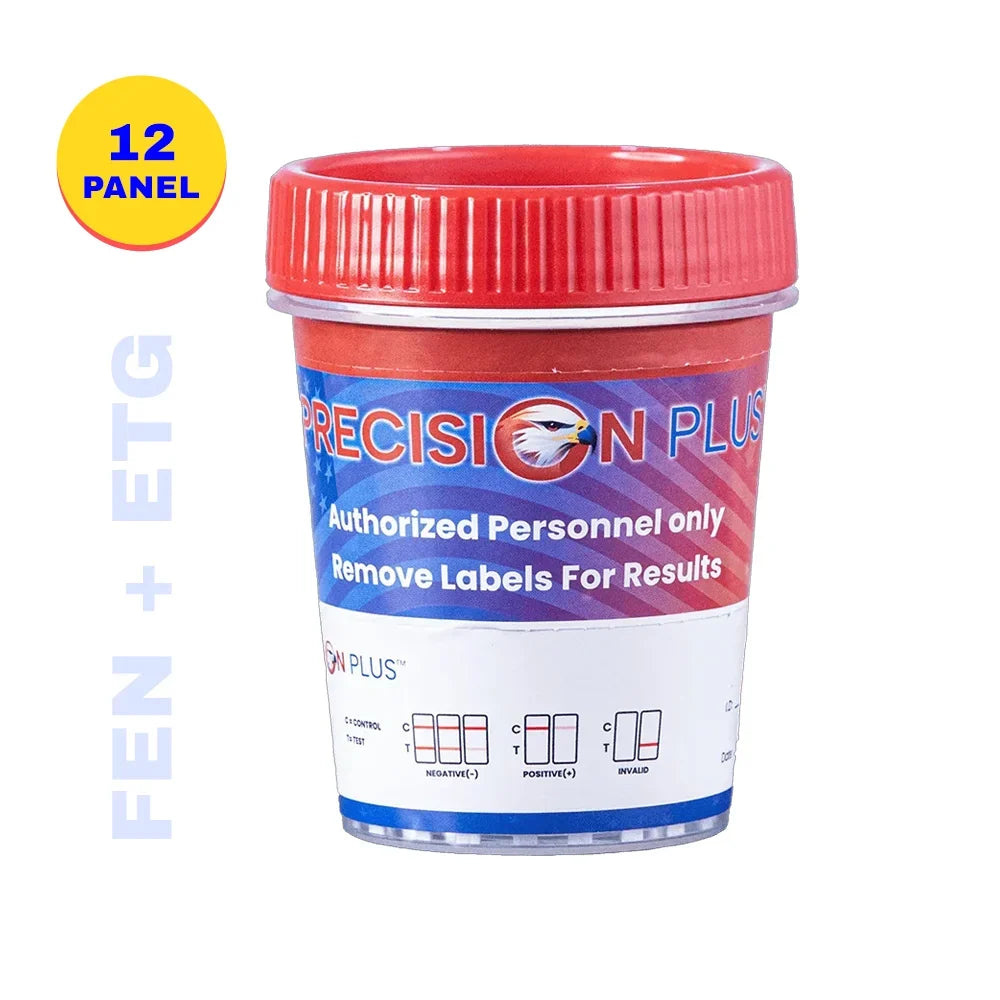
Clinics and employers who collect on site keep multi-panel drug test cups with custody forms and shippers. A cup holds the specimen and the result window in one device, which reduces handling after a crash.
On-site, clinic, or hospital: which collection site?
Pick the site that can collect fastest without delaying medical care. After-hours coverage is the usual gap. Name a primary site and a 24-hour backup in policy.
| Site type | Best for | Timing | Watch-outs |
|---|---|---|---|
| On-site workplace or clinic | Plants, treatment centers, staffing offices with a trained collector | Minutes if kits are stocked | Must meet Part 40 privacy and water-control rules for DOT |
| Occupational clinic or collection facility | Most employers and motor carriers | Same day in posted hours | Need nights and weekends; confirm they accept your CCF |
| Hospital emergency department | Injured workers who cannot travel | Often hours | Many ERs will not complete a workplace or DOT CCF |
DOT collections follow 49 CFR Part 40 (Procedures for Transportation Workplace Drug and Alcohol Testing Programs, as of November 2026): trained collector, restroom security, bluing agent, no unauthorized water, split urine specimen, shipment to a HHS-certified laboratory. Non-DOT programs should still document chain of custody.
How to send an employee to the collection site
- Confirm the event meets 49 CFR 382.303 or your written policy.
- Provide medical care first. Testing never overrides emergency treatment.
- Notify the DER and record the crash time. That time starts the 8-hour and 32-hour clocks.
- Escort the worker to the named collection site without an unsupervised gap.
- Collect breath alcohol if required, then urine (split specimen for DOT) or oral fluid as the program specifies.
- Complete the CCF, ship the same day, and document any late collection.
- Keep the person out of safety-sensitive work until the MRO reports a verified result or policy allows a return.
If you need kits or a wholesale account, contact American Screening Corp in Shreveport, LA. Same-day shipping is available nationwide on in-stock supplies. ASC sells cups, dip cards, oral fluid tests, breathalyzers, and DOT collection supplies; it does not run public walk-in collection clinics.
Collection-site readiness checklist
- Written post-accident policy naming the primary and after-hours collection sites.
- Part 40 collector qualification for any DOT collections you perform.
- FDA-cleared, CLIA-waived cups or dip cards, gloves, seals, and CCFs.
- Bluing agent, a secured restroom, and a private place to complete paperwork.
- Alcohol screening or evidential breath device if alcohol testing is in scope.
- HHS-certified laboratory account, MRO, and overnight shipper.
- Supervisor card with DER phone, site address, and the 2-, 8-, and 32-hour clocks.
Reading the screen and next steps
Read the device at the insert time. A control line means it ran. A non-negative cup is not a final employment decision. Seal the specimen and send it for GC/MS or LC-MS/MS. A DOT Medical Review Officer verifies laboratory positives before the employer receives a final result (49 CFR Part 40, as of November 2026). Do not claim 100% accuracy or treat a screen as a medical diagnosis.
Sources
- Federal Motor Carrier Safety Administration, 49 CFR 382.303 Post-accident testing (as of November 2026): https://www.ecfr.gov/current/title-49/subtitle-B/chapter-III/subchapter-B/part-382/subpart-C/section-382.303
- U.S. Department of Transportation, 49 CFR Part 40 Procedures for Transportation Workplace Drug and Alcohol Testing Programs (as of November 2026): https://www.transportation.gov/odapc/part40
- Substance Abuse and Mental Health Services Administration, Drug-Free Workplace (as of November 2026): https://www.samhsa.gov/workplace
FAQ
How soon after an accident must we collect a DOT drug test?
As soon as practicable, and not later than 32 hours after a qualifying crash. Document the reason if you miss that window. Stop alcohol attempts after 8 hours (49 CFR 382.303, as of November 2026). Do not delay emergency medical care.
Can we use the emergency room as the collection site?
Only if the worker needs emergency care and the ER has agreed in advance to collect with your custody form. Many ERs will not complete a workplace or DOT CCF. Name a clinic or on-site collector as the primary site.
What cutoff does a post-accident urine screen use for THC?
The SAMHSA initial urine cutoff for marijuana metabolite (THCA) is 50 ng/mL, with a confirmatory cutoff of 15 ng/mL (HHS Mandatory Guidelines, as of November 2026). Occasional use is often detectable 1–3 days. Confirm every positive by GC/MS or LC-MS/MS.
Is a non-negative cup result a final positive?
No. Every positive screen is preliminary. Confirm by GC/MS or LC-MS/MS laboratory testing. For DOT, a Medical Review Officer verifies the laboratory result before the employer receives a final outcome (49 CFR Part 40, as of November 2026).
This is general information, not medical or legal advice.