
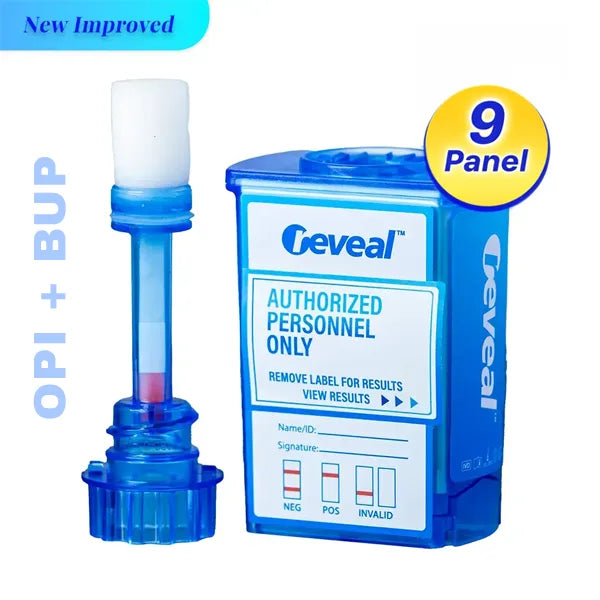
Quick answer: Oral fluid collection devices for labs collect saliva for immunoassay screening and confirmatory testing. SAMHSA initial cutoffs include THC at 4 ng/mL and cocaine at 15 ng/mL. Detection is typically 24 to 48 hours. Clinics, courts, and employers use FDA-cleared, CLIA-waived screens. Every positive is preliminary pending GC/MS or LC-MS/MS.
- Oral fluid devices collect a measured saliva specimen for screening at published ng/mL cutoffs and for mass-spectrometry confirmation.
- Most drugs are detectable for 24 to 48 hours, and observed collection reduces substitution compared with urine.
- American Screening Corp supplies FDA-cleared / CLIA-waived oral fluid tests to clinics, treatment centers, courts, labs, and employers; every positive screen is preliminary and requires GC/MS or LC-MS/MS confirmation.
Lab and clinic buyers can contact American Screening Corp for oral fluid devices, lot paperwork, and wholesale fulfillment. Last updated November 2026. American Screening Corp, Shreveport, Louisiana.
What do oral fluid collection devices do for a laboratory?
Oral fluid collection devices collect saliva so a laboratory can screen and confirm drugs of abuse. A typical device uses an absorbent pad plus a buffer vial that stabilizes the specimen for immunoassay and for GC/MS or LC-MS/MS. Laboratories, clinics, treatment centers, courts, probation offices, staffing firms, and employers use them when they need an observed collection and a short window that reflects recent use.
Need drug tests for your clinic, program or workplace?
American Screening Corp has supplied FDA-cleared, CLIA-waived tests at wholesale pricing since 2004. Popular options:
Ordering 100+ tests? Request volume pricing.
The collector is a specimen container, not a diagnosis. Volume, buffer chemistry, and chain-of-custody paperwork must match the receiving laboratory’s method. American Screening Corp, based in Shreveport, Louisiana, supplies oral fluid tests and related drug-testing supplies with same-day shipping nationwide.
Which drugs and cutoff levels do labs use?
Federal oral-fluid programs test the HHS workplace analytes. The Mandatory Guidelines for Federal Workplace Drug Testing Programs—Oral Fluid (Federal Register, October 2019) set initial cutoffs of 4 ng/mL for THC, 15 ng/mL for cocaine, 10 ng/mL for phencyclidine, 25 ng/mL for amphetamine/methamphetamine and MDMA/MDA, 30 ng/mL for codeine/morphine, hydrocodone/hydromorphone, and oxycodone/oxymorphone, and 4 ng/mL for 6-acetylmorphine.
The same guideline sets confirmatory cutoffs of 2 ng/mL for THC, 8 ng/mL for cocaine and benzoylecgonine, 10 ng/mL for PCP, 15 ng/mL for amphetamines and listed opioids, and 2 ng/mL for 6-acetylmorphine. Non-federal clinics may use the cutoffs printed in the device instructions for use. Every positive screen is preliminary; confirm by GC/MS or LC-MS/MS laboratory testing.
| Analyte | Initial cutoff (ng/mL) | Confirmatory cutoff (ng/mL) |
|---|---|---|
| THC (marijuana) | 4 | 2 |
| Cocaine | 15 | 8 |
| Phencyclidine | 10 | 10 |
| Amphetamine / methamphetamine | 25 | 15 |
| MDMA / MDA | 25 | 15 |
| Codeine / morphine | 30 | 15 |
| Hydrocodone / hydromorphone | 30 | 15 |
| Oxycodone / oxymorphone | 30 | 15 |
| 6-Acetylmorphine | 4 | 2 |
How long does oral fluid detect drug use?
Most drugs remain detectable in oral fluid for about 24 to 48 hours after use. The window is shorter than urine, especially for cannabis. Dose, frequency, residual oral contamination, and the ng/mL cutoff all change how long a result stays positive.
Choose oral fluid when the decision depends on recent use. Choose urine when the program needs a longer look-back; many of the same buyers also stock drug test cups for that purpose.
Are oral fluid collection devices FDA-cleared and CLIA-waived?
Many point-of-care oral fluid immunoassays are FDA-cleared and CLIA-waived when used exactly as labeled. Laboratory confirmation by GC/MS or LC-MS/MS is high-complexity testing and is not CLIA-waived. FDA states that drugs-of-abuse tests are screening devices and that presumptive positives should be confirmed (FDA, Drugs of Abuse Tests, as of November 2026).
DOT and other federal collections must follow 49 CFR Part 40 and the HHS Oral Fluid Mandatory Guidelines, including device and laboratory certification rules (eCFR, as of November 2026). Forensic-use-only labeled devices are not for medical diagnostic use. Verify FDA 510(k) and CLIA-waived status on the product record before you claim it in a procedure manual.
How should a lab or clinic collect the specimen?
Use the device instructions for use as the controlling document. Do not improvise collection steps.
- Confirm donor identity and the reason for the test (employment, treatment, court, or clinical program).
- Check device lot, expiration, and packaging integrity against the laboratory requisition.
- Follow the instructions for use for the wait after food, drink, or tobacco; many devices specify about 10 minutes.
- Place the collector in the mouth until the volume indicator or timed collection is complete. Keep the donor observed.
- Seal the pad in the buffer vial. Label identifiers and complete the chain-of-custody form.
- Read a point-of-care immunoassay only as labeled, or ship the sealed device to the testing laboratory.
- Treat any positive screen as preliminary and send it for GC/MS or LC-MS/MS confirmation.
Oral fluid versus urine: which should a program use?
Oral fluid and urine answer different program questions. Use the table to pick the matrix before you buy devices or write a policy.
| Program factor | Oral fluid | Urine |
|---|---|---|
| Typical detection window | 24–48 hours | 1–3 days for most drugs; longer for cannabis |
| Example THC initial cutoff | 4 ng/mL (HHS oral fluid, October 2019) | 50 ng/mL immunoassay (HHS urine) |
| Collection | Observed; low substitution risk | Restroom collection; adulteration risk |
| Best use | Recent-use decisions for labs, courts, and workplaces | Broader look-back and high-volume clinic panels |
What should a laboratory buyer put on the spec?
Buyers who call American Screening Corp most often ask four questions: how much volume the lab requires, what to do when the donor has dry mouth, how long to wait after food or drink, and whether a point-of-care device can be forwarded for confirmation. Put those answers in the purchase specification.
- Required specimen volume and split-specimen capability for HHS or DOT work
- Buffer compatible with the laboratory’s immunoassay and LC-MS/MS method
- FDA clearance and CLIA category documented on the product record
- Chain-of-custody form and tamper-evident seal
- Lot number, expiration date, and storage temperature
- Panel list and ng/mL cutoffs in writing
- Written path for preliminary positives to GC/MS or LC-MS/MS
- Instructions for dry mouth and the pre-collection wait
Who should buy oral fluid collection devices?
Clinics, hospitals, addiction-treatment centers, courts and probation, employers, staffing firms, and independent laboratories buy oral fluid collection devices. Panel counts in the field commonly run from 5-panel workplace screens through expanded 12- to 18-panel configurations. Match the panel to the written policy, not to a marketing list.
For quotes, lot documentation, or wholesale fulfillment, use the contact page linked above. This page is general information, not a product catalog. Prices and exact clearances live on the product record.
FAQ
What cutoff levels do labs use for oral fluid drug tests?
HHS oral-fluid programs use published ng/mL cutoffs, including THC at 4 ng/mL and cocaine at 15 ng/mL on the initial test (Mandatory Guidelines, Federal Register, October 2019). Non-federal labs follow the device IFU. Every positive screen is preliminary pending GC/MS or LC-MS/MS.
How long does oral fluid detect drugs after use?
Most drugs remain detectable in oral fluid for about 24 to 48 hours after use. The window is shorter than urine for cannabis. Time varies by drug, dose, cutoff, and device. Oral fluid documents recent use, not long-term history.
Are oral fluid collection devices FDA-cleared and CLIA-waived?
Many point-of-care oral fluid immunoassays are FDA-cleared and CLIA-waived when used as labeled. GC/MS or LC-MS/MS confirmation is not waived. Federal and DOT collections must use devices and labs that meet 49 CFR Part 40 and HHS oral-fluid rules. Verify the product record.
Must a positive oral fluid screen be confirmed by a lab?
Yes. Every positive oral fluid screen is preliminary. Confirm by GC/MS or LC-MS/MS laboratory testing before an employment, court, or treatment action. Split-specimen rules apply in HHS and DOT programs.
Sources
- Mandatory Guidelines for Federal Workplace Drug Testing Programs—Oral/Fluid (Federal Register)
- 49 CFR Part 40—Procedures for Transportation Workplace Drug and Alcohol Testing Programs
- FDA, Drugs of Abuse Tests
This article is general information, not medical or legal advice.