
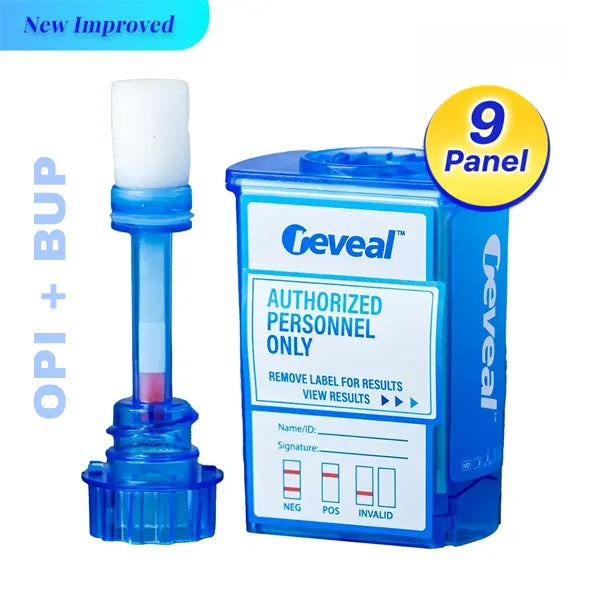
Quick answer: Urine cotinine strips typically screen at 200 ng/mL and detect use for 2-4 days in occasional users, up to 7-10 days in heavy users. Oral fluid tests typically screen at 30 ng/mL with a 1-4 day window. Select FDA-cleared, CLIA-waived kits serve clinics and employers. A positive result is preliminary and requires GC/MS or LC-MS/MS confirmation.
- Urine immunoassay strips offer a longer lookback and fit high-volume collection; oral fluid tests support observed, on-site collection with a shorter window.
- Cotinine is the primary nicotine metabolite. It is not an analyte on the HHS Mandatory Guidelines 5-panel used for federal workplace testing (SAMHSA, Drug Testing, as of November 2026).
- American Screening Corp supplies professional urine and oral fluid immunoassay kits; every positive screen must be confirmed by GC/MS or LC-MS/MS laboratory testing.
Last updated November 2026.
What a cotinine test detects
A cotinine test detects cotinine, the primary metabolite of nicotine, not nicotine itself. The body converts nicotine to cotinine. CDC reports a serum cotinine half-life of about 16 hours (CDC, Cotinine Biomonitoring Summary, as of November 2026).
Need drug tests for your clinic, program or workplace?
American Screening Corp has supplied FDA-cleared, CLIA-waived tests at wholesale pricing since 2004. Popular options:
Ordering 100+ tests? Request volume pricing.
Immunoassay strips and oral fluid devices report a qualitative positive or negative versus a labeled cutoff in ng/mL. They do not quantify concentration or identify whether nicotine came from cigarettes, cigars, e-cigarettes, pouches, gum, or patches (NIDA, Tobacco, Nicotine, and Vaping, as of November 2026).
Clinics, treatment programs, smoke-free employers, staffing firms, and courts use these screens for nicotine abstinence. They do not replace a SAMHSA 5-panel or a DOT 49 CFR Part 40 test. Nicotine and cotinine are not DOT-regulated drugs.
How urine cotinine strips work
Urine cotinine strips are lateral-flow immunoassays. Staff collect urine, dip the strip or drug test dip cards into the specimen, and read lines only in the insert's time window.
A common professional urine cutoff is 200 ng/mL, intended to flag active use and reduce most secondhand-smoke positives. Occasional users are often positive 2-4 days; heavy daily tobacco users can remain positive up to 7-10 days. Hydration can lower urine cotinine.
Urine collection needs a restroom, a temperature check, and chain of custody when the result may support employment or court action. Adulteration and substitution are the main risks versus oral fluid.
How oral fluid cotinine tests work
Oral fluid cotinine tests use a swab or pad in the mouth, then a lateral-flow strip. Collection is observed, which fits employers and staffing sites that screen on the spot.
A common professional oral fluid cutoff is 30 ng/mL. Detection is typically 1-4 days after last nicotine use. The shorter window tracks recent use more closely than urine and is less affected by water loading.
Follow the insert for food, drink, and tobacco before collection. Do not treat an oral fluid screen as a quantitative serum cotinine result.
Cutoffs, detection windows, and how the two methods compare
Match the matrix and cutoff to the written policy before you buy. Use the ng/mL cutoff printed on the kit, not a generic number.
| Factor | Urine strips (dip cards) | Oral fluid tests |
|---|---|---|
| What it detects | Cotinine in urine | Cotinine in oral fluid |
| Typical cutoff | 200 ng/mL | 30 ng/mL |
| Detection window | 2-4 days occasional; up to 7-10 days heavy use | 1-4 days |
| Collection | Restroom; temperature and adulteration checks | Observed swab; hard to substitute |
| Best fit | Treatment, longer lookback, high volume | On-site workplace or staffing screens |
| FDA / CLIA | Use only devices labeled FDA-cleared and CLIA-waived when those claims appear on the kit | Same rule: read the current labeling |
| Confirmation | GC/MS or LC-MS/MS | GC/MS or LC-MS/MS |
Which matrix should a clinic, employer, court, or staffing firm use?
Choose urine strips when you need a longer window, already collect urine, or run high volume in a clinic or treatment program. Cotinine is usually a dedicated strip, not a line on a standard 5- to 18-panel cup unless the cup is labeled for cotinine.
Choose oral fluid when collection must be observed in an office or jobsite and the policy targets recent nicotine use. Staffing firms and smoke-free employers often prefer it because substitution is difficult.
Do not use either screen for DOT-covered testing under 49 CFR Part 40. Federal workplace panels follow HHS Mandatory Guidelines analytes only (SAMHSA, Drug Testing, as of November 2026). For labeled kits matched to policy, contact American Screening Corp.
Buyer checklist before you order
- Write nicotine or tobacco abstinence into policy, including vaping and nicotine replacement if those sources count.
- Pick urine or oral fluid from the comparison above; do not mix cutoffs across sites without documenting why.
- Confirm the device labeling for FDA clearance and CLIA-waived status; forensic-use-only devices stay labeled as such.
- Record the exact cutoff in ng/mL in the SOP and donor notice.
- Define observed versus restroom collection, chain of custody, and what happens on a dilute urine.
- Send every positive immunoassay to GC/MS or LC-MS/MS confirmation before an employment or court decision.
How to run and read a cotinine immunoassay
- Identify the donor and state that the test screens for cotinine at the labeled ng/mL cutoff.
- Collect urine or oral fluid exactly as the insert specifies, including wait times after food, drink, or tobacco for oral fluid.
- Read only inside the manufacturer's time window.
- Apply that device's line rule. Many devices read a test line as negative and no test line with a valid control as preliminary positive. Follow the insert diagram.
- If the control line is absent, the test is invalid; repeat with a new device.
- Record lot, cutoff, matrix, time, and result. Send a confirmation aliquot for every preliminary positive.
Laboratory confirmation
A line on a strip is not a final result. Confirm preliminary positives with GC/MS or LC-MS/MS. Nicotine replacement for cessation can produce cotinine; route those cases through your own medical review process. Rapid screens are not 100% accurate.
Sources
- CDC, Cotinine Biomonitoring Summary — https://www.cdc.gov/biomonitoring/Cotinine_BiomonitoringSummary.html
- SAMHSA, Drug Testing — https://www.samhsa.gov/workplace/drug-testing
- NIDA, Tobacco, Nicotine, and Vaping — https://nida.nih.gov/research-topics/tobacco-nicotine-vaping
FAQ
Does a 5-panel urine drug test include cotinine?
No. HHS Mandatory Guidelines five-panel testing covers marijuana metabolites, cocaine, amphetamines, opioids, and PCP (SAMHSA, Drug Testing, as of November 2026). Cotinine is a separate nicotine metabolite assay. Order a dedicated urine strip or oral fluid device.
Do urine or oral fluid cotinine tests detect vaping and nicotine pouches?
Yes. Cotinine forms after nicotine from cigarettes, cigars, e-cigarettes, pouches, gum, or patches (NIDA, Tobacco, Nicotine, and Vaping, as of November 2026). The screen does not identify the source. Treat a positive as preliminary pending GC/MS or LC-MS/MS.
How long does cotinine stay detectable in urine versus oral fluid?
Urine strips typically detect cotinine for 2-4 days in occasional users and up to 7-10 days in heavy users at 200 ng/mL. Oral fluid tests typically detect 1-4 days at 30 ng/mL. Dose, metabolism, and hydration change the window.
Are positive cotinine strips enough for a workplace or court action?
No. Immunoassay results are preliminary. Confirm every positive by GC/MS or LC-MS/MS. Follow written policy, chain of custody, and applicable law. Verify FDA and CLIA status on the device labeling. This is not legal advice.
This is general information, not medical or legal advice.