
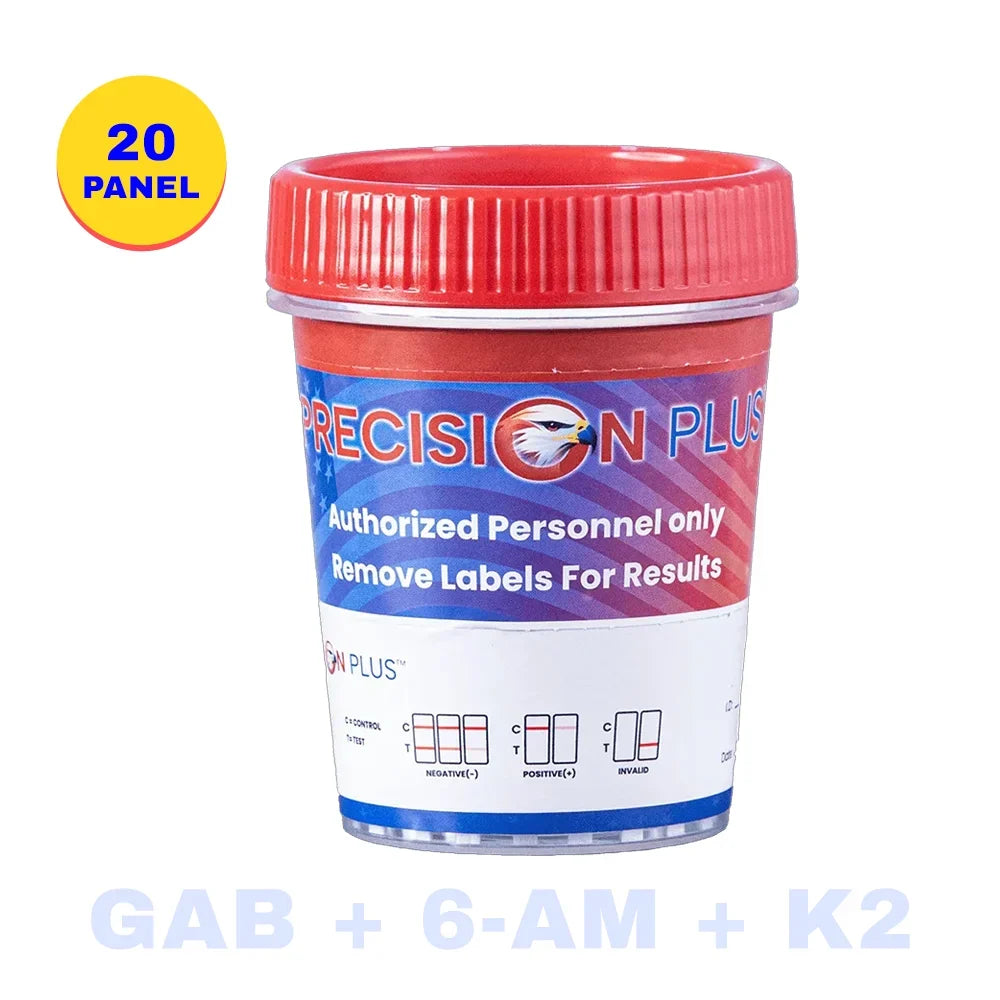
Quick answer: CLIA-waived cups are FDA-cleared urine screens treatment centers use on-site. They detect THC at 50 ng/mL, cocaine at 150 ng/mL, and opiates at 2,000 ng/mL, with 1–30 day windows by analyte. Every positive is preliminary; confirm by GC/MS or LC-MS/MS laboratory testing. American Screening Corp supplies these cups.
- On-site use generally requires a CLIA Certificate of Waiver and an FDA-cleared, CLIA-waived device used exactly as labeled.
- HHS/SAMHSA initial cutoffs commonly mapped on cups include THC 50 ng/mL, cocaine 150 ng/mL, amphetamines 500 ng/mL, PCP 25 ng/mL, and morphine 2,000 ng/mL (SAMHSA, Drug-Free Workplace, as of November 2026).
- Order 5- to 18-panel cups for the drugs you monitor, then confirm every positive by GC/MS or LC-MS/MS laboratory testing.
Last updated November 16, 2026. For clinics, OTPs, residential programs, and court-affiliated treatment—not consumer use.
What does CLIA-waived mean for a treatment center?
CLIA is the Clinical Laboratory Improvement Amendments, the federal rules CMS uses to oversee testing on human specimens (Centers for Medicare & Medicaid Services, Clinical Laboratory Improvement Amendments, as of November 2026). A CLIA-waived test is one the FDA has cleared as simple, with a low risk of error when used as labeled (U.S. Food and Drug Administration, Clinical Laboratory Improvement Amendments (CLIA), as of November 2026).
Treatment centers that run urine cups on-site typically hold a CLIA Certificate of Waiver. The certificate covers waived methods only. It does not replace state laboratory licensure, medical-director oversight, or a written confirmation policy.
American Screening Corp drug test cups sold for this use are intended for clinics, addiction-treatment programs, courts and probation partners, labs, and employers that need an on-site screen. If your program also runs DOT-regulated testing, follow 49 CFR Part 40 separately. Most SUD monitoring inside a treatment center is not DOT testing.
What do CLIA-waived cups detect, and at which cutoffs?
An instant urine cup is an immunoassay screen. It reports whether a drug class is at or above the device cutoff, printed in ng/mL on the label. Many multi-panel cups align initial cutoffs with the HHS Mandatory Guidelines that SAMHSA publishes for federal workplace programs (Substance Abuse and Mental Health Services Administration, Drug-Free Workplace, as of November 2026):
- Marijuana metabolite (THC): 50 ng/mL
- Cocaine metabolite: 150 ng/mL
- Amphetamines / methamphetamine: 500 ng/mL
- MDMA: 500 ng/mL
- Phencyclidine (PCP): 25 ng/mL
- Morphine / codeine: 2,000 ng/mL
- Hydrocodone / hydromorphone: 300 ng/mL
- Oxycodone / oxymorphone: 100 ng/mL
- 6-acetylmorphine (heroin metabolite): 10 ng/mL
Cups built for treatment monitoring often add benzodiazepines, barbiturates, methadone, buprenorphine, fentanyl, and EtG (alcohol metabolite). Those extra analytes use the cutoff on that cup’s label, not a SAMHSA workplace table. Match the panel to standing orders from your medical director. Do not assume a workplace 5-panel covers buprenorphine or fentanyl.
Detection windows
Windows are typical ranges, not diagnoses. They change with dose, frequency, hydration, and cutoff.
- Cocaine, amphetamines, short-acting opiates: about 1–3 days
- Heroin (6-AM): hours to about 1 day
- Benzodiazepines: about 1–7 days, longer with some agents
- THC: about 1–3 days after a single use; up to about 30 days with heavy use
- EtG: often up to about 80 hours after drinking, depending on cutoff and use
A result at or above cutoff is a screen only. It does not prove impairment, time of use, or a medical condition.
Which panel should a treatment center order?
Start with the drugs your census actually uses. Opioid treatment programs often need buprenorphine, methadone, oxycodone, and fentanyl plus a core 5- or 10-panel. Residential and dual-diagnosis programs often add benzodiazepines, barbiturates, and EtG. Moving from 5- to 12- or 18-panel is a clinical choice.
If collectors already pour into a specimen cup, compare format with drug test dip cards. Status is on the device label either way: FDA-cleared and CLIA-waived only when so marked.
Cup or dip card for clinic workflow?
| Decision point | Instant test cup | Dip card |
|---|---|---|
| Specimen handling | Collect and screen in one device | Collect in a cup, then dip the card |
| FDA / CLIA status | Only if the cup label states FDA-cleared and CLIA-waived | Only if the card label states FDA-cleared and CLIA-waived |
| Read time | Minutes printed on the insert | Minutes printed on the insert |
| Temperature check | Strip on most cups | Depends on the collection cup used |
| Best fit | High-volume clinics that want one-step collection | Sites that already pour specimens |
How do staff collect and read a CLIA-waived cup?
- Confirm the lot is in date, the pouch is sealed, and the label lists FDA-cleared / CLIA-waived status and ng/mL cutoffs.
- Collect urine in the cup. Check the temperature strip in the labeled window (often 90–100°F / 32–38°C on the insert).
- Place the cup on a flat surface. Read at the minutes printed in the instructions—not before the minimum and not after the maximum.
- A line in the control region means the device ran. Interpret drug lines only against the package insert.
- Record result, lot, time, and collector ID in the chart.
- Treat every positive as preliminary; confirm by GC/MS or LC-MS/MS laboratory testing.
Some cups include creatinine, pH, or oxidant pads. Those pads are screening aids, not a full validity battery. Follow the insert if a pad is out of range.
What should you verify before you order?
- CLIA Certificate of Waiver is current; state laboratory rules have been reviewed.
- The device is labeled FDA-cleared and CLIA-waived for urine.
- Panel list and ng/mL cutoffs match standing orders.
- Fentanyl, buprenorphine, methadone, and EtG are included only if clinically required.
- Read time, temperature strip, and storage temperatures are on the insert.
- A confirmation lab uses GC/MS or LC-MS/MS with documented chain of custody.
- Staff are trained to the insert; results are recorded in the chart.
- Reorder quantity matches census; same-day shipping nationwide is available from Shreveport, Louisiana.
Why confirmation is required
Immunoassay cups can cross-react. A preliminary positive is not a diagnosis and not proof of impairment. HHS workplace programs require laboratory confirmation (SAMHSA, Drug-Free Workplace, as of November 2026). Treatment programs should confirm before a clinical or administrative action. This page does not tell you how to sanction a patient.
Support teams at American Screening Corp hear the same questions from treatment-center buyers: which cup is CLIA-waived, whether fentanyl is on the panel, how SAMHSA cutoffs map to the label, and how fast a wholesale order ships. The most common reorder fix is adding buprenorphine or fentanyl after the first lot, or retraining staff not to read a cup after the insert’s maximum time.
FAQ
Do treatment centers need a CLIA certificate to use waived cups?
Yes, if the facility performs the test for health assessment or treatment decisions. CMS requires a CLIA Certificate of Waiver for waived tests. Read the device label and follow state laboratory rules. This is not legal advice.
What cutoff levels do CLIA-waived cups use?
Many cups follow HHS/SAMHSA initial cutoffs: THC 50 ng/mL, cocaine 150 ng/mL, amphetamines 500 ng/mL, PCP 25 ng/mL, morphine 2,000 ng/mL. Always use the ng/mL printed on the cup (SAMHSA, as of November 2026).
Are cup results final for a treatment program?
No. Every positive screen is preliminary; confirm by GC/MS or LC-MS/MS laboratory testing. Negatives at or below cutoff are reported as negative for that screen. Follow your medical director’s protocol.
How long do drugs stay detectable in urine cups?
Windows vary by drug, dose, and frequency. Cocaine and short-acting opiates are often 1–3 days; THC may be 1–30 days; benzodiazepines often 1–7 days. Use the labeled cutoff; do not treat a window as a diagnosis.
Sources
- Centers for Medicare & Medicaid Services, Clinical Laboratory Improvement Amendments (CLIA)
- Substance Abuse and Mental Health Services Administration, Drug-Free Workplace
- U.S. Food and Drug Administration, Clinical Laboratory Improvement Amendments (CLIA)
This is general information, not legal or medical advice.