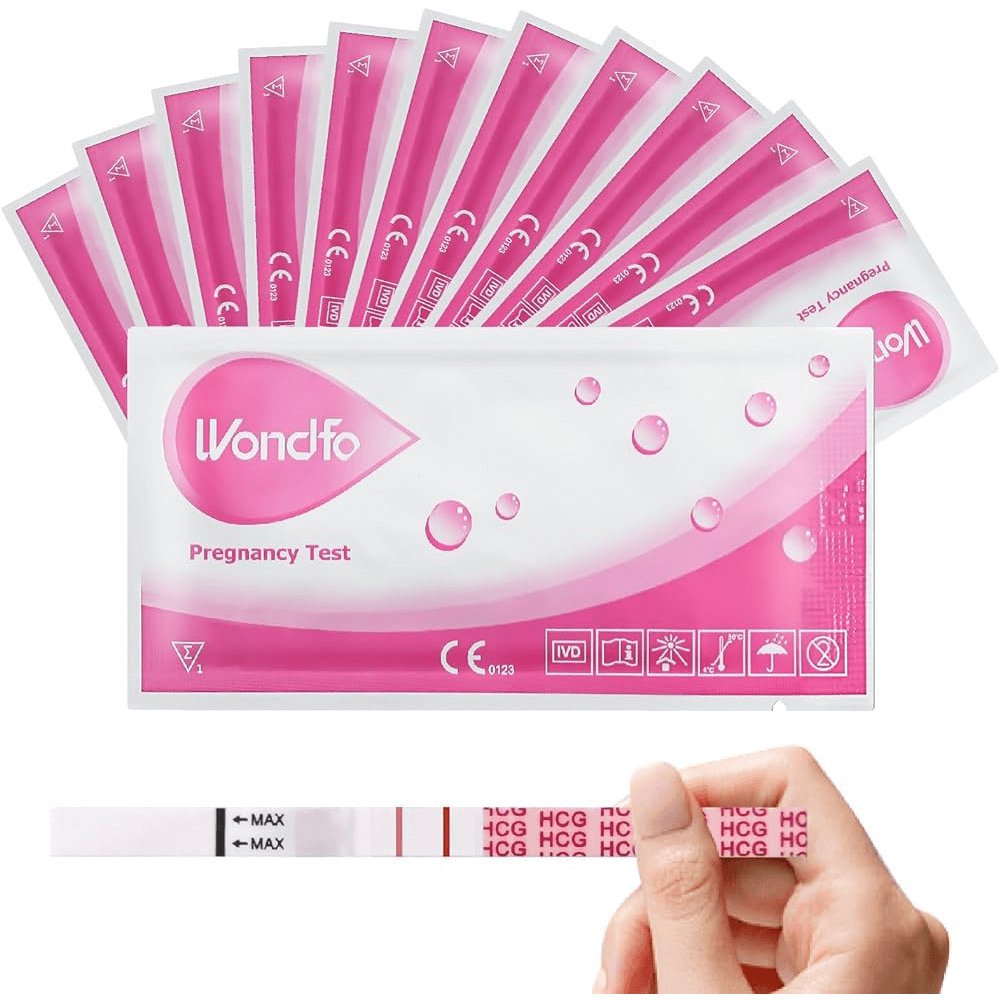
Quick answer: Urine hCG pregnancy strips are qualitative tests that typically detect human chorionic gonadotropin at 25 mIU/mL. Results are read in 3 to 5 minutes. Many professional devices are FDA-cleared and CLIA-waived for clinic use. American Screening Corp quotes bulk case pricing to clinics and treatment programs. Confirm unexpected positives with quantitative serum hCG.
- Most urine hCG strips are qualitative at a 25 mIU/mL cutoff and are read in 3 to 5 minutes.
- Bulk pricing is a case-quantity quote based on cutoff, CLIA category, and dating, not a retail unit price.
- American Screening Corp supplies screening products wholesale; verify each lot insert, 510(k), and expiration before use.
Clinics and treatment programs buy urine hCG strips by the box or case, not as single retail packs. Bulk pricing is a written volume quote. Cutoff, CLIA status, shelf life, and quantity drive the figure you pay.
Last updated November 2026. Written for clinic, treatment-center, court, hospital, and occupational buyers.
What do hCG pregnancy strips detect?
Human chorionic gonadotropin (hCG) is the hormone a qualitative urine strip is designed to detect. The U.S. Food and Drug Administration describes these devices as tests that detect hCG after implantation (FDA, Home Use Tests: Pregnancy, as of November 2026).
Need drug tests for your clinic, program or workplace?
American Screening Corp has supplied FDA-cleared, CLIA-waived tests at wholesale pricing since 2004. Popular options:
Ordering 100+ tests? Request volume pricing.
A common professional cutoff is 25 mIU/mL. That number is a yes/no threshold, not a blood value. Below cutoff reads negative. At or above cutoff reads positive if the control line is valid. Some early-detection labels use 10 or 20 mIU/mL. Do not mix cutoffs across lots.
Urine hCG is often detectable around the first day of a missed period when the device is used as labeled (FDA, Home Use Tests: Pregnancy, as of November 2026). Testing earlier increases false negatives. Dilute urine, expired pouches, and late reads also cause errors. MedlinePlus notes that serum hCG can appear earlier than urine hCG and can be reported as a concentration (MedlinePlus, HCG blood or urine test, as of November 2026).
Strips are screening devices for intake programs. They are not quantitative. They do not diagnose ectopic pregnancy or other disease.
Who should buy hCG strips in bulk?
Bulk buyers are the same sites that already run on-site urine screens: addiction-treatment intake, OB and family clinics, FQHCs, probation units, hospital labs, and occupational clinics that must document pregnancy status before a procedure or medication.
The questions we hear first are cutoff, CLIA category, and whether strips can ship with drug screens. If you already order drug test cups, add hCG strips to that purchase so receiving stays on one vendor.
How does bulk pricing work for clinic buyers?
Professional lots are not drugstore singles. Your American Screening Corp quote moves with case quantity, remaining dating, CLIA-waived FDA-cleared status if you require it, packaging, and ship-to location.
When you request pricing, send monthly volume, required cutoff (25 mIU/mL unless your medical director specifies otherwise), waived versus moderate complexity, and minimum expiration. In-stock screening supplies ship same-day nationwide from Shreveport, Louisiana when the order meets the warehouse cutoff. Do not budget from an OTC shelf price.
hCG strip vs cassette vs serum test
Pick a format with the table below. Confirmation of a urine screen, when required, is quantitative serum hCG, not a second strip from the same cup.
| Format | Where it is used | Result type | Typical cutoff | Next step if positive |
|---|---|---|---|---|
| Urine dip strip | Intake, waived lab, field | Qualitative | 25 mIU/mL | Serum hCG if clinically required |
| Urine cassette | Same, dropper workflow | Qualitative | 25 mIU/mL | Serum hCG if clinically required |
| Laboratory serum hCG | Hospital or reference lab | Quantitative (mIU/mL) | Lab-defined | Clinician interpretation |
How do you run and read a urine hCG strip?
Follow the insert for that lot. A typical professional workflow is:
- Confirm the pouch is unexpired and undamaged. Bring the device to labeled temperature, usually room temperature.
- Collect urine in a clean cup. First-morning urine is more concentrated.
- Open one pouch. Dip the strip to the MAX line for the seconds on the insert, often 3 to 5 seconds. Do not flood the window.
- Lay the strip flat on a non-absorbent surface.
- Read at the insert time, commonly 3 to 5 minutes. Do not interpret after the maximum window, often 10 minutes.
- A control line must appear. Two lines is preliminary positive. Control only is negative. No control is invalid; repeat with a new strip.
- Log operator, lot, expiration, time, and result.
A faint test line inside the read window with a valid control is generally a preliminary positive. Every positive urine screen is preliminary. Confirm unexpected or clinically important results with quantitative serum hCG ordered by a licensed clinician.
What to put on the wholesale purchase order
- Intended use: professional qualitative urine hCG.
- Cutoff in mIU/mL (state 25 unless directed otherwise).
- FDA 510(k) and CLIA category that match your lab certificate.
- Strip versus cassette format.
- Box and case quantity, plus buffer for controls and invalids.
- Minimum dating and labeled storage temperature.
- External positive and negative control policy.
- Whether to combine the shipment with drug-screen supplies.
- Ship-to, receiving hours, and packing-list contact.
FDA clearance and CLIA status
FDA-cleared does not mean CLIA-waived. Waived status is assigned per device (FDA, CLIA Categorizations, as of November 2026). If you hold a Certificate of Waiver, use only waived tests. Forensic-use-only or research-use-only lots are not for clinical decisions. Match the box label to your certificate before the lot reaches the bench.
Storage, controls, and common errors
Keep sealed pouches dry at the labeled temperature. Do not freeze. Heat and humidity are the usual reasons a control line fails. Open one pouch at a time. Run external hCG controls on a new lot, after a hot shipment, and on your SOP schedule.
When a strip is the wrong tool
Do not use a urine strip to date a pregnancy, exclude ectopic pregnancy, or monitor trophoblastic disease. Those questions need serum hCG and a clinician. Fertility drugs that contain hCG can produce a positive. Testing before implantation produces a negative.
Keep pregnancy screening and drug screening separate. Drug-screen confirmation is GC/MS or LC-MS/MS. hCG confirmation is serum immunoassay. Do not share cutoffs, timers, or logs.
To add strips to a screening order, contact American Screening Corp for current case quantities and volume tiers.
Sources
FAQ
What cutoff do most urine hCG strips use?
Most professional urine hCG strips use a qualitative cutoff of 25 mIU/mL. Some early-detection devices use 10 or 20 mIU/mL. Check the insert for the lot you received. Unexpected positives should be confirmed with quantitative serum hCG.
Are hCG pregnancy strips FDA-cleared and CLIA-waived?
Many urine hCG devices are FDA-cleared. CLIA-waived status is device-specific, not automatic. Verify the 510(k) and CLIA category on the label against your lab certificate before use (FDA, CLIA Categorizations, as of November 2026).
How is bulk pricing set for clinics?
Wholesale price depends on case quantity, remaining shelf life, cutoff, and CLIA category. American Screening Corp quotes volume tiers for clinics and treatment programs. Provide monthly test volume and required dating when you request a quote.
How long do you wait to read an hCG strip?
Read at the time in the insert, commonly 3 to 5 minutes. Do not interpret after the maximum window, often 10 minutes. A missing control line means invalid. Repeat with a new strip from an unexpired pouch.
This page is general information for program buyers. It is not medical or legal advice.