
Quick answer: An e-authorization donor pass is an electronic order emailed to a donor that authorizes a workplace, clinic, or court drug collection. Typical urine screens use HHS cutoffs such as 50 ng/mL for marijuana metabolite. Use FDA-cleared, CLIA-waived cups on site. A positive screen is preliminary; confirm by GC/MS or LC-MS/MS.
- Email the pass only to the named donor; collectors must still verify government photo ID under 49 CFR Part 40.
- Match the authorized panel to the device on the bench; American Screening Corp supplies 5- to 18-panel urine cups for clinic, employer, and court collections.
- A non-negative immunoassay is preliminary; confirm by GC/MS or LC-MS/MS laboratory testing.
Reviewed by American Screening Corp, Shreveport, Louisiana. Last updated November 23, 2026.
What is an e-authorization donor pass?
An e-authorization donor pass is a digital collection order. An employer, third-party administrator, clinic, probation office, or court emails it to one named donor. The message lists the donor name, a unique authorization or order number, the test reason, the specimen type, and the panel.
Need drug tests for your clinic, program or workplace?
American Screening Corp has supplied FDA-cleared, CLIA-waived tests at wholesale pricing since 2004. Popular options:
Ordering 100+ tests? Request volume pricing.
The pass is not a test result and it is not a diagnosis. The donor shows the email or a printed copy at the collection site so staff can open the correct order. Photo identification is still required before any specimen is collected.
Who should send the pass by email?
The designated employer representative, clinic coordinator, or court clerk sends the pass. Send it only to the donor. Do not copy a work crew or a public inbox.
As of November 2026, 49 CFR Part 40.14 requires the collector to have the employer name, donor identity, test reason, and medical review officer information. Put those data in the order system. Staffing firms and employers that also screen new hires can pair the collection with FCRA-compliant employment background checks.
Does an email donor pass replace the CCF?
No. The email pass tells the donor to appear. Chain of custody is a separate record. DOT collections must use a Federal Custody and Control Form, including an approved electronic CCF, under 49 CFR Part 40.45 as of November 2026.
| Record | What it does | What it does not do |
|---|---|---|
| Email donor pass | Notifies the named donor and states the panel, reason, and site | Does not document chain of custody or report a result |
| Paper CCF | Records IDs, specimen IDs, certifications, and signatures at collection | Does not by itself notify the donor to appear |
| Electronic CCF | Creates the same custody record in an HHS- and DOT-allowed electronic system | Does not skip photo ID, privacy, or collection steps in Part 40 |
What must the collector do after the donor arrives?
Follow the device label and, for transportation employees, 49 CFR Part 40.61 through 40.73. A typical on-site sequence is:
- Confirm the donor pass is unexpired and matches the person in front of you.
- Inspect a government photo ID and compare the name to the order.
- Describe the collection. Have the donor remove unnecessary outer clothing and empty pockets as required.
- Select a sealed, in-date cup or dip card whose panel matches the authorization.
- Collect the specimen, check temperature and validity where the label requires it, and complete the CCF or eCCF.
- Read the immunoassay at the minutes on the label. If non-negative, package the specimen for GC/MS or LC-MS/MS confirmation. Do not treat the screen as a final result.
Which device and cutoffs should match the authorization?
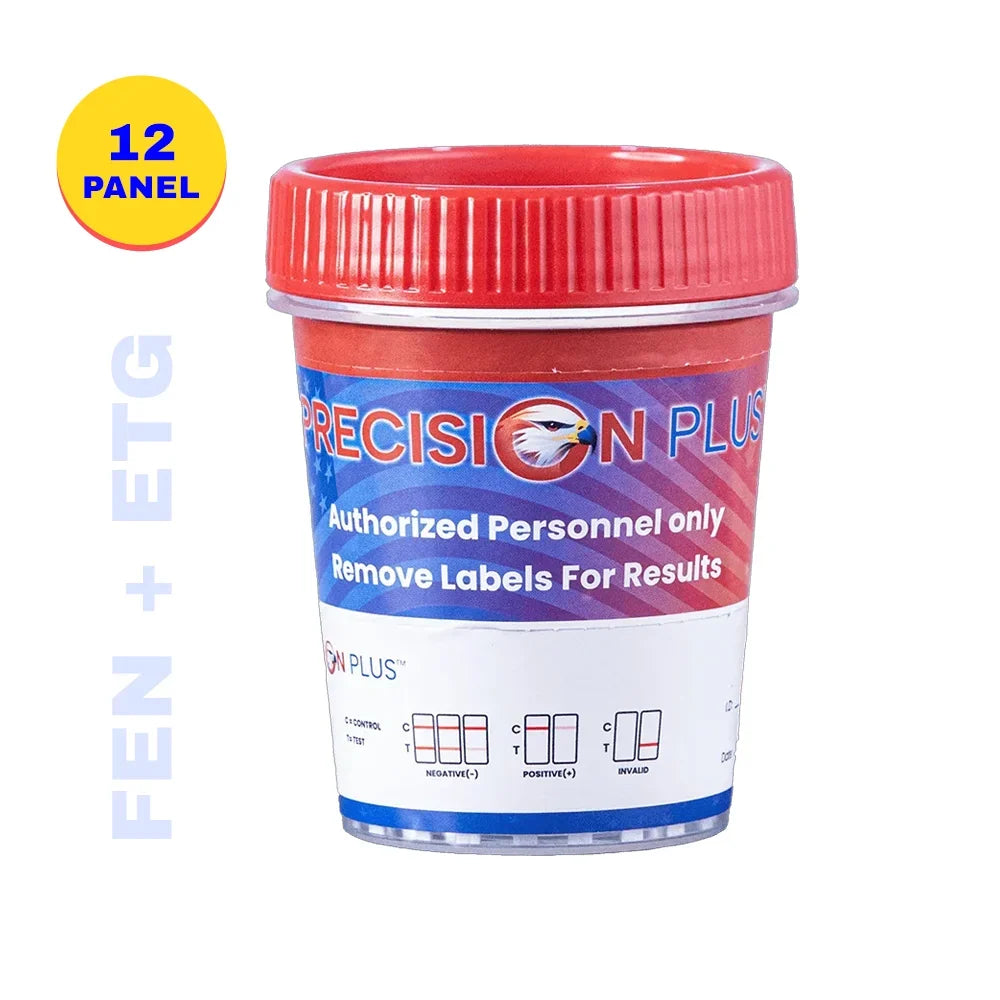
The authorization is only as good as the device on the bench. If the pass says 12-panel urine plus fentanyl, a 5-panel cup will not satisfy the order. Stock FDA-cleared, CLIA-waived drug test cups in every panel you authorize, from 5-panel through 18-panel.
Urine cups combine collection and screening in one device and fit most clinic, employer, and probation workflows. Dip cards need a separate collection cup and fit sites that pour before screening. Oral fluid devices are used only when the authorization specifies saliva.
HHS Mandatory Guidelines for Federal Workplace Drug Testing Programs (urine), Federal Register, January 23, 2017, set these initial test cutoffs, which 49 CFR Part 40 follows: marijuana metabolites 50 ng/mL; cocaine metabolite 150 ng/mL; amphetamines 500 ng/mL; MDMA 500 ng/mL; codeine/morphine 2,000 ng/mL; hydrocodone/hydromorphone 300 ng/mL; oxycodone/oxymorphone 100 ng/mL; 6-acetylmorphine 10 ng/mL; phencyclidine 25 ng/mL.
Confirmatory cutoffs in the same Guidelines include 15 ng/mL for marijuana metabolite (THCA) and 100 ng/mL for cocaine metabolite. Fentanyl and EtG are not on that federal urine panel. If the email lists them, use a device whose label states those analytes and that cutoff.
Typical urine immunoassay detection windows are about 1–3 days for cocaine, amphetamines, and short-acting opioids, and about 1–3 days after occasional cannabis use. Repeated cannabis use can remain detectable for several weeks. Windows vary by dose, frequency, and specimen and are not pass/fail rules.
Oral fluid orders need an oral fluid device, not a urine cup. Breath alcohol needs a breath device per your policy or 49 CFR Part 40 Subpart N. Read every result against the package insert.
What should you check before you hit send?
Use this list before you send the email:
- Confirm the legal name, unique order number, test reason, and appearance deadline.
- Confirm specimen type: urine, oral fluid, or breath.
- Confirm the collection site stocks that exact panel in an FDA-cleared, CLIA-waived format when the setting requires it.
- Name the MRO or reporting path for regulated tests.
- Send only to the donor’s work or program email. Log the time.
- Do not add medical, legal, or disciplinary commentary in the email.
- Instruct the donor to bring government photo ID.
What does a non-negative screen mean?
A missing drug line, or a device that reads non-negative, is a preliminary immunoassay screen. Do not make an employment, probation, or treatment decision on that screen alone. Confirm by GC/MS or LC-MS/MS laboratory testing. Rapid cups do not replace a certified laboratory result.
FAQ
Can we email a donor pass for a DOT-regulated test?
Yes, if the collection still follows 49 CFR Part 40. The email pass is only a notice to appear. The collector must use a DOT CCF or approved eCCF, verify photo ID, and complete every collection step.
Does the email authorization replace chain of custody?
No. Chain of custody is documented on the paper CCF or electronic CCF. The donor pass only tells the donor where and why to appear. Collectors start the CCF after ID verification.
Which cutoff levels should the cup match?
For federal and DOT-aligned urine screens, HHS initial cutoffs include 50 ng/mL marijuana metabolite, 150 ng/mL cocaine metabolite, 500 ng/mL amphetamines, 2,000 ng/mL codeine/morphine, and 25 ng/mL PCP, as of the 2017 Mandatory Guidelines.
What if the donor does not open the email?
Treat it as a failure to appear under your written policy or 49 CFR Part 40. Document the send time, address, and deadline. Do not collect without identity verification and a valid order.
Sources
- 49 CFR Part 40 — Procedures for Transportation Workplace Drug and Alcohol Testing Programs
- Drug Testing (SAMHSA Workplace)
- Mandatory Guidelines for Federal Workplace Drug Testing Programs (Federal Register, January 23, 2017)
This page is general information, not legal or medical advice.