
Quick answer: Alcohol tests are named EtG (urine), BAT (breath), or saliva alcohol. EtG cutoffs are 100–500 ng/mL; detection is up to 80 hours. DOT breath cutoffs are 0.02 and 0.04 (49 CFR Part 40). American Screening Corp supplies CLIA-waived kits for clinics and courts. Every positive screen is preliminary; confirm by GC/MS or LC-MS/MS.
- EtG is the urine immunoassay for ethyl glucuronide used by treatment centers, probation, and courts; typical cutoffs are 100, 300, or 500 ng/mL.
- Breath alcohol tests (BAT and EBT) are the DOT workplace names; 49 CFR Part 40 sets 0.02 as the screening cutoff and 0.04 as the violation level, as of November 2026.
- Saliva alcohol tests measure ethanol as BAC on site in minutes and are often CLIA-waived; any non-negative screen still needs laboratory confirmation.
What are the common alcohol test names?
Clinics, courts, staffing firms, and employers asking for the alcohol test name need the analyte for the purchase order, chain of custody, and policy. Print the assay name, not the word “alcohol” alone, so the collector and the lab run the right test.
Need drug tests for your clinic, program or workplace?
American Screening Corp has supplied FDA-cleared, CLIA-waived tests at wholesale pricing since 2004. Popular options:
Ordering 100+ tests? Request volume pricing.
EtG (ethyl glucuronide) is the urine immunoassay name used by treatment centers, drug courts, and probation. BAT (Breath Alcohol Technician) and EBT (evidential breath testing) are the breath names for DOT workplace testing under 49 CFR Part 40 (Procedures for Transportation Workplace Drug and Alcohol Testing Programs, as of November 2026). Saliva alcohol, also called oral-fluid alcohol, is the on-site ethanol strip read as BAC.
Lab menus also list EtS (ethyl sulfate), urine ethanol, and PEth (phosphatidylethanol). PEth is a blood biomarker performed in a laboratory, not a rapid cup or dip. If you need EtG, print “EtG” and the ng/mL cutoff.
What each alcohol test detects and the cutoff
EtG immunoassays detect ethyl glucuronide in urine. Common cutoffs on cups and dips are 100 ng/mL, 300 ng/mL, and 500 ng/mL. SAMHSA (The Role of Biomarkers in the Treatment of Alcohol Use Disorders, 2012 Revision, as of November 2026) warns that a low-cutoff EtG result can follow incidental exposure to alcohol in household products, not drinking.
Breath devices detect ethanol. Under 49 CFR Part 40, a screen of 0.02 or greater requires confirmation on an evidential breath testing device. An alcohol concentration of 0.04 or greater is a DOT alcohol violation. Units are grams of alcohol per 210 liters of breath.
Saliva alcohol strips detect ethanol in oral fluid, often at 0.02 BAC. Urine ethanol detects ethanol itself and covers only recent drinking. Every positive screen is preliminary; confirm by GC/MS or LC-MS/MS laboratory testing, or by EBT for DOT breath.
| Test name | Specimen | Analyte | Typical cutoff | Detection window | Typical buyer |
|---|---|---|---|---|---|
| EtG immunoassay | Urine | Ethyl glucuronide | 100, 300, or 500 ng/mL | Up to 80 hours | Treatment, courts, probation |
| Breath alcohol (BAT/EBT) | Breath | Ethanol (BAC) | 0.02 screen / 0.04 confirmation (DOT) | Hours while ethanol is present | DOT employers |
| Saliva alcohol | Oral fluid | Ethanol (BAC) | Often 0.02 | Hours while ethanol is present | Clinics, on-site workplace |
| Urine ethanol | Urine | Ethanol | Varies by device | A few hours | Limited recent-use screen |
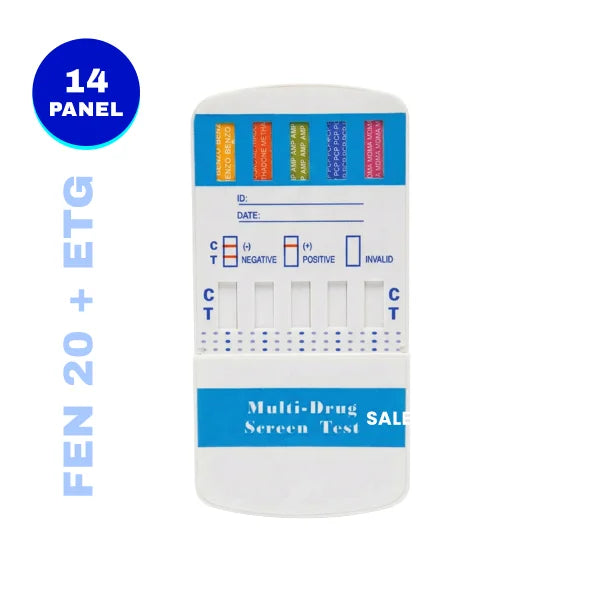
Many 5- to 18-panel drug test cups include an EtG panel so one specimen screens drugs and alcohol. Programs that only need alcohol use EtG drug test dip cards.
How long alcohol stays detectable
Ethanol on breath, saliva, or blood is a short window measured in hours. NIAAA (Alcohol Metabolism, as of November 2026) describes how the body eliminates ethanol after drinking. Once ethanol is gone, BAT and saliva tests read negative.
EtG can remain after ethanol is gone. Manufacturers commonly state a detection window up to 80 hours after drinking. Actual length varies with amount consumed, cutoff, and urine concentration. SAMHSA advises that an EtG immunoassay alone is not proof of beverage alcohol use.
Do not quote a guaranteed hour count to a donor. Put the specimen, cutoff, and confirmation rule in the written policy.
Which alcohol test your program should order
DOT and other safety-sensitive employers order BAT/EBT, not EtG, when they must follow Part 40. Treatment centers, courts, and probation order EtG urine when they need a longer look-back. Clinics that need a same-visit ethanol check order saliva alcohol.
- Print the analyte name (EtG, breath alcohol, or saliva alcohol) on the policy and the PO.
- Print the cutoff next to the name (ng/mL or BAC).
- Verify FDA-cleared / CLIA-waived versus forensic-use-only on the product label.
- Require GC/MS or LC-MS/MS, or EBT, on every preliminary positive.
- Name who may collect, read, and record the result.
- For DOT, follow 49 CFR Part 40, including the 15-minute confirmation wait.
- Do not use EtG to measure current impairment.
How to run and read an on-site alcohol screen
Follow the device instructions for use. A typical urine cup or dip procedure is:
- Identify the donor and open a sealed device.
- Collect the specimen per the IFU and start the timer.
- Read only at the stated time, often 5 minutes; do not read after the maximum time.
- Confirm a control line is present. No control line is invalid; repeat with a new device.
- Apply the IFU line rule. A result at or above cutoff is a preliminary positive.
- Record result, cutoff, lot, and time. Send every preliminary positive for GC/MS or LC-MS/MS.
For DOT breath, a qualified BAT runs a screen. If the result is 0.02 or greater, wait at least 15 minutes and confirm on an EBT (49 CFR Part 40 Subpart N, as of November 2026).
FDA, CLIA, and DOT rules that apply
Claim FDA 510(k) clearance or CLIA-waived status only when the product record holds it. Forensic-use-only alcohol tests must stay labeled as such and are not diagnostic devices. CLIA-waived saliva alcohol and some urine screens may be used at a waived site if staff follow the manufacturer’s instructions. That result is not a medical diagnosis.
DOT alcohol testing follows 49 CFR Part 40 for devices, BAT training, cutoffs, and the meaning of 0.02 versus 0.04. HHS Mandatory Guidelines cover federal workplace drug tests, not DOT alcohol tests.
American Screening Corp, Shreveport, Louisiana, supplies urine cups, dip cards, oral fluid tests, breathalyzers, and DOT-compliant collection kits to clinics, hospitals, treatment centers, courts, labs, staffing firms, and employers, with same-day shipping nationwide. Check the product record for FDA/CLIA status before you order.
Sources
- 49 CFR Part 40 — Procedures for Transportation Workplace Drug and Alcohol Testing Programs
- The Role of Biomarkers in the Treatment of Alcohol Use Disorders, 2012 Revision (SAMHSA)
- Alcohol Metabolism (NIAAA)
FAQ
What is the difference between an EtG test and a breath alcohol test?
An EtG test names a urine immunoassay for ethyl glucuronide, a metabolite, at 100–500 ng/mL, with a window up to about 80 hours. A breath alcohol test (BAT) measures ethanol as BAC. DOT screening is 0.02 and confirmation 0.04 (49 CFR Part 40).
What cutoff should we use for an EtG alcohol test?
Common immunoassay cutoffs are 100, 300, and 500 ng/mL. SAMHSA advises that low-cutoff EtG can reflect incidental exposure. Treatment and court programs often select 300 or 500 ng/mL. Confirm every preliminary positive by GC/MS or LC-MS/MS. This is not legal advice.
Is a positive alcohol screen a final result?
No. Every positive screen is preliminary. Confirm by GC/MS or LC-MS/MS laboratory testing. DOT breath screens at 0.02 or greater require an evidential breath confirmation after a wait. Do not take employment or court action on an unconfirmed immunoassay alone.
Are alcohol test kits FDA-cleared and CLIA-waived?
Some saliva alcohol and urine screens are FDA-cleared and CLIA-waived; others are labeled forensic use only. Match the claim to the product record and IFU. American Screening Corp lists status on each kit. CLIA-waived devices still require following the manufacturer’s instructions.
This article is general information, not medical or legal advice.