
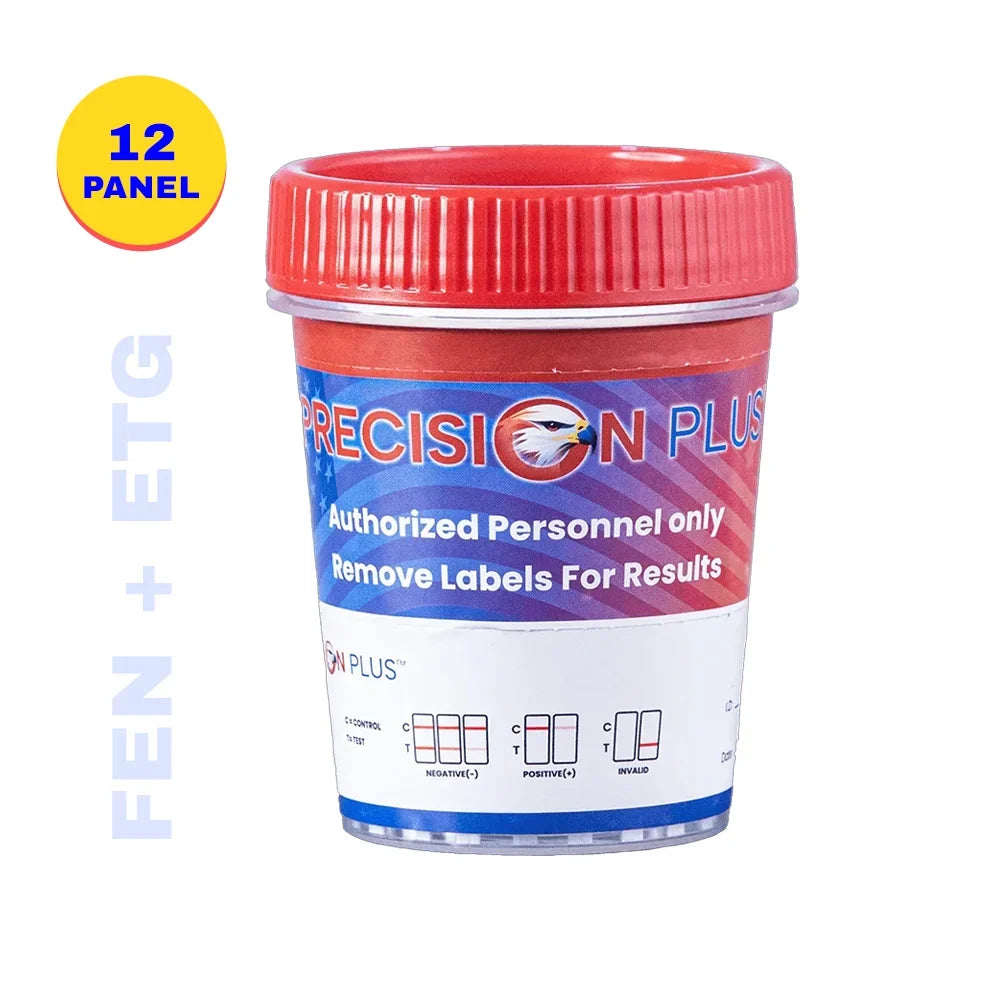
Quick answer: A drug test name is the panel count plus the analytes the device screens, such as a 5-panel (THC, COC, AMP, OPI, PCP) or a 10-panel with benzodiazepines and barbiturates. Cutoffs are in ng/mL. FDA-cleared, CLIA-waived cups from American Screening Corp are for clinics, employers, and courts. Any positive is preliminary; confirm by GC/MS or LC-MS/MS.
- The name is the panel count plus analyte codes (THC, COC, AMP, OPI, PCP, BZO, and others), not a slogan.
- Match cutoff (ng/mL) and detection window to the program. SAMHSA/HHS urine initial cutoffs include THC 50 ng/mL and cocaine 150 ng/mL as of January 2017.
- American Screening Corp supplies FDA-cleared, CLIA-waived cups and dip cards to clinics, courts, and employers. Every positive screen is preliminary and must be confirmed by GC/MS or LC-MS/MS.
What does a drug test name mean?
A drug test name is the specification a buyer uses to order the right screen: the panel count plus the analyte codes printed on the device. Clinics, courts, staffing firms, and employers should treat that name as a bill of materials, not a marketing line.
Need drug tests for your clinic, program or workplace?
American Screening Corp has supplied FDA-cleared, CLIA-waived tests at wholesale pricing since 2004. Popular options:
Ordering 100+ tests? Request volume pricing.
The name tells you which drugs the immunoassay can flag and, on the package insert, the cutoff in nanograms per milliliter (ng/mL). It is not a diagnosis and not a chain-of-custody finding by itself. Every positive screen is preliminary; confirm by GC/MS or LC-MS/MS laboratory testing.
What do the letters on a cup or dip card mean?
Most instant devices print three-letter codes next to each window. Put those same codes on the purchase order so the panel matches written policy.
Common codes: THC (marijuana metabolite, THC-COOH); COC (cocaine metabolite, benzoylecgonine); AMP (amphetamine); mAMP or MET (methamphetamine); OPI or MOP (opiates, morphine/codeine); OXY (oxycodone); BUP (buprenorphine); MDMA (methylenedioxymethamphetamine); PCP (phencyclidine); BZO (benzodiazepines); BAR (barbiturates); MTD (methadone); TCA (tricyclic antidepressants); ETG (ethyl glucuronide); FTY (fentanyl).
Buyers calling American Screening Corp support most often ask whether OPI includes oxycodone or fentanyl. It does not. OPI or MOP is morphine and codeine at the labeled cutoff. If the program needs oxycodone, buprenorphine, or fentanyl, those codes must appear in the test name.
How are 5-panel, 10-panel, and 12-panel tests named?
The number in the name is the count of drug classes on that device, not a federal grade. A 5-panel is the workplace core. A 10-panel or 12-panel adds classes. Always count the codes; do not assume two 10-panel SKUs are identical.
| Panel name | Analytes usually in the name | Typical buyers |
|---|---|---|
| 5-panel | THC, COC, AMP/mAMP, OPI, PCP | Employers, DOT-style programs |
| 10-panel | 5-panel plus BZO, BAR, MTD, and others (varies) | Staffing, courts, treatment |
| 12- to 18-panel | Adds BUP, OXY, MDMA, fentanyl, and/or ETG as labeled | Treatment centers, probation |
| ETG or fentanyl name | Ethyl glucuronide or fentanyl as a named strip or cup line | Treatment, clinics, courts |
The federal 5-panel is defined in the HHS Mandatory Guidelines for Federal Workplace Drug Testing Programs (as of January 2017) and mirrored for transportation in DOT 49 CFR Part 40. Instant 10-panel and 12-panel names are trade conventions. FDA does not publish one mandatory 10-panel list. Count the codes on the insert before you award a bid.
What cutoff levels go with each drug name?
Cutoff is the ng/mL concentration at which the named immunoassay flags a line change. HHS urine initial immunoassay cutoffs in the Mandatory Guidelines (as of January 2017), which many occupational cups follow, include:
- Marijuana metabolites (THC): 50 ng/mL
- Cocaine metabolites (COC): 150 ng/mL
- Amphetamine/methamphetamine (AMP/mAMP): 500 ng/mL
- MDMA: 500 ng/mL
- Codeine/morphine (OPI): 2,000 ng/mL
- Hydrocodone/hydromorphone: 300 ng/mL
- Oxycodone/oxymorphone (OXY): 100 ng/mL
- 6-acetylmorphine: 10 ng/mL
- Phencyclidine (PCP): 25 ng/mL
DOT publishes the parallel table at 49 CFR Part 40.87 (as of the current eCFR). Some cups are named with a 300 ng/mL opiate cutoff instead of 2,000 ng/mL. That is a different specification. Match the insert to the policy, especially for DOT-covered employees versus treatment or court programs.
How long does each named test detect a drug?
Detection windows are not part of the legal test name and are not HHS cutoff concentrations. They change with dose, frequency, hydration, and ng/mL cutoff. Occupational urine immunoassay programs commonly plan around AMP/mAMP 1–3 days; COC 1–4 days; OPI 1–4 days; PCP 3–7 days; THC 1–3 days after single use and up to about 30 days with frequent use; BZO 1–7 days; MTD 2–7 days; BUP 1–4 days; FTY about 1–3 days; ETG up to about 80 hours after alcohol.
Oral fluid (saliva) names use shorter windows, often hours to two days. Do not read a detection window as proof of impairment or as medical advice.
Cup vs dip card: which name should you order?
If the collector needs an integrated container, temperature strip, and screw lid, order the panel as drug test cups. If urine is already in a standard cup, order the same codes as drug test dip cards.
Keep panel name, analyte list, and ng/mL cutoffs identical across formats. Confirm SKU, expiration, FDA 510(k) clearance, and CLIA-waived status on the product record when the site is a waived laboratory. Forensic-use-only labeled lots are a different name and must not be substituted into a waived clinical workflow. FDA-cleared means a 510(k) for the intended use; CLIA-waived means waived complexity under the Clinical Laboratory Improvement Amendments (FDA CLIA page, current).
How to read results on a named panel
Use the insert that ships with that named lot. Do not extend the read time to “make a line appear.”
- Verify the pouch name matches the order: panel count, analyte codes, cutoff, lot, and expiration.
- Bring the device to room temperature. For cups, confirm the temperature strip is in range after collection.
- Time the read from the insert, commonly 5 minutes. Do not interpret after the maximum read time, often 10 minutes.
- A control line must appear. No control line means invalid; repeat with a new device.
- A line in the test region is negative for that analyte at the labeled cutoff. No test line plus a control line is a preliminary positive.
- Record the named panel, lot, time, and each analyte. Send every preliminary positive for GC/MS or LC-MS/MS before an employment, court, or clinical decision.
Checklist before you buy by drug test name
- Confirm the written policy lists each analyte, not only “10-panel.”
- Match each code (THC, COC, OXY, BUP, FTY, ETG) to the box.
- Match each cutoff in ng/mL to SAMHSA/HHS or DOT if the program requires those tables.
- Choose cup or dip format for the collection site.
- Confirm FDA-cleared / CLIA-waived versus forensic-use-only.
- Set a lab confirmation path for preliminary positives and train staff on control lines and the insert timer.
Who should order by these names
American Screening Corp in Shreveport, Louisiana sells these named screens wholesale to clinics, hospitals, addiction-treatment centers, courts and probation, laboratories, staffing firms, employers, schools, and distributors. Same-day shipping is nationwide on in-stock kits. Written by the American Screening Corp content team. Last updated November 16, 2026.
FAQ
What does a 5-panel drug test name include?
A 5-panel name usually means THC, COC, AMP, OPI, and PCP—the HHS/DOT workplace set. Confirm the insert and ng/mL cutoffs. Any positive is preliminary; confirm by GC/MS or LC-MS/MS.
Do all 10-panel drug test names screen the same drugs?
No. A 10-panel name is not standardized by FDA. Many add BZO, BAR, MTD, and others to a 5-panel, but oxycodone, buprenorphine, and fentanyl are often extra. Match codes on the box to your policy.
Is a named immunoassay cup a final result?
No. Instant cups and dip cards are screening immunoassays. A line result is not a legal finding. Every positive screen is preliminary; confirm by GC/MS or LC-MS/MS laboratory testing before an employment or court action.
What FDA or CLIA words should appear with the test name?
For waived-lab use, the label should state FDA-cleared and CLIA-waived for that intended use. Forensic-use-only devices are named and labeled differently. Check the product record and package insert, not the catalog headline alone.
Sources
- HHS Mandatory Guidelines for Federal Workplace Drug Testing Programs (Federal Register, January 23, 2017)
- DOT 49 CFR Part 40 — Procedures for Transportation Workplace Drug and Alcohol Testing Programs
- FDA: Clinical Laboratory Improvement Amendments (CLIA)
This page is general information from American Screening Corp, not legal or medical advice.