
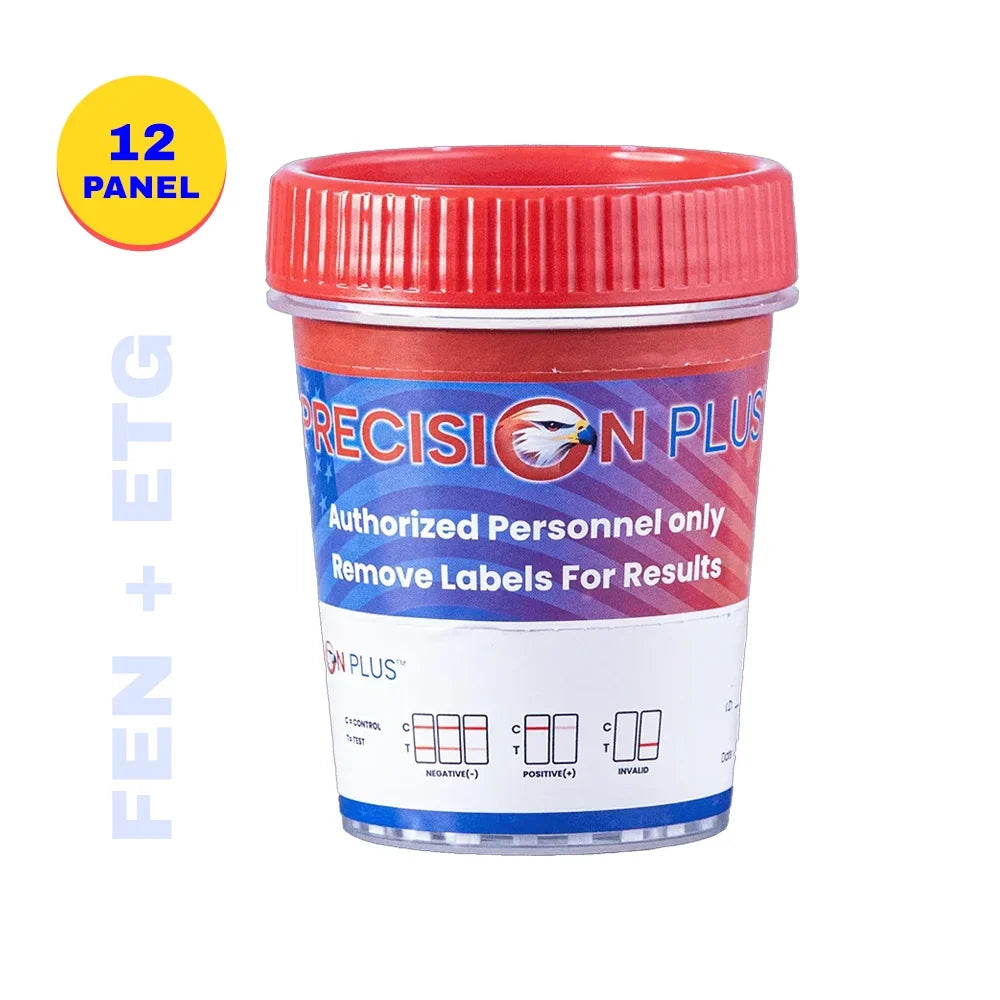
Quick answer: Mobile detect drug test kits are on-site immunoassay screens for urine or oral fluid. A standard 5-panel cup detects THC at 50 ng/mL, cocaine at 150 ng/mL, amphetamines at 500 ng/mL, opiates at 2,000 ng/mL, and PCP at 25 ng/mL. Results read in minutes. Every positive is preliminary; confirm by GC/MS or LC-MS/MS. American Screening Corp supplies FDA-cleared, CLIA-waived kits.
- On-site kits are immunoassay screens, not final laboratory results; every positive is preliminary and must be confirmed by GC/MS or LC-MS/MS.
- HHS-aligned urine cutoffs commonly used on 5-panel devices are THC 50 ng/mL, cocaine 150 ng/mL, amphetamines 500 ng/mL, opiates 2,000 ng/mL, and PCP 25 ng/mL.
- American Screening Corp supplies FDA-cleared, CLIA-waived cups, dip cards, and oral fluid devices to clinics, courts, treatment centers, and employers.
What is a mobile detect drug test kit?
A mobile detect drug test kit is a portable immunoassay device used to screen urine or oral fluid at the collection site. Clinics, probation offices, job-site trailers, and mobile collection vans use it when a result is needed in minutes.
Need drug tests for your clinic, program or workplace?
American Screening Corp has supplied FDA-cleared, CLIA-waived tests at wholesale pricing since 2004. Popular options:
Ordering 100+ tests? Request volume pricing.
Antibodies on a lateral-flow strip bind a drug or metabolite. If the specimen is at or above the printed cutoff, the line pattern indicates a presumptive positive. Staff must follow that device IFU; results are commonly read at five minutes. Instant kits do not replace a certified-lab result when a statute or contract requires one.
What drugs do they detect, and at what cutoff levels?
Panel count is the number of drug classes on the device. A 5-panel screen usually covers marijuana metabolite (THC-COOH), cocaine metabolite, amphetamines, opiates, and PCP. Expanded 10- to 18-panel devices add classes such as benzodiazepines, oxycodone, fentanyl, and EtG. Match the panel to the drugs your program must detect.
Cutoff is the concentration in nanograms per milliliter (ng/mL) that separates a negative screen from a presumptive positive. Devices used in federally aligned workplace programs commonly follow HHS Mandatory Guidelines initial-test cutoffs (SAMHSA, Mandatory Guidelines for Federal Workplace Drug Testing Programs, as of October 2017):
- Marijuana metabolites: 50 ng/mL
- Cocaine metabolites: 150 ng/mL
- Amphetamines and MDMA: 500 ng/mL
- Codeine/morphine: 2,000 ng/mL
- Hydrocodone/hydromorphone: 300 ng/mL
- Oxycodone/oxymorphone: 100 ng/mL
- 6-acetylmorphine: 10 ng/mL
- PCP: 25 ng/mL
Fentanyl strips, EtG strips, and oral-fluid devices use the cutoff printed on that product label. Do not apply a urine workplace cutoff to saliva or to a forensic-use-only strip. Clinic and probation buyers ask first about cutoff, panel count, and whether an instant line can stand alone. It cannot.
How long is the detection window?
A detection window is the period after last use during which a specimen may still screen at or above cutoff. It is an estimate. Dose, frequency, hydration, and the device cutoff all change the window.
For urine immunoassay planning, programs commonly treat amphetamines, cocaine metabolite, and opiates as a few days. THC may clear in 1-3 days after a single use and remain detectable for weeks with daily use. Oral fluid windows are shorter, often hours to about two days. Use these ranges only to choose a specimen type, not to time last use.
How do you run an on-site urine screen?
Follow the instructions for use for the exact SKU. On most competitive immunoassay drug strips, a visible test line is negative and a missing test line with a valid control is a presumptive positive. Confirm that legend on the IFU; never invert it.
- Verify the kit is in date, the pouch is intact, and the panel is the one you intend to run.
- Identify the donor and explain the collection. Check photo ID when your protocol requires it.
- Collect urine to the marked volume line. Keep the specimen in view if chain of custody requires it.
- Seat the lid, lay the cup flat, and start timing as the IFU specifies, commonly five minutes.
- Read control and test lines only inside the stated window. No control line means invalid; recollect. A presumptive positive is preliminary; confirm by GC/MS or LC-MS/MS. Document lot, time, reader, and result.
Cup, dip card, or oral fluid: which format?
Format is a workflow choice. The same immunoassay cutoffs can appear in a cup, a dip card, or an oral-fluid swab. Choose the vessel that fits volume, privacy, and whether you need recent-use or historical-use detection.
| Format | Specimen | Best fit | Watch-outs |
|---|---|---|---|
| Cup | Urine | Single-donor intake; adulteration strips in one vessel | Needs a restroom and minimum volume |
| Dip card | Urine in a separate cup | High-volume benches and mixed panels | Extra handling; dip time must match the IFU |
| Oral fluid | Saliva | Recent use; observed collection; no restroom | Shorter window; different cutoffs than urine |
Wholesale buyers who run mobile routes usually stock drug test cups for field collections and drug test dip cards for in-office volume. Oral fluid fills the gap when a restroom is not available or when the program cares about use in the last day rather than the last week.
Are these kits FDA-cleared and CLIA-waived?
Many multi-panel urine cups and dip cards intended for clinical and workplace screening are cleared by the U.S. Food and Drug Administration under the 510(k) pathway and categorized as CLIA-waived when used as labeled (FDA, Drugs of Abuse Home Use Test; CMS Clinical Laboratory Improvement Amendments, as of 2025). A waived site may run the test only by following the IFU.
Not every strip is cleared for clinical use. Forensic-use-only devices must be labeled as such. Verify FDA 510(k) and CLIA-waived status on the specific SKU. American Screening Corp ships in-stock waived kits nationwide the same day.
Every positive screen is preliminary; confirm by GC/MS or LC-MS/MS laboratory testing. Under 49 CFR Part 40 (U.S. Department of Transportation, Office of Drug and Alcohol Policy and Compliance, as of 2025), DOT drug tests use HHS-certified laboratories. An instant kit is not a DOT test. Invalids (no control line, out-of-range temperature, adulteration flags) require a new collection, not a guess.
Who should purchase mobile detect kits?
These kits are sold to organizations. Primary buyers are addiction-treatment clinics, hospital and office labs, probation and drug-court programs, staffing and occupational-health clinics, and employers running non-DOT policies.
Before you write a purchase order, walk this checklist with your compliance lead:
- Confirm the panel list against the drugs your statute, payer, or client contract names.
- Record the cutoff (ng/mL) and specimen type for each analyte; do not mix urine and oral-fluid cutoffs.
- Verify FDA-cleared / CLIA-waived versus forensic-use-only on the SKU, not on the catalog category.
- Write the confirmation path: which lab, GC/MS or LC-MS/MS, who pays, which chain-of-custody form.
- If any donor is DOT-covered, keep Part 40 collections on the DOT path; do not substitute an instant cup.
FAQ
Are mobile detect kits as accurate as a lab test?
No. They are immunoassay screens. A negative at or below cutoff is used to rule out. A positive is preliminary and must be confirmed by GC/MS or LC-MS/MS. Do not treat an instant line as a final result.
What cutoff does a 5-panel urine cup use for THC and cocaine?
Devices aligned to HHS workplace initial-test levels commonly use 50 ng/mL for marijuana metabolites and 150 ng/mL for cocaine metabolites. Always read the cutoff printed on that device label and instructions for use.
Can employers use instant kits for DOT-regulated testing?
DOT-regulated testing follows 49 CFR Part 40 and uses HHS-certified laboratories. An instant kit is not a DOT test. Use waived cups only where your non-DOT policy allows. This page is not legal advice.
Should a mobile program buy cups or dip cards?
Cups combine collection and test in one vessel and often include adulteration strips, which suits field collections. Dip cards use a separate cup and suit high-volume benches. Match format to workflow, chain of custody, and panel list.
Sources
- Mandatory Guidelines for Federal Workplace Drug Testing Programs (SAMHSA / HHS)
- 49 CFR Part 40 - Procedures for Transportation Workplace Drug and Alcohol Testing (DOT)
- FDA - Drugs of Abuse Home Use Test
This page is general information, not medical or legal advice.