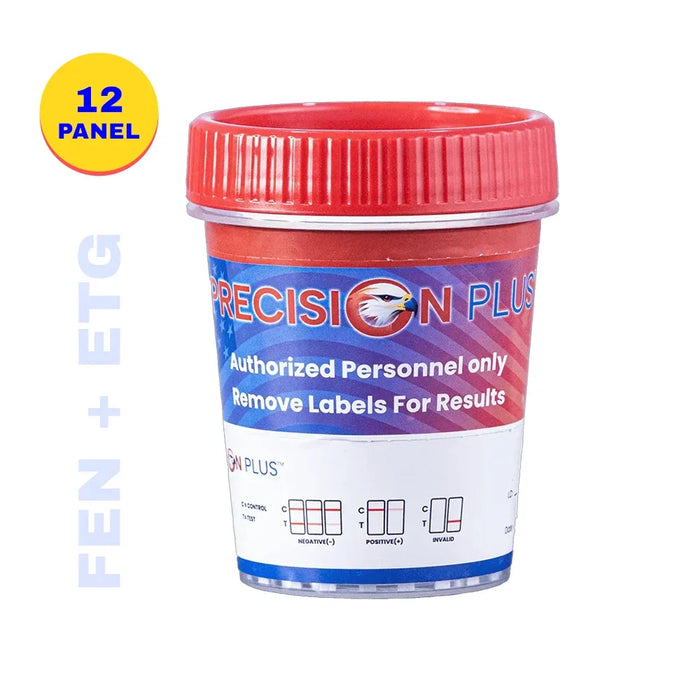
What an MTD Drug Test Detects
An MTD drug test is a methadone drug test: a screening assay that looks for methadone in urine or oral fluid, not for morphine-class opiates. Clinics, courts, opioid treatment programs, and employers add MTD to a panel when they must document methadone use, diversion risk, or compliance with a medication-assisted treatment (MAT) plan.
Methadone is a long-acting synthetic opioid used for pain and, in SAMHSA-regulated opioid treatment programs, for opioid use disorder. On-site immunoassays labeled MTD detect methadone. Some configurations also detect EDDP, the primary metabolite, which helps support ingested medication versus a specimen spiked with parent drug. A visual or analyzer result is presumptive only. If a result may affect employment, court standing, custody, or treatment privileges, send the specimen to a certified laboratory for GC-MS or LC-MS/MS confirmation.
Why a Standard Opiate or 5-Panel Test Misses Methadone
Buyers often assume an opioid or opiate result includes methadone. It does not. Opiate (OPI/MOP) reagents target morphine and codeine. Methadone does not share that structure, so a negative opiate strip does not rule methadone out. Buprenorphine, oxycodone, fentanyl, and methadone each need their own assay when your protocol requires them.
Federal workplace testing under SAMHSA mandatory guidelines and Department of Transportation testing under 49 CFR Part 40 use fixed analyte lists that do not include methadone. DOT expanded opioid panels added semi-synthetics such as oxycodone and hydrocodone; methadone is still not a required DOT analyte. Do not substitute an MTD cup for a DOT collection. If a non-DOT policy, probation order, pain-clinic contract, or OTP procedure requires methadone, specify an MTD drug test on the cup, dip card, or laboratory requisition.
Order drug test cups and kits online at https://www.americanscreeningcorp.com/collections/drug-testing-cups, or call 1-866-526-2873 for bulk and wholesale pricing.
Who Should Run a Methadone Drug Test
American Screening Corp supplies clinics, hospitals, addiction-treatment centers, courts and probation offices, laboratories, staffing firms, and employers. Typical methadone drug test use cases include:
- Opioid treatment programs and office-based MAT: verify the patient is taking methadone, flag other unexpected drugs, and support take-home decisions.
- Pain management and behavioral health: document adherence and unexpected positives.
- Courts, drug courts, and probation: enforce orders that ban illicit opioids or that require documented MAT.
- Hospital and intake settings: rapid point-of-care information while a lab result is pending.
- Staffing firms and employers: expanded pre-employment or reasonable-suspicion panels when a written policy includes methadone.
A confirmed MTD positive often reflects lawful prescribed MAT. Route results through prescription verification and medical review. Do not treat every methadone finding as illicit use.
Urine vs. Oral Fluid for Methadone Screening
Most MTD volume in treatment and court work is urine. Oral fluid is useful when you need an observed collection without a restroom. American Screening Corp offers urine drug test dip cards and oral fluid tests for wholesale programs, along with multi-panel cups and laboratory confirmation support.
| Factor | Urine cup or dip card | Oral fluid |
|---|---|---|
| Typical detection window | Several days; longer with daily MAT dosing | Shorter, often about one to two days |
| Collection control | Restroom process; temperature strip and adulteration checks | Collector-observed swab; harder to substitute |
| Common program use | OTPs, courts, expanded employment panels | On-site or no-restroom collections |
| Result type | Presumptive immunoassay | Presumptive immunoassay |
Match the matrix to collection control, detection window, and chain of custody. Cups with temperature strips remain the standard for OTPs and probation. Dip cards fit clinics and labs that already pour urine. Oral fluid reduces substitution risk when the collector watches the swab.
Cutoffs, Detection Time, and Lab Confirmation
Many CLIA-waived urine immunoassays use a 300 ng/mL methadone cutoff. Always follow the package insert for the lot you issue to collectors. Cutoff, cross-reactivity, and read time are device-specific. Oral fluid cutoffs are stated for that matrix and must not be compared with urine numbers.
Urine may remain positive for several days after last use and longer in daily high-dose MAT. Oral fluid windows are shorter. Hydration, dose timing, and metabolism change results. Point-of-care devices are qualitative screens. They are not blood levels and not proof of impairment.
Send presumptive positives to an accredited laboratory when the result may affect employment, custody, benefits, or program standing. Confirmation should identify methadone and, when the method includes it, EDDP. Maintain chain of custody and collector training. DOT collections must follow Part 40. If you also need methadone, collect a separate non-DOT specimen with a non-DOT form. Do not add MTD to a DOT Custody and Control Form.
Checklist before you place a wholesale order
- Confirm MTD is printed on the panel; do not assume it is inside OPI.
- Record the immunoassay cutoff and whether EDDP is included.
- Choose urine cup, dip card, or oral fluid based on observation needs and window.
- Decide CLIA-waived point-of-care versus send-out screening.
- Define which non-negatives go to GC-MS or LC-MS/MS confirmation.
- Train collectors on read time, specimen temperature, and adulteration checks.
- Keep DOT 5-panel collections separate from non-DOT MTD panels.
- Align positives with prescription verification and medical review.
How Clinics and Employers Specify an MTD Panel
Tell your supplier the analytes, matrix, device format, and whether you need chain-of-custody cups. A classic 5-panel will miss methadone. Treatment centers should not treat a hospital opiate result as a methadone result. Common builds are 10- to 14-panel urine devices that include MTD plus other treatment-relevant drugs.
American Screening Corp, based in Shreveport, Louisiana, sells wholesale urine cups, dip cards, oral fluid tests, breathalyzers, DOT-compliant collection kits, and lab confirmation services to clinics, hospitals, addiction-treatment centers, courts, labs, staffing firms, and employers. Request package inserts, CLIA categorization, and case quantities when you standardize a device across sites.
Sources
- SAMHSA: Methadone
- U.S. Department of Transportation: 49 CFR Part 40
- SAMHSA: Drug-Free Workplace Program
FAQ
What does an MTD drug test detect?
An MTD drug test detects methadone in urine or oral fluid. It does not replace an opiate (morphine/codeine) assay. Some devices also target the metabolite EDDP. Treat immunoassay results as presumptive until a laboratory confirms them.
Does a standard opiate or 5-panel test include methadone?
No. Opiate strips do not reliably detect methadone. SAMHSA federal workplace panels and DOT Part 40 panels do not list methadone as a required analyte. Order a dedicated MTD methadone drug test when your protocol requires it.
What cutoff is used on a methadone urine screen?
Many CLIA-waived urine immunoassays use 300 ng/mL methadone. Follow the insert for your device and lot. Confirm non-negatives with GC-MS or LC-MS/MS for methadone and, when offered, EDDP.
Should employers treat a positive MTD result as illegal drug use?
Not automatically. Methadone is a lawful prescription for pain and opioid use disorder. Use medical review and prescription verification. Keep DOT collections on Part 40 forms and run any MTD test as a separate non-DOT specimen.
This is general information for testing programs and is not legal or medical advice.
Order drug test cups and kits online at https://www.americanscreeningcorp.com/collections/drug-testing-cups, or call 1-866-526-2873 for bulk and wholesale pricing.