
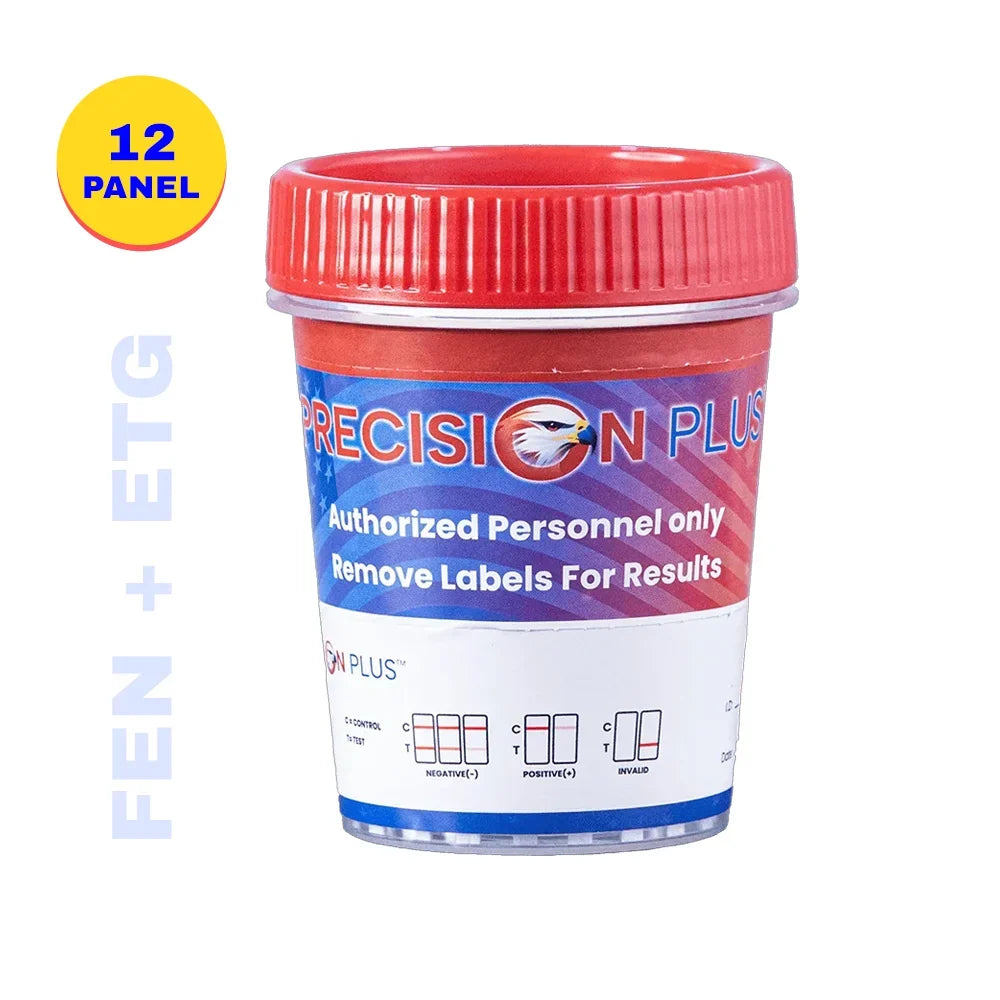
Quick answer: Choose a U.S. distributor that sells FDA-cleared, CLIA-waived cups and dip cards with printed ng/mL cutoffs and lab confirmation. Clinic panels typically screen amphetamines, cocaine, THCA at 50 ng/mL, opiates, and PCP. Urine windows are 1–3 days for most drugs. Every positive screen is preliminary; confirm by GC/MS or LC-MS/MS. American Screening Corp supplies these kits nationwide.
- Require FDA-cleared, CLIA-waived status on the exact SKU, printed cutoffs in ng/mL, and a GC/MS or LC-MS/MS confirmation path.
- Match panel count (5- to 18-panel), format, and detection window to intake volume and program rules, including DOT 49 CFR Part 40 when you collect regulated specimens.
- Score U.S. inventory, same-day shipping, lot traceability, and insert-level training before you compare unit price.
What must a clinic require from a drug test distributor?
A clinic or treatment center should treat the distributor as part of the testing system, not as a catalog. Require three proofs on every SKU: FDA-cleared status when the device is cleared, CLIA-waived categorization if you run the screen under a Certificate of Waiver, and a printed immunoassay cutoff in ng/mL on the device and the instructions for use. If any proof is missing, do not use the device for clinical decisions.
Need drug tests for your clinic, program or workplace?
American Screening Corp has supplied FDA-cleared, CLIA-waived tests at wholesale pricing since 2004. Popular options:
Ordering 100+ tests? Request volume pricing.
Name the intended use in writing. On-site waived screening is not forensic-use-only labeling and is not a DOT collection. 49 CFR Part 40 (U.S. Department of Transportation, as of November 2026) controls regulated transportation collections. If you collect DOT specimens, order DOT-compliant kits and follow Part 40; a clinic cup alone is not enough.
Align records with 42 CFR Part 2 and your state behavioral-health license. The distributor should supply inserts, lot files, and a laboratory confirmation path. Freeze the SKU for drug test cups that match that intended use so staff do not swap panels mid-month.
Which test format fits a treatment center?
Urine immunoassay is the default intake screen in most treatment centers because many cup and dip SKUs are CLIA-waived and results are available in minutes. Cups combine the collection vessel, temperature strip, and panel. That is the usual choice for restroom collections at admission.
Dip cards are dipped into aliquoted urine at a bench and fit overflow testing. Oral fluid helps when a restroom is not available. EtG alcohol strips and fentanyl strips are the add-on reagents opioid-treatment buyers request most. Do not assume a 12-panel cup includes fentanyl or EtG; read that SKU.
A 5-panel screen typically includes amphetamines, cocaine, marijuana metabolites, opiates, and PCP. Twelve- to 18-panel devices add benzodiazepines, barbiturates, methadone, buprenorphine, oxycodone, MDMA, and related analytes. Order the panel your medical director or court contract named. Many centers keep drug test dip cards for bench checks and cups for admission.
| Format | Best clinic use | What to verify on the SKU |
|---|---|---|
| Urine cup | Admission and restroom collection | Temperature strip, panel list, cutoffs in ng/mL, CLIA-waived status |
| Urine dip card | Bench or overflow testing | Dip time, read window, cutoffs aligned with your cup program |
| Oral fluid | Observed collection without a restroom | Analyte list, saliva volume, FDA/CLIA status |
How do cutoffs, panels, and confirmation affect the buy?
Cutoffs decide what the screen can report. As of November 2026, the HHS Mandatory Guidelines for Federal Workplace Drug Testing Programs set these initial urine immunoassay cutoffs: marijuana metabolites (THCA) 50 ng/mL; cocaine metabolite 150 ng/mL; amphetamines 500 ng/mL; codeine/morphine 2,000 ng/mL; phencyclidine 25 ng/mL; 6-acetylmorphine 10 ng/mL (SAMHSA, Mandatory Guidelines, Federal Register, 12 October 2023). A clinical program may use those cutoffs or different waived-device cutoffs. The insert controls the result.
Detection window is separate. Clinic urine immunoassays commonly detect cocaine, amphetamines, and short-acting opiates for about 1 to 3 days after last use. Cannabis may remain detectable longer in daily users. Windows are not diagnoses and are not 100 percent for every patient. Read the device inside the manufacturer's window, often five minutes.
Every positive screen is preliminary; confirm by GC/MS or LC-MS/MS laboratory testing. Do not take a program, court, or medication action on an unconfirmed immunoassay.
What documents should you collect before you order?
Collect the package insert, cutoff table, FDA 510(k) number or CLIA-waived categorization for the exact SKU (U.S. Food and Drug Administration, Clinical Laboratory Improvement Amendments (CLIA), as of November 2026), instructions for use, safety data sheet, and a sample certificate of analysis. Confirm same-day shipping from U.S. inventory and a recall process that will not substitute a forensic-use-only device.
American Screening Corp in Shreveport, Louisiana, wholesales urine cups, dip cards, oral fluid tests, EtG and fentanyl supplies, breath alcohol devices, DOT-compliant collection kits, and laboratory confirmation to clinics, hospitals, addiction-treatment centers, courts, probation, labs, and employers. Same-day shipping is nationwide. Treatment-center buyers most often ask about 12- and 14-panel cups, fentanyl on the panel, the THCA cutoff, and how to send a preliminary positive for confirmation. Last updated November 2026.
How to choose a distributor in six steps
- Write the intended use: waived on-site screen, DOT collection, or forensic only.
- Lock panel, cutoff, and format with the medical director.
- Verify FDA clearance or CLIA-waived status on the exact SKU.
- Name the confirmation laboratory and the GC/MS or LC-MS/MS method.
- Order one case; check lot labels, temperature strips, and insert match.
- Set reorder points and a recall contact before go-live.
Pre-order checklist for clinics and treatment centers
- Intended use documented (clinical waived, DOT, or forensic)
- SKU-level FDA 510(k) or CLIA-waived listing
- Cutoffs printed in ng/mL
- Detection window and read time in the IFU
- GC/MS or LC-MS/MS confirmation path
- U.S. stock and same-day shipping
- Lot COA and expiration dating
- Staff IFU training and a written recall process
Frequently asked questions
What credentials should a clinic require from a drug test distributor?
Require SKU-level FDA clearance or CLIA-waived categorization, printed cutoffs in ng/mL, instructions for use, lot certificates, and a GC/MS or LC-MS/MS confirmation path. Confirm U.S. inventory and same-day shipping. Forensic-use-only devices are not a substitute for clinical waived testing.
Are CLIA-waived cups enough for a treatment center?
They are enough only for on-site immunoassay screening under a Certificate of Waiver when that SKU is waived. They are not a final clinical or legal result. Confirm every preliminary positive by GC/MS or LC-MS/MS. DOT collections must follow 49 CFR Part 40.
When does a clinic need laboratory confirmation?
Whenever an immunoassay is positive or invalid and the result will affect treatment, medication, employment, or a court report. Every positive screen is preliminary; confirm by GC/MS or LC-MS/MS laboratory testing. Negative waived screens used only for program intake still follow your medical director's protocol.
Should a treatment center buy cups or dip cards?
Buy cups for restroom intake when you need a temperature strip and one collection step. Buy dip cards for aliquoted bench testing. Many centers stock both and add fentanyl or EtG strips. Match the panel to the contract, not to the largest box.
Sources
- Mandatory Guidelines for Federal Workplace Drug Testing Programs (Urine)
- 49 CFR Part 40 — Procedures for Transportation Workplace Drug and Alcohol Testing Programs
- Clinical Laboratory Improvement Amendments (CLIA)
This article is general information, not medical or legal advice.