
What Is a DOT Drug Test?
A DOT drug test is a federally regulated test required under 49 CFR Part 40 for safety-sensitive transportation employees. It screens for five drug classes (marijuana, cocaine, amphetamines, opioids, and PCP) using a urine specimen, or oral fluid where the employer's DOT agency allows it. The specimen must be collected on the federal Custody and Control Form (CCF), analyzed by an HHS-certified laboratory, and verified by a Medical Review Officer (MRO).
For clinics, third-party administrators, staffing firms, and employers, the key point is that "DOT" describes a regulated process, not just a panel of drugs. Every step has to follow Part 40, or the result may not count.
DOT Drug Test Panel: The 5 Drug Classes
The DOT drug test panel is fixed by regulation. It is often called the DOT 5-panel drug test, and employers cannot add or remove classes for a DOT test. The panel covers:
- Marijuana metabolites (THC)
- Cocaine metabolites
- Amphetamines: amphetamine, methamphetamine, MDMA, and MDA
- Opioids: codeine, morphine, heroin metabolite (6-AM), hydrocodone, hydromorphone, oxycodone, and oxymorphone
- Phencyclidine (PCP)
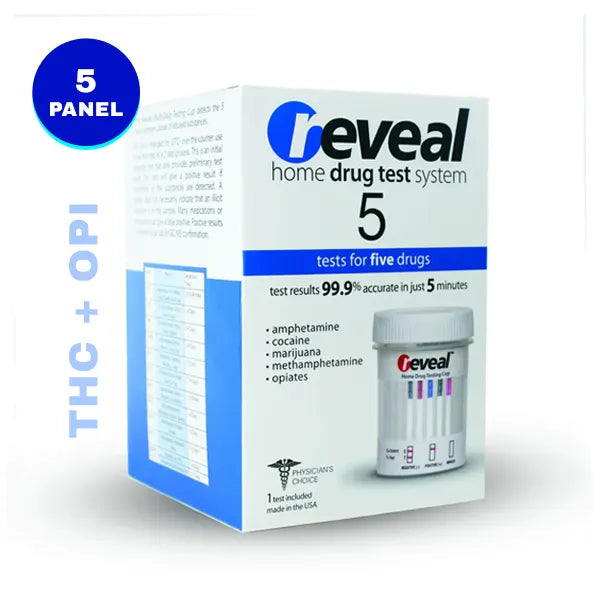
Note that the DOT "5-panel" counts drug classes. It is not the same as a generic 5-panel test sold for workplace use, and the cutoff levels and confirmation steps are set by federal rules.
Does a DOT test include alcohol?
Alcohol is tested separately, by breath, using an evidential breath testing device and a trained technician. An alcohol result of 0.02 or higher triggers removal from safety-sensitive duty, and 0.04 or higher is a violation. Employers usually schedule drug and alcohol testing together, but they are different procedures.
DOT 5-Panel vs. Non-DOT Testing
Buyers often mix up regulated and non-regulated testing. Use this table to match the test to the situation.
| Feature | DOT 5-panel test | Non-DOT test (employer policy, court, treatment) |
|---|---|---|
| Authority | 49 CFR Part 40 plus agency rules (FMCSA, FAA, FRA, FTA, PHMSA, USCG) | Employer policy, court order, clinical protocol, or state law |
| Drug panel | Fixed five classes | Flexible (cups and cards come in various panel configurations) |
| Specimen | Urine; oral fluid where permitted | Urine, oral fluid, and others |
| Paperwork | Federal CCF with chain of custody | Varies by program |
| Laboratory | HHS-certified lab required | Instant on-site screening is common, with optional lab confirmation |
| Result review | MRO verification required | Depends on program |
| Instant (point-of-care) screens | Not allowed for DOT-required tests | Allowed and widely used |
If your program covers non-DOT populations, such as probation clients, treatment patients, or non-CDL staff, on-site screening is a practical option. Drug testing cups let your staff get immediate presumptive results, with lab confirmation available when a result must be defended.
DOT Drug Testing Requirements for Employers
Who is covered
Employers with safety-sensitive employees regulated by a DOT agency must test them. That includes commercial drivers under FMCSA, as well as covered employees in aviation, rail, transit, pipeline, and maritime operations. Each agency has its own rule part, but all follow Part 40 for how testing is done.
When tests are required
- Pre-employment: a verified negative result is required before the employee performs safety-sensitive work.
- Random: unannounced selection from a scientifically valid pool. FMCSA's current minimum annual random rate is 50% for drugs and 10% for alcohol. Rates vary by agency and can change.
- Reasonable suspicion: based on trained supervisor observations.
- Post-accident: when the event meets the agency's criteria.
- Return-to-duty and follow-up: after a violation and an evaluation by a Substance Abuse Professional (SAP).
Marijuana and CBD
Marijuana remains a prohibited drug for DOT-regulated employees, even where state law permits medical or recreational use. MROs do not accept CBD use as a legitimate medical explanation for a positive result.
Employer compliance checklist
- Write and distribute a DOT-compliant drug and alcohol policy and educational materials.
- Name a designated employer representative (DER).
- Train supervisors who may make reasonable suspicion determinations.
- Use collection sites and collectors who meet Part 40 qualifications.
- Send specimens only to HHS-certified laboratories, with MRO review.
- Maintain a random selection pool and document that selections are unannounced.
- Run the required FMCSA Drug & Alcohol Clearinghouse queries for CDL drivers, and report violations.
- Keep records for the retention periods Part 40 and your agency require.
- Remove employees from safety-sensitive duty after a violation until the SAP and return-to-duty process is complete.
What About Oral Fluid DOT Testing?
Since 2023, DOT rules have allowed oral fluid as a second specimen type for DOT drug testing, alongside urine. It tests for the same five drug classes and is useful for observed, shorter-window collections. It still requires a federal CCF, an HHS-certified lab, and MRO review, so it differs from non-regulated oral fluid screens. For non-DOT programs, oral fluid drug tests offer a quick, observed collection.
Where a Wholesale Supplier Fits
American Screening Corp supplies drug and alcohol testing products to clinics, hospitals, treatment centers, courts and probation offices, labs, staffing firms, and employers, including DOT-compliant collection kits and lab confirmation. Before you build a DOT program, confirm with your laboratory and TPA which kit components, CCF versions, and collector requirements apply. Contact our team to match supplies to your program.
What Counts as a Regulated 5-Panel Drug Test?
A regulated 5-panel drug test is a federally mandated laboratory test for workers in safety-sensitive jobs. A clinic, court, probation, or private-employer screen is not automatically regulated, even when it uses the same five drug classes.
The U.S. Department of Transportation requires testing under 49 CFR Part 40 for safety-sensitive employees in six modes, as of November 2026 (DOT Office of Drug and Alcohol Policy and Compliance, 49 CFR Part 40): Federal Motor Carrier Safety Administration (FMCSA) commercial drivers; Federal Aviation Administration (FAA) aviation personnel; Federal Railroad Administration (FRA) railroad employees; Federal Transit Administration (FTA) transit employees; Pipeline and Hazardous Materials Safety Administration (PHMSA) pipeline workers; and U.S. Coast Guard (USCG) maritime crew.
HHS Mandatory Guidelines cover many federal employees. Nuclear Regulatory Commission rules cover NRC licensees. DOT specimens must be tested by an HHS-certified laboratory. Instant cups and dip cards cannot produce a valid DOT result.
Treatment centers, staffing firms, construction employers, and courts often run a non-DOT 5-panel that matches the federal drug classes and cutoffs. American Screening Corp supplies FDA-cleared, CLIA-waived cups and dips for those programs and ships same-day nationwide. Every positive screen is preliminary; confirm by GC/MS or LC-MS/MS laboratory testing. This is general information, not medical or legal advice.
DOT 5-Panel Cutoff Levels (ng/mL)
A DOT 5-panel urine test detects marijuana metabolites, cocaine metabolite, amphetamines (amphetamine, methamphetamine, MDMA, MDA), opioids (codeine, morphine, 6-acetylmorphine, hydrocodone, hydromorphone, oxycodone, oxymorphone), and phencyclidine (PCP). The laboratory cutoffs below are the federal values in 49 CFR Part 40, as of November 2026 (DOT, DOT Drug Testing Cutoff Concentrations).
| Analyte | Initial test (ng/mL) | Confirmation (ng/mL) |
|---|---|---|
| Marijuana metabolite (THCA) | 50 | 15 |
| Cocaine metabolite (benzoylecgonine) | 150 | 100 |
| Amphetamines / MDMA / MDA | 500 | 250 |
| Codeine / morphine | 2000 | 2000 |
| Hydrocodone / hydromorphone | 300 | 100 |
| Oxycodone / oxymorphone | 300 | 100 |
| 6-Acetylmorphine (heroin metabolite) | 10 | 10 |
| Phencyclidine (PCP) | 25 | 25 |
An immunoassay at or above the initial cutoff is preliminary; the lab confirms with GC/MS or LC-MS/MS. Urine detection windows are typically 1–3 days for cocaine, amphetamines, and most opioids; PCP is often several days; marijuana metabolites may persist longer with repeated use. Windows vary by dose, frequency, and specimen.
Non-DOT clinics, courts, and employers may use FDA-cleared, CLIA-waived cups aimed at the same initial ng/mL targets, then confirm every positive. This is general information, not medical or legal advice.
How a Regulated Urine Collection Works
DOT collections follow a fixed chain-of-custody process so the result can support an employment decision. Clinic, court, and non-DOT employer collections often copy the same steps for defensibility. Procedure under 49 CFR Part 40 Subparts D–F, as of November 2026 (DOT, 49 CFR Part 40):
- A qualified collector verifies donor identity and explains the steps.
- The site is secured and a bluing agent is placed in the toilet.
- The donor provides at least 45 mL of urine in one void.
- The collector reads specimen temperature within 4 minutes. The acceptable range is 90-100 F (32-38 C).
- The collector splits the specimen into Bottle A (at least 30 mL) and Bottle B (at least 15 mL), seals both, and completes the Federal Drug Testing Custody and Control Form (CCF).
- Sealed bottles ship to an HHS-certified laboratory. A Medical Review Officer reviews verified results before the employer receives them.
If the donor cannot provide 45 mL, shy-bladder rules in Part 40 apply. Direct observation is used only in the situations Part 40 lists. Employers cannot replace this process with an instant cup on a DOT-regulated test. For non-DOT workplace, clinic, and court programs, a 5-panel cup can provide a preliminary screen only. Every positive screen is preliminary; confirm by GC/MS or LC-MS/MS laboratory testing. This is general information, not legal advice.
FAQ
What is on a DOT drug test panel?
The panel covers marijuana, cocaine, amphetamines (including methamphetamine, MDMA, and MDA), opioids (codeine, morphine, 6-AM, hydrocodone, hydromorphone, oxycodone, oxymorphone), and PCP.
Is a DOT 5-panel drug test the same as a regular 5-panel test?
No. A DOT test follows 49 CFR Part 40, with a federal CCF, trained collector, HHS-certified lab, and MRO review. A regular 5-panel screen may use a different drug mix and has no regulatory standing for DOT purposes.
What are the DOT drug testing requirements for employers?
Employers must have a written policy, a DER, trained supervisors, and a testing program covering pre-employment, random, reasonable suspicion, post-accident, and return-to-duty/follow-up tests. They must also use certified labs and MROs, keep records, and, for CDL drivers, use the FMCSA Clearinghouse.
Can an employer use instant dip cards or cups for a DOT test?
No. Instant screens cannot replace a DOT-required test. They are suitable for non-DOT programs such as probation, treatment, or company-policy testing.
Sources
- U.S. DOT Office of Drug and Alcohol Policy and Compliance: 49 CFR Part 40
- eCFR: Title 49, Part 40, Procedures for Transportation Workplace Drug and Alcohol Testing Programs
- FMCSA: Drug and Alcohol Testing Program
This article is general information, not legal or medical advice.