
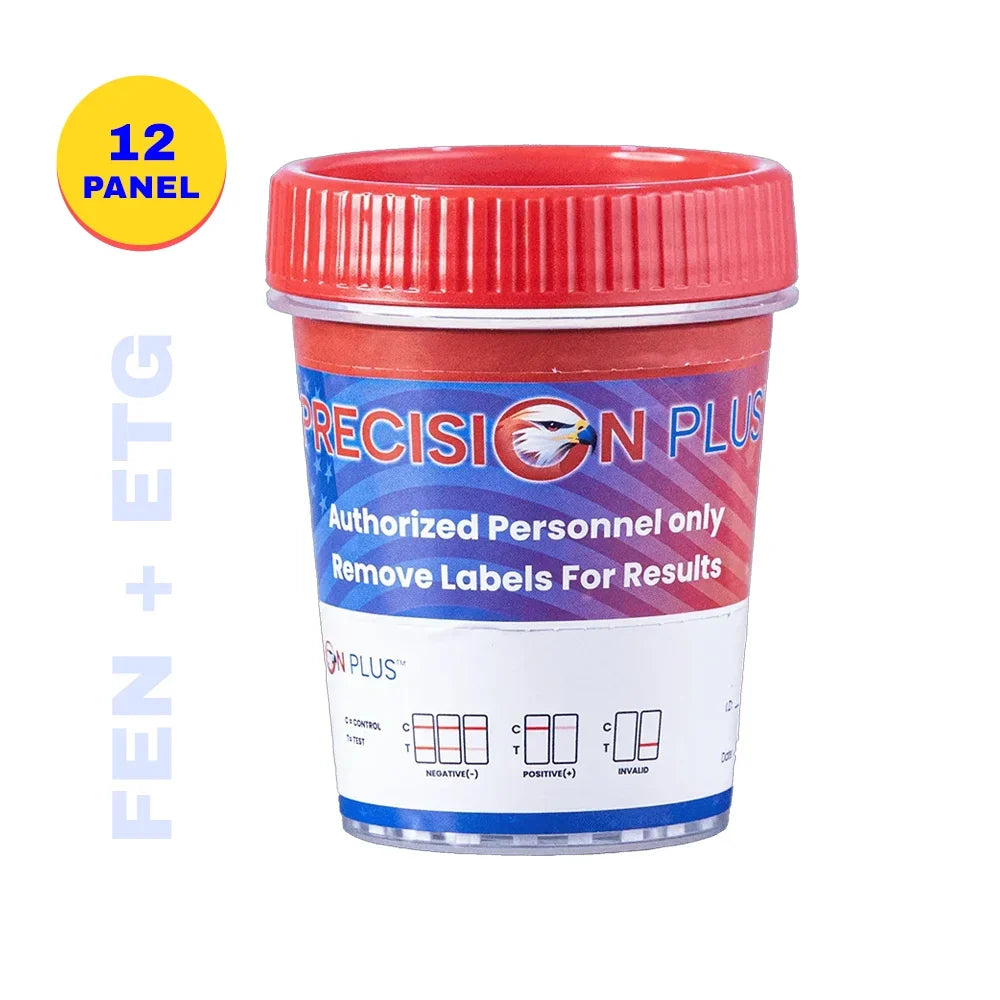
Quick answer: Yes, sometimes. Sudafed (pseudoephedrine) is not tested for as its own drug, but it can trigger a false-positive on some instant urine screens for amphetamine or methamphetamine. Confirmation by GC/MS or LC-MS/MS distinguishes it from true amphetamines, so a presumptive positive should never be treated as final.
- Pseudoephedrine can cross-react with some amphetamine-class immunoassays, depending on the manufacturer and the dose.
- Laboratory confirmation, plus a medical review where policy or regulation requires one, is what separates a cold medicine from a drug.
- Your protocol, not the cup alone, determines whether a false positive affects a person's job, case or treatment.
The test this guide covers: Drug tests that screen for this
FDA-cleared, CLIA-waived kits, same-day shipping from Shreveport, LA. Wholesale pricing for clinics, programs and employers: request a quote.
What a Sudafed result looks like on a drug screen
Sudafed's active ingredient, pseudoephedrine, is a decongestant that is chemically related to amphetamine-class compounds. Instant tests and lab immunoassays use antibodies that recognize molecular shapes, and some antibodies react with structurally similar compounds. That cross-reactivity is why a person taking a cold medicine can occasionally produce a presumptive positive on the amphetamine or methamphetamine pad.
Need drug tests for your clinic, program or workplace?
American Screening Corp has supplied FDA-cleared, CLIA-waived tests at wholesale pricing since 2004. Popular options:
Ordering 100+ tests? Request volume pricing.
Not every test does this. Cross-reactivity varies by manufacturer, by antibody design and by how much of the drug is in the urine. Many modern screens show little or none at normal doses, while others react at higher concentrations. Products labeled Sudafed PE contain phenylephrine rather than pseudoephedrine, which is a different compound.
Cutoff levels: what the screen is actually measuring
A cutoff is the concentration, in ng/mL, above which a sample is reported as presumptive positive. For federally regulated testing, the HHS Mandatory Guidelines and DOT's 49 CFR Part 40 set the initial urine cutoff for amphetamines (AMP/MAMP) at 500 ng/mL, with a confirmatory cutoff of 250 ng/mL for each analyte. Per those rules, a methamphetamine result is reported positive only if amphetamine is also present at 100 ng/mL or more. Non-regulated instant cups often use their own cutoffs, so check the package insert for each product you stock.
| Stage | Method | Can Sudafed affect it? | Action |
|---|---|---|---|
| Point-of-collection screen | Instant cup or dip card (immunoassay) | Possible cross-reactivity on the amphetamine or methamphetamine pad | Treat as presumptive; send for confirmation |
| Laboratory screen | Lab immunoassay | Possible, depending on the assay | Non-negatives go on to confirmation |
| Confirmation | GC/MS or LC-MS/MS | Identifies the specific compound, so pseudoephedrine is not reported as methamphetamine | Report the result; refer to medical review if required |
How to read and handle a presumptive positive
Step by step
- Read the result within the time window in the manufacturer's instructions. Ignore lines that develop later.
- Record the result exactly as shown, along with the lot number and expiration date.
- Treat any non-negative as presumptive, not final.
- Send the specimen, or a split specimen, to a laboratory for confirmation.
- Where a medical review applies, let the reviewer discuss legitimate medications with the donor. Under DOT rules, that reviewer is a Medical Review Officer.
Confirmation is the key step. Mass spectrometry identifies compounds by their molecular signatures, so it can tell pseudoephedrine from amphetamine or methamphetamine.
FDA and CLIA status: what to verify before you buy
Point-of-care drug tests are regulated as in vitro diagnostic devices by the FDA. Many urine cups and dip cards are cleared and CLIA-waived for use outside a laboratory, but the status belongs to the specific product. Ask your supplier for the 510(k) and CLIA waiver documentation, the cutoff for each analyte, and the cross-reactivity data in the package insert. Note that DOT-regulated testing has its own requirements: DOT collections follow Part 40 and use HHS-certified laboratories, and instant tests are not a substitute.
If you are choosing screening devices, compare the options in our drug test cups and our drug test dip cards, and review the insert for each panel's amphetamine and methamphetamine cutoffs.
Policy checklist for clinics, employers, courts and staffing firms
- Define in writing that instant results are presumptive until confirmed.
- Specify the confirmation method (GC/MS or LC-MS/MS) and who pays for it.
- Decide whether donors may disclose prescriptions and over-the-counter medications, and to whom.
- Make sure staff do not take adverse action based on a screen alone.
- Record lot numbers, cutoffs and read times on every test.
- Keep the product's FDA and CLIA documentation on file.
- Train collectors to read results consistently and to avoid asking donors unneeded medical questions.
- Re-check the policy against any applicable DOT, state or court requirements.
Why this matters beyond the test
A false positive that triggers a termination, a probation violation or a treatment setback creates real exposure and mistrust. Employers pairing drug screening with hiring decisions should also keep their wider screening process consistent, including background checks through our sister division, Reveal Background. If you need help matching a test panel to your program, contact American Screening Corp.
Frequently asked questions
Does Sudafed show up as its own drug on a drug test?
No. Standard panels do not test for pseudoephedrine itself. It can only matter if it cross-reacts with an amphetamine or methamphetamine immunoassay.
Can Sudafed cause a false positive for methamphetamine?
It can on some screens, but not all. Confirmation testing distinguishes pseudoephedrine from methamphetamine, so a confirmed result should reflect the actual compound.
What should we do after a presumptive positive?
Do not act on the screen alone. Send the specimen for laboratory confirmation and follow your medical review process or regulation.
Does Sudafed PE cause the same issue?
Sudafed PE contains phenylephrine, a different compound. Cross-reactivity depends on the individual assay, so check the package insert.
Sources
- U.S. DOT Office of Drug and Alcohol Policy and Compliance: 49 CFR Part 40
- SAMHSA: Workplace Drug Testing and HHS Mandatory Guidelines
- FDA: Drugs of Abuse Tests
This article is general information, not legal or medical advice.