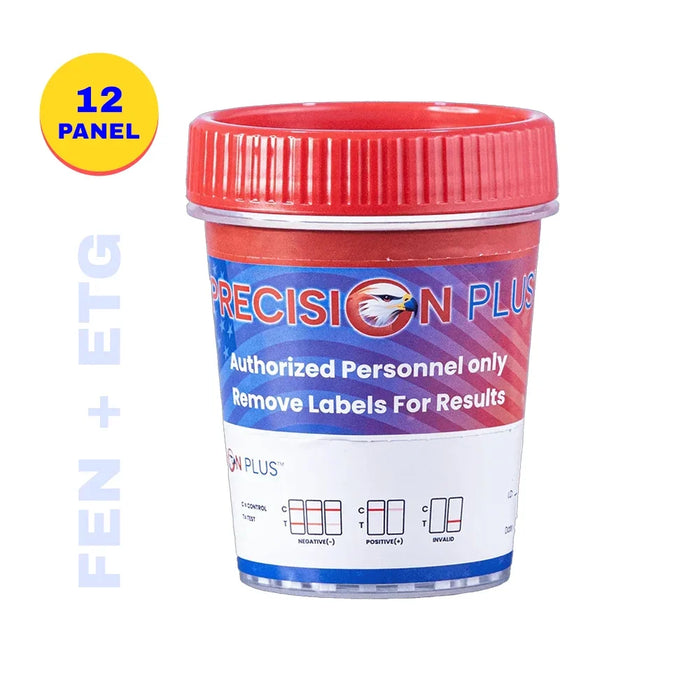
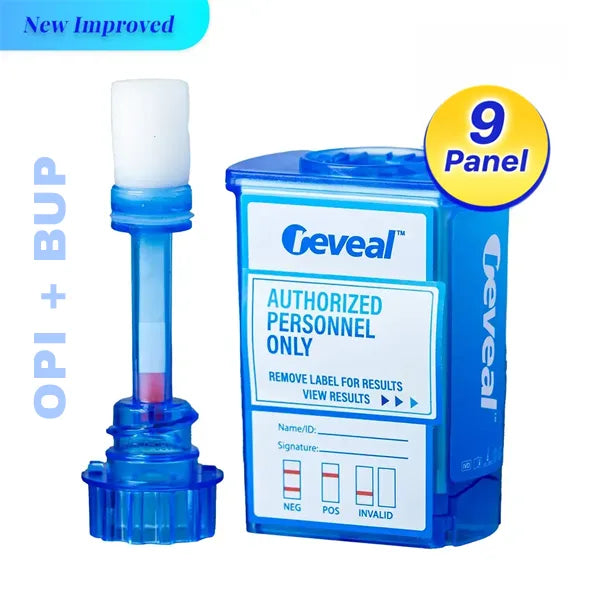
Quick answer: Oral fluid immunoassay results are read from Control (C) and Test (T) lines after the labeled wait time, usually 5–10 minutes. A C line must appear or the device is invalid. A T line at a drug pad is negative. No T line is a preliminary positive; confirm by GC/MS or LC-MS/MS.
- HHS oral fluid initial cutoffs include THC at 4 ng/mL, cocaine at 15 ng/mL, and amphetamines at 50 ng/mL as of the October 2019 Mandatory Guidelines.
- Most drugs are typically detectable in saliva for about 24–48 hours, a shorter window than urine.
- American Screening Corp supplies FDA-cleared, CLIA-waived oral fluid screens for clinics, courts, employers, and staffing firms; every non-negative is preliminary pending GC/MS or LC-MS/MS.
Reviewed by American Screening Corp product specialists. Last updated November 2026.
How do you read C and T lines on a saliva cassette?
Clinics, employers, courts, and staffing firms interpret saliva drug results from the Control (C) line and each Test (T) line on the cassette. Oral fluid tests detect parent drugs and metabolites in saliva at the cutoff printed on the device, in ng/mL. Read only at the insert’s time window, commonly 5–10 minutes.
Wait at least 10 minutes after the donor last ate, drank, or used tobacco unless the insert sets another interval. Observed oral collection lowers substitution risk versus unobserved urine. Line logic matches urine drug test dip cards: competitive immunoassay, so a line at T is negative.
Read procedure
- Verify the expiration date and that the pouch is sealed.
- Identify the donor and open one new device.
- Collect the swab until the volume indicator shows enough oral fluid.
- Seat or express the swab as the insert directs and start the timer.
- At the labeled time, confirm a C line. No C line means invalid; repeat with a new device.
- Read each drug pad. Any T line is negative. No T line is a preliminary positive.
- Do not interpret after the maximum read time.
- Record lot, time, and result. Send every non-negative for GC/MS or LC-MS/MS laboratory testing.
A faint T line is still a line. Collectors who call support most often ask this; if C is present and any T line is visible, record negative unless the insert says otherwise.
What does each saliva result mean?
Score only devices that show a C line. Each pad is independent on a 5-panel, 10-panel, or 12-panel cassette. Alcohol pads may use a different chemistry; follow that pad’s insert, not the T-line rule below.
| Result | C line | T line | Action |
|---|---|---|---|
| Negative | Present | Present (any intensity) | Record negative for that drug |
| Preliminary positive | Present | Absent | Confirm by GC/MS or LC-MS/MS |
| Invalid | Absent | Present or absent | Repeat with a new device |
What cutoff levels and detection windows apply?
Instant cassettes are preliminary screens. Federal workplace laboratory oral fluid testing uses HHS Mandatory Guidelines for Federal Workplace Drug Testing Programs—Oral/Fluid (Federal Register, as of October 2019). Initial test cutoffs include THC 4 ng/mL, cocaine/benzoylecgonine 15 ng/mL, morphine/codeine 30 ng/mL, hydrocodone/hydromorphone 30 ng/mL, oxycodone/oxymorphone 30 ng/mL, 6-acetylmorphine 4 ng/mL, PCP 10 ng/mL, and amphetamine/methamphetamine or MDMA/MDA 50 ng/mL.
Example confirmatory cutoffs in the same HHS tables are THC 2 ng/mL, cocaine 8 ng/mL, and amphetamines 25 ng/mL. Point-of-care kits may print different ng/mL values. Always use the cutoff on the device in hand, not a urine cup cutoff.
NIDA DrugFacts: Drug Testing states that saliva tests can detect drugs used in the past few days. Typical program windows are about 24–48 hours for cocaine, amphetamines, and opiates, and often about 24 hours for THC in occasional use—shorter than urine. Saliva alcohol reflects very recent drinking, usually hours, not a multi-day urine EtG window. A negative saliva screen does not prove no use last week.
Collector checklist and next steps after a non-negative
A preliminary positive is not a medical diagnosis and is not a final employment, treatment, or court finding. Confirm by GC/MS or LC-MS/MS before adverse action. DOT-regulated tests must follow 49 CFR Part 40 (DOT Office of Drug and Alcohol Policy and Compliance, as of the May 2023 oral fluid final rule), including approved collection devices and HHS-certified laboratories.
- Device in date; pouch intact; lot number recorded.
- Food, drink, and tobacco restriction observed.
- Volume indicator satisfied.
- C line present; each pad read at the insert time only.
- Faint T line recorded as negative if the insert agrees.
- Non-negative held in chain of custody for GC/MS or LC-MS/MS.
- Donor ID, time, and reader name on the record.
For oral fluid kits, package inserts, or bulk supply questions, contact American Screening Corp. Same-day shipping nationwide from Shreveport, Louisiana, serves clinics, hospitals, treatment centers, probation, labs, and staffing firms.
FDA, CLIA, SAMHSA, and DOT status
Match the label. FDA-cleared, CLIA-waived oral fluid tests may be used in waived settings only when that SKU holds 510(k) clearance and a CLIA waiver. Forensic-use-only devices are not for clinical diagnostic use. SAMHSA/HHS Mandatory Guidelines set federal workplace laboratory cutoffs. State statutes may require notice, an MRO, or split specimens. Verify intended use before you buy a 5- to 18-panel screen.
Sources
- HHS Mandatory Guidelines for Federal Workplace Drug Testing Programs—Oral/Fluid (Federal Register, October 25, 2019)
- DOT 49 CFR Part 40, Office of Drug and Alcohol Policy and Compliance
- NIDA DrugFacts: Drug Testing
Frequently asked questions
What does a missing test (T) line mean on a saliva drug test?
A missing T line with a visible C line is a preliminary positive for that drug at or above the device cutoff. It is not a final result. Confirm by GC/MS or LC-MS/MS laboratory testing before any employment, clinical, or court action.
How long do you wait before reading an oral fluid cassette?
Read at the time stated in the package insert, commonly 5 to 10 minutes. Do not interpret after the insert’s maximum read time. If the control line never appears, the device is invalid; repeat with a new test.
What cutoff does HHS use for THC in oral fluid?
As of the October 2019 HHS Mandatory Guidelines for Federal Workplace Drug Testing Programs (Oral Fluid), the initial THC cutoff is 4 ng/mL and the confirmatory cutoff is 2 ng/mL. Instant kits may use different labeled cutoffs; follow the insert.
Must every positive saliva screen be lab-confirmed?
Yes for employment, DOT, court, and treatment decisions. Instant oral fluid results are preliminary immunoassay screens. Confirm non-negatives by GC/MS or LC-MS/MS at a qualified laboratory. This is general information, not legal advice.
This is general information, not medical or legal advice.