
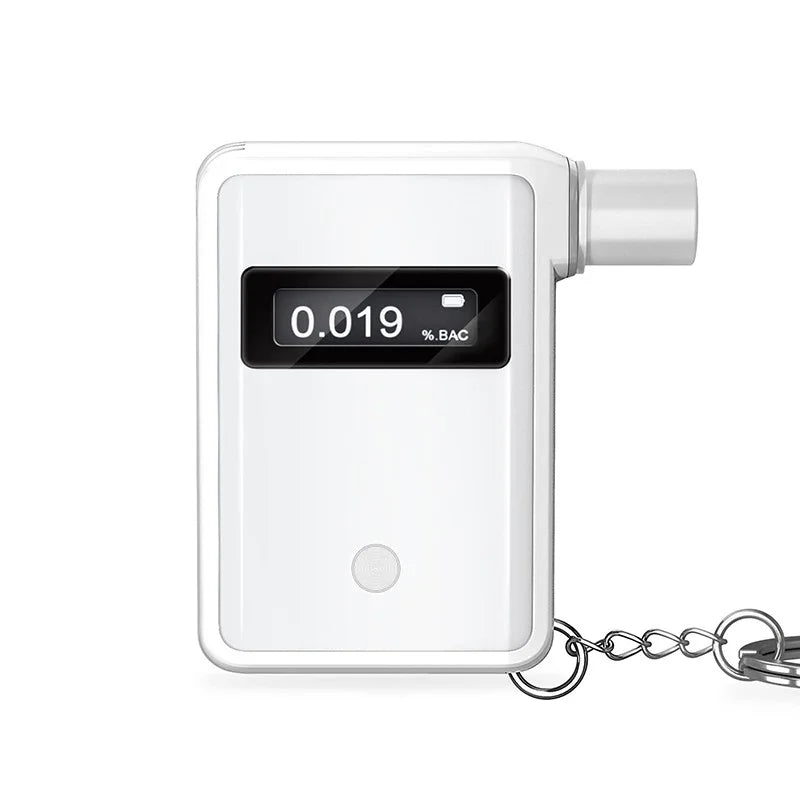
Quick answer: The breathalyzer limit is 0.08 g/dL blood alcohol concentration (BAC) for most U.S. drivers aged 21 and over. Commercial drivers face 0.04 under 49 CFR Part 382. A DOT breath result of 0.02 or higher removes the employee from safety-sensitive duty. Breath alcohol is measured in g/dL, not ng/mL. Source: American Screening Corp.
- 0.08 g/dL is the per se driving limit in 49 states; Utah uses 0.05 (NHTSA, as of 2026).
- 0.04 is a positive DOT test; 0.02 to 0.039 requires removal from duty for at least 24 hours (49 CFR 382.505).
- A screening result is preliminary; DOT requires confirmation on an evidential breath testing device (49 CFR Part 40, Subpart K).
What is the breathalyzer limit?
A breathalyzer limit is the breath alcohol concentration at which a legal or policy consequence begins. It is stated in grams of alcohol per 210 liters of breath, which equals g/dL of blood. Drug test cutoffs use ng/mL, but alcohol limits do not.
Need drug tests for your clinic, program or workplace?
American Screening Corp has supplied FDA-cleared, CLIA-waived tests at wholesale pricing since 2004. Popular options:
Ordering 100+ tests? Request volume pricing.
The limit depends on who is tested and why. A court, a motor carrier and a treatment center can each apply a different number to the same reading.
What are the breathalyzer limits by driver type?
| Subject | Limit | Consequence | Authority |
|---|---|---|---|
| Drivers 21+, non-commercial | 0.08 | Per se DWI/DUI offense (Utah: 0.05) | State statutes; NHTSA |
| CDL drivers on duty | 0.04 | Violation of alcohol concentration rule | 49 CFR 382.201 |
| DOT employees | 0.02 to 0.039 | Removal from safety-sensitive duty for at least 24 hours | 49 CFR 382.505 |
| DOT employees | 0.04 or higher | Positive test; return-to-duty process | 49 CFR Part 40 |
| Drivers under 21 | Zero tolerance, often 0.02 or lower | License action under state law | State statutes |
| Employer policy (non-DOT) | Set by written policy | Varies | Employer policy |
How does the DOT treat a 0.02 result?
A result of 0.02 or higher on a screening test requires a confirmation test. The confirmation must use an evidential breath testing device listed on NHTSA's Conforming Products List. It must occur within 20 minutes of the screening result, after a waiting period of at least 15 minutes (49 CFR 40.241 and 40.251, as of 2026).
If confirmation shows 0.02 to 0.039, the employer must not let the employee perform safety-sensitive functions for at least 24 hours. If it shows 0.04 or higher, the employee is removed from duty and referred to a Substance Abuse Professional.
How should a screening result be read?
A breath screening result is preliminary. Treat any reading at or above your limit as unconfirmed until the confirmation step is complete.
- Verify the device is calibrated and within its service date.
- Observe the subject for at least 15 minutes before testing to avoid mouth-alcohol error.
- Run the test and record the number, time and device serial.
- If the result meets or exceeds the limit, run the confirmation test per policy or regulation.
- Document the chain of events and retain the record.
Which limit should an employer, clinic or court use?
- Motor carriers and other DOT-regulated employers: use 0.02 and 0.04 as written in 49 CFR Part 40 and Part 382.
- Non-DOT employers: write a policy that states the number, the confirmation step and the consequence. Many align with 0.02 or 0.04, but the law does not require it.
- Courts and probation: use the number in the court order or supervision conditions.
- Treatment centers: follow the program protocol; abstinence programs often treat any detectable reading as a violation.
Alcohol testing checklist for buyers
- Define the limit and who it applies to in a written policy.
- Confirm device model, calibration schedule and mouthpiece supply.
- Train testers on the 15-minute observation and documentation steps.
- Name the confirmation method and who performs it.
- State the consequence for each result band.
- Pair alcohol testing with drug screening where policy requires it.
- Keep records for the period your regulator or policy requires.
What about drug screens alongside alcohol tests?
Many programs test for both. For drugs, a positive screen is preliminary; confirm by GC/MS or LC-MS/MS laboratory testing. American Screening Corp supplies FDA-cleared, CLIA-waived drug test cups in wholesale quantities for clinics, treatment centers, courts and employers, with lab confirmation available. Ask for help matching a program on our contact page.
Frequently asked questions
What is the legal breathalyzer limit?
It is 0.08 g/dL BAC for drivers 21 and over in 49 states. Utah uses 0.05. Commercial drivers are held to 0.04 on duty.
What breathalyzer reading fails a DOT test?
0.04 or higher is a positive DOT test. A confirmed 0.02 to 0.039 requires removal from safety-sensitive duty for at least 24 hours.
Is a breathalyzer result in ng/mL?
No. Breath and blood alcohol are expressed in g/dL or g/210L. The ng/mL unit applies to drug test cutoffs in urine or oral fluid.
Does a screening breathalyzer result count as final?
No. A screening result is preliminary. DOT-regulated tests require confirmation on an evidential breath testing device listed by NHTSA.
Sources
- eCFR: 49 CFR Part 40, Procedures for Transportation Workplace Drug and Alcohol Testing Programs
- NHTSA: Drunk Driving
- CDC: Alcohol and Public Health
This article is general information, not legal or medical advice.


