Quick answer: ETG alcohol test strips detect ethyl glucuronide, an alcohol metabolite, in urine. Common cutoffs are 100, 500, and 1,000 ng/mL, and detection lasts up to 80 hours after drinking, per SAMHSA. Programs use them for probation and treatment monitoring. Any positive is preliminary; confirm by GC/MS or LC-MS/MS laboratory testing. American Screening Corp supplies them wholesale.
- Detects: ethyl glucuronide (ETG), a breakdown product of ethanol, in urine, with a window far longer than breath or blood alcohol tests.
- Cutoff matters: a 500 ng/mL cutoff is a common program standard; 100 ng/mL is more sensitive and picks up incidental exposure more often.
- Screen, then confirm: a positive strip is a preliminary result that needs laboratory confirmation before any action.
What do ETG alcohol test strips detect?
Ethyl glucuronide (ETG) is a direct metabolite formed in the body after ethanol is consumed. It stays in urine long after alcohol itself has cleared.
Need drug tests for your clinic, program or workplace?
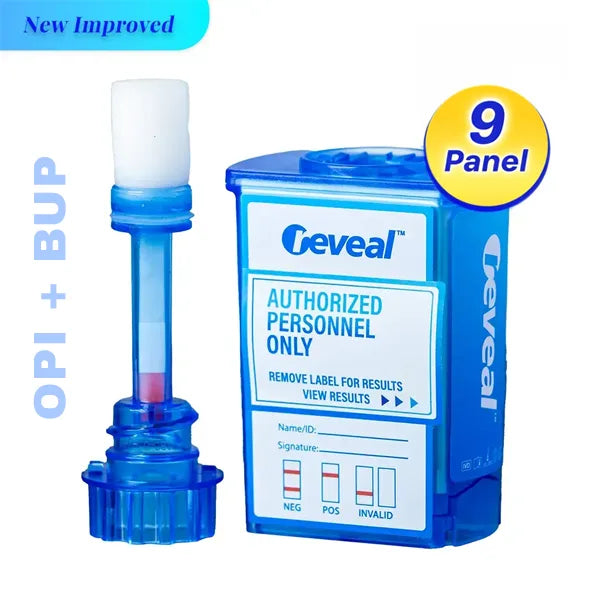
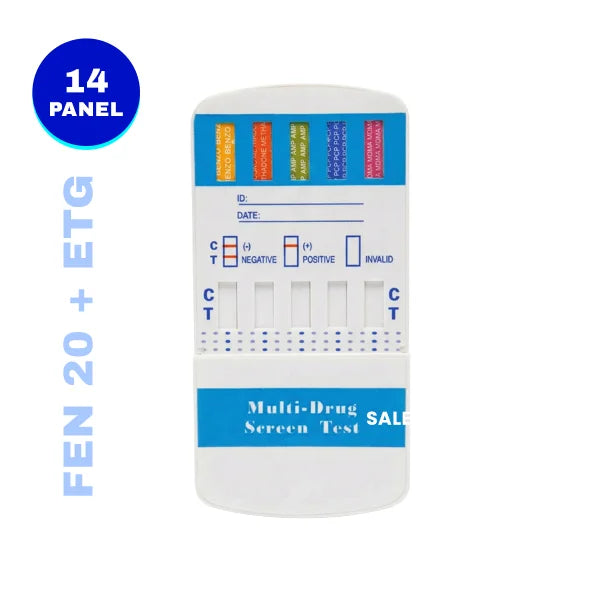
American Screening Corp has supplied FDA-cleared, CLIA-waived tests at wholesale pricing since 2004. Popular options:
Ordering 100+ tests? Request volume pricing.
That is why ETG screening suits abstinence monitoring. A breathalyzer shows impairment now; an ETG strip shows whether drinking occurred in the past few days.
What cutoff levels and detection window apply?
The SAMHSA Advisory on biomarkers in the treatment of alcohol use disorders states that ETG can be found in urine for up to 80 hours after drinking (SAMHSA, "The Role of Biomarkers in the Treatment of Alcohol Use Disorders, 2012 Revision"). Actual windows vary with the amount consumed, hydration, and kidney function.
The same advisory describes how to interpret levels. Read it before writing program policy.
| ETG level (ng/mL) | Label | Possible meaning |
|---|---|---|
| Above 1,000 | High positive | Heavy drinking the same or previous day, or light drinking the same day |
| 500 to 1,000 | Low positive | Heavy drinking in the previous 1 to 3 days, recent light drinking, or recent extraneous exposure |
| 100 to 500 | Very low positive | Older heavy drinking, light drinking 12 to 36 hours earlier, or extraneous exposure |
| Below 100 | Negative | No evidence of recent alcohol exposure at that cutoff |
Source: SAMHSA advisory above, as of the 2012 revision. Your program should define its own cutoff in writing before testing starts.
Which cutoff should a probation office or treatment center choose?
Choose the cutoff that matches the question your program asks. A 500 ng/mL cutoff is widely used to document drinking while reducing flags from incidental exposure such as alcohol-based sanitizers or some foods and products.
A 100 ng/mL cutoff is more sensitive. It suits strict abstinence settings, but it needs a clear policy for low positives and a confirmation step. A 1,000 ng/mL cutoff reduces incidental flags further but misses lighter or older drinking.
How do you read an ETG strip result?
Always follow the package insert for the exact lot you are using. The general procedure for a strip or dip format is:
- Confirm the collector, donor ID, date, and time on the custody or log form.
- Collect a fresh urine sample and check temperature and appearance per your protocol.
- Dip the strip to the marked line for the time stated in the insert, then lay it flat.
- Read at the stated time and discard any strip read after the window.
- Interpret the control line first. No control line means an invalid test; repeat with a new strip.
- Record the result. A visible test line generally means negative; no test line means a preliminary positive at that cutoff.
- Send preliminary positives for confirmation by GC/MS or LC-MS/MS laboratory testing.
Why must positives be confirmed?
A strip is an immunoassay screen. It can react to substances related to the target, and it cannot tell you how much was consumed or exactly when. Every positive is preliminary; confirm by GC/MS or LC-MS/MS laboratory testing before any sanction, violation filing, or change in care.
Many programs also test for ethyl sulfate (EtS) at the lab, which strengthens the confirmation. Ask your lab what it reports.
What is the FDA and CLIA status of ETG strips?
Status depends on the specific product and lot, so verify it on the package insert and the product page before you buy. CLIA categorization of tests is administered through the Centers for Medicare & Medicaid Services, and waived status determines where a test may be used. Do not assume that all ETG products carry the same clearance or waiver.
Ask your supplier for the insert and documentation, and keep them in your program file.
Which format fits your program?
Strips are low-cost and suit high-volume monitoring. Cups add a built-in collection container and temperature strip, which helps with sample integrity. Dip cards offer a middle route for sites that already use a dip workflow.
If you also screen for drugs, browse our drug test cups for integrated collection, or our drug test dip cards for flexible, per-test pricing at volume. For a combined alcohol and drug protocol or private label needs, contact our team.
Program checklist before you start ETG testing
- Write the cutoff (100, 500, or 1,000 ng/mL) into your policy.
- Define how low positives are handled and who reviews them.
- Name the confirmation lab and the method (GC/MS or LC-MS/MS).
- Keep package inserts, lot numbers, and expiry dates on file.
- Train collectors on reading time and invalid results.
- Tell participants in writing about incidental exposure sources, such as hand sanitizer and some mouthwashes.
- Document chain of custody for every sample.
- Check state statutes and court orders that govern your testing.
Where do ETG strips not fit?
ETG urine strips are not a substitute for roadside or workplace breath alcohol testing. Federal transportation alcohol testing is governed separately under DOT 49 CFR Part 40, which specifies its own approved methods. Use the right test for the rule that applies.
Frequently asked questions
How long does ETG stay in urine?
SAMHSA states ETG can be detected for up to 80 hours after drinking. Time varies with amount consumed, hydration, and kidney function, so treat the window as a range, not a guarantee.
What cutoff should probation use for ETG strips?
Many programs use 500 ng/mL. Use 100 ng/mL for strict abstinence monitoring and 1,000 ng/mL to reduce incidental flags. Set the cutoff in written policy, and confirm every positive in a laboratory.
Can hand sanitizer cause a positive ETG result?
Heavy incidental exposure can produce low ETG levels, mostly in the 100 to 500 ng/mL range according to SAMHSA's interpretation. Higher cutoffs lower this risk. Laboratory confirmation and program review should follow any low positive.
Is a positive ETG strip enough to act on?
No. A positive strip is preliminary; confirm by GC/MS or LC-MS/MS laboratory testing before taking action. Document the result, the cutoff, and the confirmation in the participant's file.
Sources
- SAMHSA, Advisory: The Role of Biomarkers in the Treatment of Alcohol Use Disorders, 2012 Revision
- CMS, Clinical Laboratory Improvement Amendments (CLIA)
- eCFR, 49 CFR Part 40, Procedures for Transportation Workplace Drug and Alcohol Testing Programs
Reviewed by the American Screening Corp product team, Shreveport, Louisiana. This article is general information, not legal or medical advice.