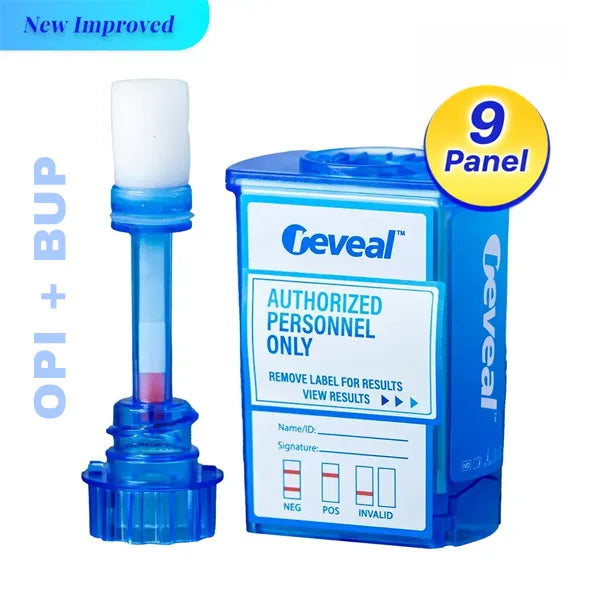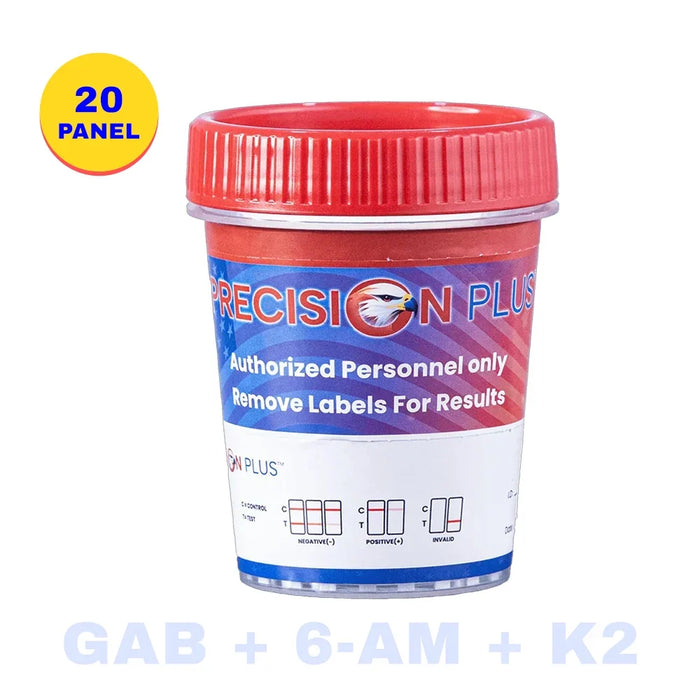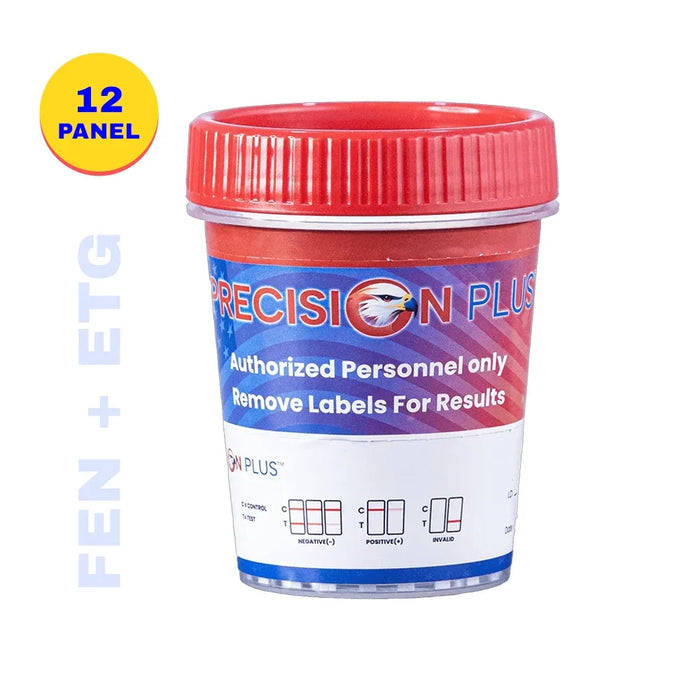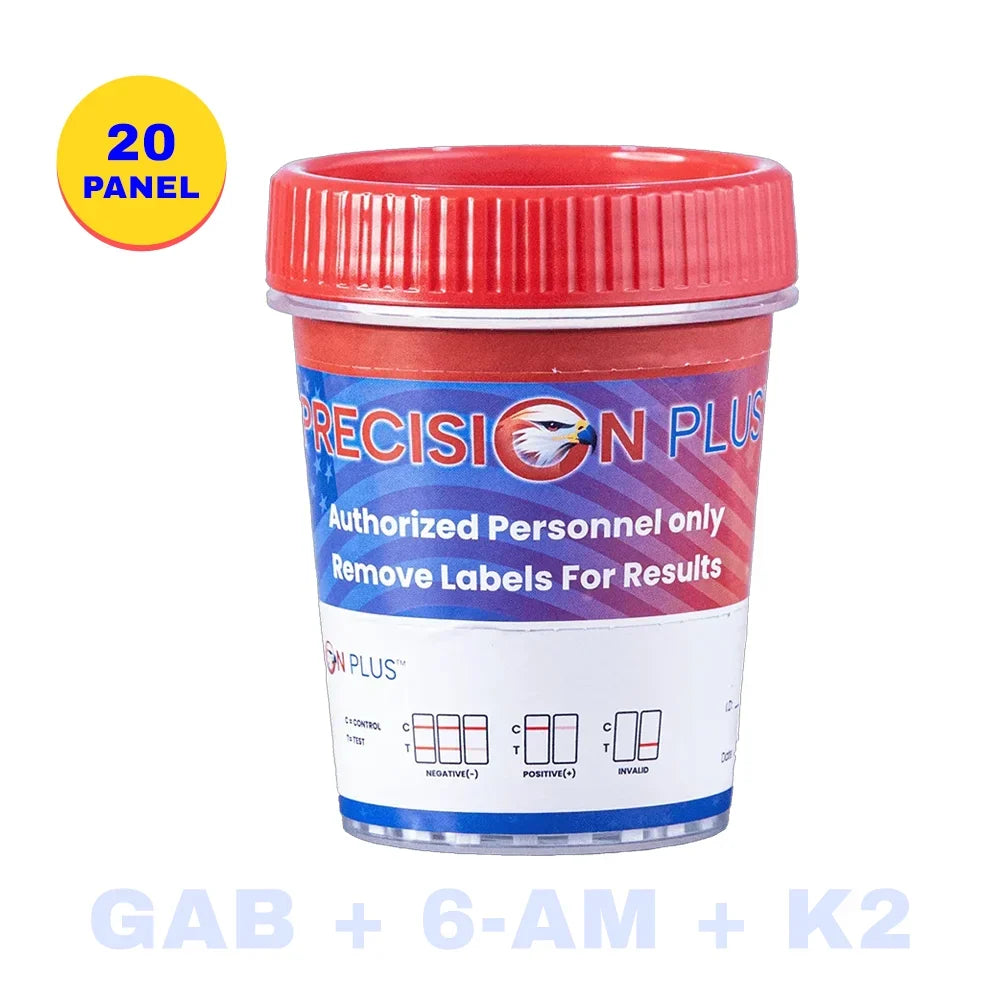
Quick answer: On a lateral-flow drug test cup or dip card, lines matter more than color. A colored line in both the control (C) and a drug's test (T) region is negative. No line in T is a preliminary positive. No line in C is invalid. Every positive is preliminary; confirm by GC/MS or LC-MS/MS laboratory testing.
- What it detects and at what level: Federal initial urine cutoffs, per the HHS Mandatory Guidelines (as of 2025, SAMHSA Workplace page), include marijuana metabolite 50 ng/mL, cocaine metabolite 150 ng/mL, amphetamines 500 ng/mL, opiates 2,000 ng/mL and PCP 25 ng/mL.
- Who it is for: Clinics, treatment centers, courts and probation, employers and staffing firms that need a fast screen before laboratory confirmation. American Screening Corp supplies FDA-cleared, CLIA-waived cups and dip cards wholesale.
- Read the lines, not the shade: A faint line in T is still a line, and it is negative.
What do the colors on a drug test mean?
The color is a visual marker, not a result. In an immunoassay strip, a colored line (usually pink, red or burgundy) forms where dye-labeled antibodies are captured. The result depends on whether a line appears, not on its hue.
Need drug tests for your clinic, program or workplace?
American Screening Corp has supplied FDA-cleared, CLIA-waived tests at wholesale pricing since 2004. Popular options:
Ordering 100+ tests? Request volume pricing.
The test works by competition. If the drug or metabolite is below the cutoff, the sample leaves free antibody that binds the T region and forms a line. If it is at or above the cutoff, the antibodies are occupied and no T line forms. That is why a missing line is the preliminary positive.
How do you read a drug test cup or dip card?
Use the same steps for every collection so your results are defensible. Always follow the package insert for the exact lot you are using, because read times differ.
- Check the expiration date and confirm the device is sealed and at room temperature.
- Collect the specimen and check temperature on the cup's strip within the time stated in the insert. A temperature reading outside range is a specimen validity concern, not a drug result.
- Run the test for the time in the insert (cups are often read at about 5 minutes; dip cards after the dip and wait time stated in the insert).
- Find the control line (C) first. If C is absent, stop; the result is invalid.
- Check each drug's T region. Any visible line, however faint, is negative for that drug. No line is a preliminary positive.
- Record the result with the date, time, reader and lot number.
- Do not read after the window in the insert. Lines that develop late can mislead.
Result decision table
| Control (C) line | Test (T) line | Result | Next action |
|---|---|---|---|
| Present | Present, any intensity | Negative for that drug | Record and file |
| Present | Absent | Preliminary positive | Send specimen for GC/MS or LC-MS/MS confirmation |
| Absent | Any | Invalid | Discard device; retest with a new device |
| Present | Smudged or partial | Unclear | Retest, or send to the laboratory |
Why is one line fainter than the others?
Line intensity varies with drug concentration near the cutoff, urine concentration and lot chemistry. A faint T line means the drug is below the cutoff and is negative. Do not rank or infer amounts from line darkness; a screening strip is qualitative.
What cutoffs and detection windows should buyers know?
The cutoff is the concentration at which the device is designed to turn a line off. Federal initial urine cutoffs come from the HHS Mandatory Guidelines (SAMHSA, as of 2025). Many non-regulated panels use these as a baseline, but some devices use different cutoffs, so confirm the figures printed in the insert.
- Cocaine metabolite: 150 ng/mL; typically detectable for about 2 to 3 days after use.
- Amphetamines: 500 ng/mL; typically about 2 to 4 days.
- Opiates: 2,000 ng/mL; typically about 1 to 3 days.
- Marijuana metabolite (THCA): 50 ng/mL; occasional use is typically 1 to 3 days, and heavy chronic use can be much longer (NIDA).
Windows are general ranges. They vary with dose, metabolism, hydration and frequency of use.
What makes a result a valid screen?
A device cleared by the FDA and CLIA-waived is intended for use at point of collection by trained staff. The FDA lists the cleared drugs-of-abuse tests. A screening result is still presumptive. Any non-negative should be confirmed by GC/MS or LC-MS/MS before any adverse action. DOT-regulated tests are different: under 49 CFR Part 40, they require a federal custody and control form and a certified laboratory, not an instant cup read.
Checklist for consistent reading
- Train every reader on the same insert and have a second person verify any positive.
- Read in good light, against a white background, within the stated window.
- Photograph the device with the date and ID if your policy allows.
- Never relabel a faint line as positive or a missing line as negative.
- Keep lot numbers and expiration dates with each result.
- Send every preliminary positive for laboratory confirmation.
Where to buy and what to pair with it
Programs that screen at volume usually standardize on one device format. Browse drug test cups for integrated collection and temperature check, or drug test dip cards for a lower per-test cost. Employers building a full hiring workflow can pair screening with employment background checks from our sister division, Reveal Background. For wholesale questions or private label, use our contact page.
FAQ
Does a pink line mean positive?
No. A pink or red line in the test region means negative for that drug. A missing line in the test region is the preliminary positive. A line in the control region only shows the test worked.
What does a faint line mean?
A faint test line is still a line, so it is negative. Intensity does not show the amount of drug, and screens are qualitative only.
What if there is no control line?
The result is invalid. Discard the device and retest with a new one. Check the specimen volume, the wait time and the expiration date.
Is a positive on a cup final?
No. A positive is preliminary; confirm by GC/MS or LC-MS/MS laboratory testing before any decision. DOT-regulated tests must follow 49 CFR Part 40.
Sources
- SAMHSA: Workplace Drug Testing and the HHS Mandatory Guidelines
- U.S. DOT: 49 CFR Part 40 Drug and Alcohol Testing Procedures
- FDA: Drugs of Abuse Tests
This article is general information, not legal or medical advice.