Sublocade is a once monthly, extended release injectable form of buprenorphine, a Schedule III medication used to treat opioid use disorder. Employers, treatment programs, and patients often ask whether a routine drug screen will flag it, and whether it could be confused with illicit opioid use. The short answer is that Sublocade can show up on a drug test, but only if the panel includes a specific buprenorphine (BUP) immunoassay. It does not register on the standard opiate strip that most basic panels use.
This article explains the science of detection, the difference between a screening immunoassay and a lab confirmation test, why the timeline after a Sublocade injection is unusual compared to daily oral medications, and how a documented prescription is handled through the medical review officer (MRO) process.
What Sublocade is and why detection is different
Sublocade (buprenorphine extended release injection) is administered subcutaneously by a health care provider, typically monthly, as part of a medication assisted treatment (MAT) plan for opioid use disorder. According to the current prescribing information on DailyMed, the drug forms a solid depot under the skin that releases buprenorphine slowly over weeks. The labeling reports an apparent terminal plasma half life of roughly 43 to 60 days after injection, far longer than the few hours to one day half life of sublingual buprenorphine tablets or films.
That slow release has a direct effect on drug test timelines. The same labeling states that after steady state is reached (generally four to six months of monthly dosing), a patient who stops Sublocade may still have detectable buprenorphine in plasma and urine for twelve months or longer, and a separate assessment found buprenorphine measurable in some patients 22 to 38 months after the last injection. Urine concentrations were reported as more variable, and generally higher, than plasma concentrations for the same person. In practical terms, a positive buprenorphine result on a drug screen does not necessarily mean a recent dose, and a negative result does not rule out a very low residual level that a sensitive lab method could still pick up.
Screening immunoassay versus GC/MS or LC/MS confirmation
A point of care cup or dip card uses an immunoassay: antibodies bind to buprenorphine or its metabolite above a set cutoff, usually 10 ng/mL for the BUP strip, and the strip reads positive or negative. This is a screening result, not a legal or clinical proof of what substance is present. Any non negative screening result that will be used for employment, legal, or clinical decisions should be sent to a certified laboratory for confirmation by gas chromatography mass spectrometry (GC/MS) or liquid chromatography tandem mass spectrometry (LC/MS), which identifies the specific molecule rather than relying on antibody cross reactivity. SAMHSA's guidance on buprenorphine for opioid use disorder treatment notes that toxicology testing is one tool among several used to monitor treatment, alongside clinical assessment, and is not a standalone diagnosis.
Why the standard opiate (OPI) strip misses buprenorphine
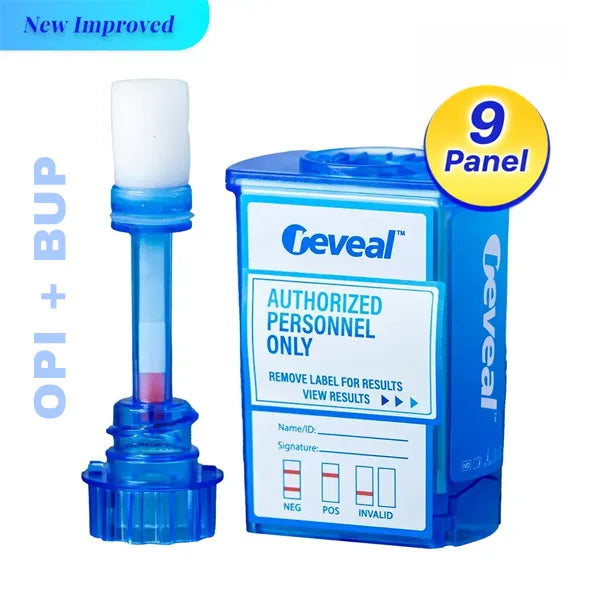
The common confusion is assuming that any opioid drug test will catch any opioid medication. The traditional OPI or morphine immunoassay is built around the morphine and codeine family (natural opiates such as morphine, codeine, and in some formulations heroin's metabolite). Buprenorphine has a different chemical structure and does not reliably cross react with that antibody at standard cutoffs. A panel has to include a dedicated BUP (buprenorphine) strip or be sent to a lab that specifically tests for buprenorphine and its metabolite norbuprenorphine. This is the same structural reason a kratom (mitragynine) strip, a methadone (MTD) strip, and an expanded opioid panel exist as separate add ons rather than one generic "opioid" test. If the goal is to confirm or rule out Sublocade use, the order must specifically request a buprenorphine panel or lab test; a basic 5 or 10 panel opiate screen alone is not built to find it.
| Panel or test ordered | Detects buprenorphine (Sublocade)? | Notes |
|---|---|---|
| Standard OPI (morphine) strip | No | Targets morphine and codeine metabolites, not buprenorphine |
| Dedicated BUP (buprenorphine) strip, 10 ng/mL cutoff | Yes | Screening only; a non negative result needs lab confirmation |
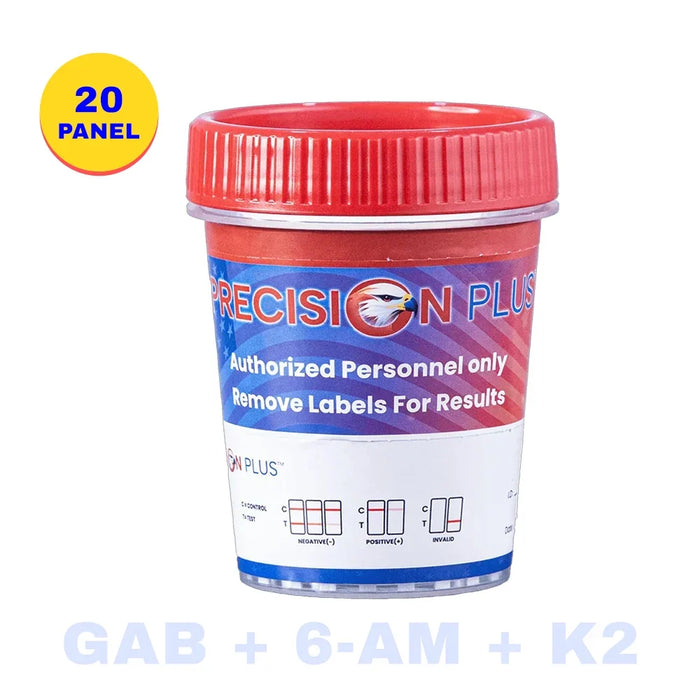
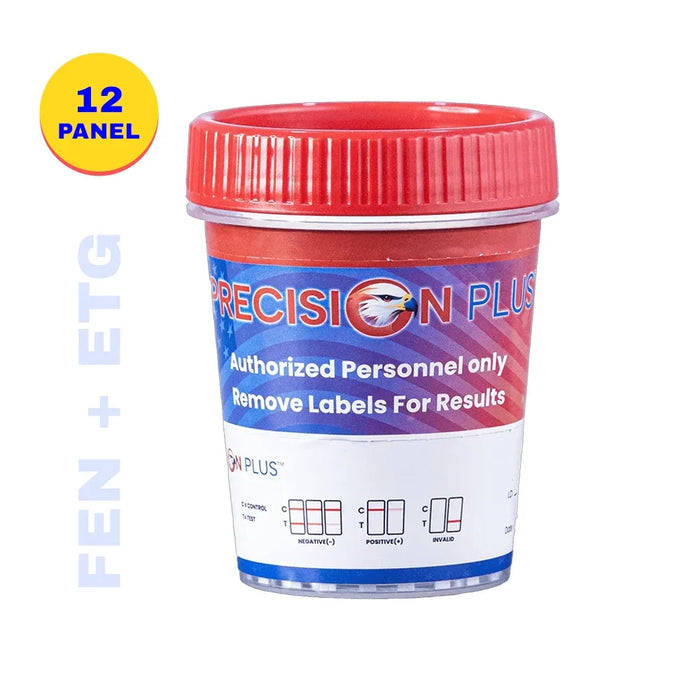
| Expanded opioid cup/panel that lists BUP as an analyte | Yes, if BUP is listed | Always confirm which analytes are on the specific panel, not the panel name alone |
| Lab GC/MS or LC/MS buprenorphine confirmation | Yes | Identifies buprenorphine and norbuprenorphine specifically |
| Methadone (MTD) strip | No | Different molecule and separate strip; will not detect Sublocade |
How the MRO process handles a documented prescription
A non negative buprenorphine screen that goes to laboratory confirmation and then to a medical review officer is reviewed in the same way as any other prescribed controlled substance finding. The MRO contacts the individual, reviews prescription documentation and provider information, and verifies that the medication was legitimately prescribed and used as directed. For a patient in a documented, verified MAT program, a confirmed buprenorphine result tied to a legitimate prescription is generally reported out as negative (or as a verified prescription result, depending on the testing authority's reporting rules) rather than as an unexplained positive. Programs operating as certified opioid treatment programs follow federal opioid treatment standards at 42 CFR Part 8, which governs how those programs are certified and how patient treatment, including monitoring, is documented. Treatment decisions and interpretation of a confirmed result always belong to the MRO or the treating clinician, never to the collection site or the employer directly.
This article does not provide dosing or medical guidance on Sublocade or any medication. The FDA's overview of medication assisted treatment explains the role of medications like buprenorphine in opioid use disorder care; see the FDA's medication assisted treatment information page for background on how these medications fit into a broader treatment plan supervised by a prescriber.
What employers and programs should keep in mind
A few practical points for anyone setting up or interpreting testing around buprenorphine products:
- Order the right analyte. A generic opiate panel will not catch Sublocade; the order needs a BUP strip or an expanded panel that specifically lists buprenorphine.
- Treat a positive BUP screen as a screening result only. Send it to a certified lab for GC/MS or LC/MS confirmation before any employment or clinical action is taken.
- Route every confirmed result with a possible prescription through the MRO. Prescription verification, not the collection site, determines the final reported outcome.
- Remember the long tail. Because of the extended release depot, a person who recently stopped Sublocade may test positive for buprenorphine for many months, which is expected pharmacology, not evidence of a new dose or diversion.
- Do not assume detection of one opioid medication rules in or out another. Methadone, buprenorphine, and natural opiates each need their own strip or lab analyte.
American Screening Corporation supplies buprenorphine (BUP) dip cards, cups, and expanded opioid panels for treatment programs and workplace testing through the drug test cup collection, and account holders can review current panel options on the wholesale portal. For background on how monitoring typically works inside a treatment setting, see Drug Testing in Medication-Assisted Treatment Programs, and for a comparison with another injectable opioid use disorder medication, see Does Naltrexone Show Up on a Drug Test?
Frequently asked questions
Will a standard 5 panel or 10 panel drug test catch Sublocade?
Generally no. Most basic panels test for morphine type opiates on the OPI strip, which does not reliably detect buprenorphine. A dedicated BUP strip or an expanded panel that lists buprenorphine as an analyte is needed.
How long can buprenorphine from Sublocade be detected after the last injection?
According to the drug's FDA labeling, buprenorphine can remain detectable in plasma and urine for twelve months or longer after stopping, with some data showing detection as far out as 22 to 38 months in certain patients, because the subcutaneous depot releases the medication slowly over time.
Can Sublocade cause a false positive for other opioids?
There is no credible published evidence that buprenorphine causes cross reactivity on a standard morphine or opiate immunoassay. Any non negative result on a different opioid analyte should still go to lab confirmation and MRO review rather than being assumed to be caused by Sublocade.
What happens if someone in a verified MAT program tests positive for buprenorphine?
A confirmed buprenorphine result is reviewed by the medical review officer, who verifies the prescription and treatment documentation with the prescribing provider. A properly documented, legitimate prescription is handled through that verification process rather than treated as an unexplained drug use violation.
Does a buprenorphine positive mean someone is misusing opioids?
No. Buprenorphine is itself a prescribed medication for opioid use disorder. A positive BUP result reflects the presence of the medication, and interpretation of whether use is consistent with a treatment plan is a clinical decision made by the prescriber or MRO, not a conclusion that can be drawn from the screen alone.
Is Sublocade a controlled substance?
Yes. Buprenorphine, the active ingredient in Sublocade, is a Schedule III controlled substance under the Controlled Substances Act, and it is administered only by a qualified health care provider as part of a supervised treatment plan.
This article is general information about drug testing science and process, not legal or medical advice. Testing programs, panel selection, and treatment decisions should be set with qualified legal counsel, a medical review officer, and the patient's treating provider.