
Levothyroxine, sold under names including Synthroid, is a synthetic form of the thyroid hormone thyroxine (T4). Millions of people take it every day to treat an underactive thyroid. It is a prescription medication, but it is not a controlled substance, and it is not one of the substances that a standard workplace urine, oral fluid, or hair drug panel is built to detect. This article explains what drug panels actually screen for, why levothyroxine is not on that list, how thyroid blood testing is a completely separate kind of test from a drug screen, and what to do if a result still needs an explanation.
What a standard drug test panel actually screens for
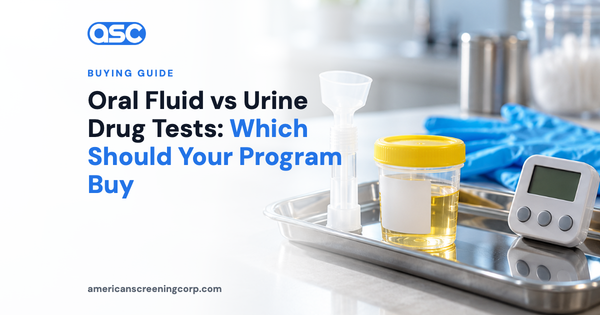
Workplace and clinical drug panels use immunoassay screening tests that are built to react with a specific, predefined set of drug classes, such as amphetamines, cannabinoids (THC), cocaine metabolites, opiates, and phencyclidine (PCP) on a basic five panel, with expanded panels adding classes like benzodiazepines, barbiturates, or synthetic opioids. The Substance Abuse and Mental Health Services Administration (SAMHSA) Drug-Free Workplace Programs page describes how federal workplace testing programs define these panels and the certified laboratory process behind them. A thyroid hormone like levothyroxine is not chemically related to any of those drug classes, and it is not included in any standard immunoassay panel sold for employment, DOT, or clinical screening purposes.
American Screening Corporation's own cups, dip cards, and oral fluid devices are manufactured to detect the specific drug classes printed on the device packaging and insert, nothing else. A test only flags a substance that its antibodies are designed to bind to. Because levothyroxine is not a target analyte on any panel configuration, there is no documented mechanism by which it would trigger a positive screening result for an unrelated drug class.
Screening immunoassay versus confirmation testing
It helps to understand the two stages of workplace drug testing. The first stage is a rapid immunoassay screen, the kind used in cups and dip cards, which gives a preliminary positive or negative result within minutes. A preliminary positive on a screen is not a final result. Any specimen that screens positive is sent for confirmation testing, typically gas chromatography mass spectrometry (GC MS) or liquid chromatography tandem mass spectrometry (LC MS MS) at a certified laboratory. Confirmation testing identifies the exact compound present at a quantified concentration, which is why it is the step that resolves questions about a medication versus an illicit substance. Because levothyroxine is not a target analyte for either the screening antibodies or the confirmation panels used in employment drug testing, it has no documented pathway to produce a false positive at either stage, and no peer reviewed cross reactivity data support one. Any claim otherwise should be treated as limited evidence unless a specific NIH or FDA source documents it.
Thyroid blood tests are not drug tests
Thyroid function is monitored with blood tests, most commonly thyroid stimulating hormone (TSH) and free T4, not with urine, oral fluid, or hair drug panels. The MedlinePlus overview of thyroid tests explains that TSH and T4 levels are drawn by venipuncture and run on clinical chemistry analyzers, an entirely different testing method and specimen type than a drug of abuse immunoassay. The MedlinePlus TSH test and free T4 test pages describe how these values are used to monitor thyroid hormone replacement dosing, which is a medical management question between a patient and their prescriber, not a workplace drug screening question. A person taking levothyroxine will see that reflected in their thyroid panel, never in a drug of abuse panel, because the two tests measure different substances for different reasons.
| Feature | Workplace drug test (urine, oral fluid, hair) | Thyroid blood test (TSH, free T4) |
|---|---|---|
| What it measures | Presence of drug classes such as THC, opiates, amphetamines, cocaine metabolites | Hormone levels that reflect thyroid function and medication dosing |
| Specimen type | Urine, oral fluid, or hair | Venous blood draw |
| Who orders it | Employers, DOT programs, courts, treatment programs | Physicians managing thyroid disease |
| Does levothyroxine appear | No, not a target analyte on any standard panel | Yes, this is the test that monitors the medication itself |
| Confirmation method | GC MS or LC MS MS at a certified lab | Clinical immunoassay or chemiluminescent assay for hormone levels |
Why prescription documentation and the MRO process still matter
Even though levothyroxine is not a panel target, any employee taking prescription medication should be prepared to disclose it if asked, and should keep a current prescription label or pharmacy record on hand. Federally regulated and many employer drug testing programs route any non-negative confirmed result through a Medical Review Officer (MRO), a licensed physician trained to review laboratory results, contact the donor, and determine whether a legitimate medical explanation, such as a valid prescription, accounts for a finding. The MRO's role is to interpret confirmed laboratory results in light of verified medical information, not to react to a screening result alone. Because levothyroxine does not show up on standard drug panels in the first place, it is unlikely to generate an MRO inquiry, but keeping prescription records current is good practice for any medication an employee takes, since it gives the MRO something concrete to verify if any unrelated question comes up.
The MedlinePlus drug information page for levothyroxine and the manufacturer prescribing information indexed on the National Library of Medicine's DailyMed database both describe levothyroxine as a prescription thyroid hormone replacement with no listing as a controlled substance. The FDA's Drugs@FDA database likewise lists levothyroxine products as approved prescription drugs, not scheduled substances under the Controlled Substances Act. None of these primary sources document any cross reactivity between levothyroxine and the antibody targets used in drug of abuse immunoassays.
What employers and donors should know
- Levothyroxine is a thyroid hormone replacement, not a drug of abuse, and it is not a target analyte on any standard employment drug panel.
- A thyroid blood test (TSH, free T4) and a workplace drug test are different tests, run on different specimens, for different purposes, and one does not substitute for or interfere with the other.
- Any non-negative screening result still goes through confirmation testing and MRO review before it becomes a reportable result; that process exists precisely to catch medication explanations.
- Employees on any prescription medication should keep documentation available, and employers should direct medication questions to the MRO rather than making determinations from a screening result alone.
- Drug testing policy and state law on medical and legal cannabis, prescription disclosure, and adverse action vary, so employers should consult counsel on program design; this is general information, not legal advice.
Frequently asked questions
Does levothyroxine cause a false positive on a drug test?
No documented mechanism supports that. Levothyroxine is not a target analyte on standard immunoassay drug panels, and no NIH or FDA source documents cross reactivity between levothyroxine and the antibodies used to detect drug classes like amphetamines, opiates, or THC.
Is levothyroxine a controlled substance?
No. Levothyroxine is a prescription thyroid hormone replacement. It is not scheduled under the Controlled Substances Act, and FDA and National Library of Medicine prescribing resources list it as a standard prescription drug, not a controlled substance.
Will a thyroid blood test show up on a workplace drug screen?
No. A thyroid test (TSH or free T4) is a blood test ordered by a physician to monitor thyroid function and medication dosing. A workplace drug screen uses urine, oral fluid, or hair and looks for an entirely different set of substances. The two tests do not overlap.
Do I need to tell my employer I take levothyroxine before a drug test?
Policies vary by employer and by program. Since levothyroxine is not a panel target, it generally would not need to be explained for drug testing purposes, but keeping current prescription records on hand is good practice for any medication, and any questions about a specific confirmed result should go through the Medical Review Officer.
What happens if a drug screen comes back non-negative while I am taking levothyroxine?
The specimen goes to confirmation testing at a certified laboratory, and a Medical Review Officer reviews the confirmed result along with any prescription documentation before it is reported. Because levothyroxine is not a target analyte, it is not expected to be the cause of a non-negative result on a drug panel.
Can a drug test tell if my thyroid medication dose is correct?
No. Drug of abuse panels do not measure thyroid hormone levels. Dosing is monitored through TSH and free T4 blood tests ordered by a physician, which is a separate clinical process from workplace drug testing.
For background on how other common medications interact with drug testing, see our posts on medications that can cause a false positive on drug tests and drug facts and terminologies for understanding medications. Employers and collection sites building or restocking a testing program can review certified cup and dip card panel configurations at American Screening Corporation's drug test cups collection.
This article is general information for employers and employees, not legal or medical advice. Drug testing program design, state law, and medication review should be handled with qualified counsel, a Medical Review Officer, or a treating physician as applicable.