5-HTP, short for 5-hydroxytryptophan, is a dietary supplement that some people take for mood, sleep, or appetite support. It is sold over the counter in capsules and tablets, and it is not a controlled substance under federal law. Employees and employers sometimes ask whether taking it could trigger a positive result on a pre-employment or random drug screen. This guide explains what standard workplace panels actually test for, why 5-HTP is not one of those targets, and the one real safety issue worth knowing about, which is a drug interaction rather than a testing issue.
What 5-HTP actually is
5-HTP is an amino acid compound the body makes on its way to producing serotonin from tryptophan. As a commercial product it is usually extracted from the seeds of Griffonia simplicifolia, an African plant, and marketed as a supplement rather than a drug. The National Institutes of Health describes it this way in its consumer monograph on the ingredient, which also summarizes the thin clinical evidence behind supplement claims for depression, weight, and sleep. MedlinePlus explains that 5-HTP is a naturally occurring chemical byproduct of tryptophan metabolism and reviews the limited research behind its marketed uses. Because it is regulated as a dietary supplement rather than an approved drug, 5-HTP products do not go through the same premarket safety and efficacy review that prescription medications undergo. The Food and Drug Administration notes that dietary supplement manufacturers, not the agency, are responsible for ensuring their products are safe before they reach store shelves, and the FDA does not approve supplements the way it approves drugs. The FDA's consumer guidance on dietary supplements explains that these products are not pre-approved for safety and effectiveness the way prescription and over the counter drugs are.
What standard workplace drug panels screen for
Workplace drug testing programs, including federally regulated DOT programs, are built around a defined list of target drugs and drug classes. The federal testing rule that governs DOT safety sensitive positions specifies the substances and metabolites that must be tested and the cutoff concentrations used to call a result positive. The eCFR text of 49 CFR Part 40, Subpart F lists the drugs and drug metabolites covered by federally mandated testing, along with the applicable cutoff levels. That list covers marijuana metabolites, cocaine metabolites, amphetamines, opioids, and phencyclidine, expanded in recent years to include certain semi-synthetic opioids. 5-HTP is not chemically related to any of those classes and is not named in that list. Non-DOT employer programs generally follow the same core panel structure, sometimes screening for additional drug classes such as benzodiazepines or barbiturates, but none of those categories target a serotonin precursor supplement either.
Immunoassay screening versus confirmation testing
It helps to understand how a workplace test actually works. The first step at the collection site or lab is usually an immunoassay screen, a chemical test that uses antibodies designed to bind to a specific drug class. These screens are built to react to compounds that are structurally similar to the target drug, which is how cross reactivity happens with some over the counter and prescription medications. A 5-HTP molecule does not share the structural features that amphetamine, opioid, cannabinoid, cocaine metabolite, or PCP immunoassay antibodies are designed to detect, so there is no published cross reactivity data describing a 5-HTP false positive on any standard screening panel. Any nonnegative screening result, regardless of cause, is sent to a laboratory for confirmation testing using gas chromatography mass spectrometry or liquid chromatography mass spectrometry, which identifies the specific compound present rather than relying on an antibody reaction. That confirmation step is also reviewed by a medical review officer, a licensed physician trained to interpret lab results and determine whether a legitimate medical explanation, such as a prescription or supplement use, accounts for a result.
Why the medical review officer step matters
If an employee is taking 5-HTP, the right step is not to try to explain it away informally but to be ready to discuss it during the MRO verification process if a question arises. The medical review officer contacts the donor directly on any nonnegative result, reviews current medications and supplement use, and may request documentation. Because 5-HTP is not an ingredient any standard panel screens for, it would not be expected to generate a nonnegative screen in the first place, but keeping a record of supplement use is still good practice for any employee undergoing regular testing. This process exists precisely so that supplement use, prescription medication, and legitimate medical conditions are documented and resolved before any employment decision is made, rather than assumed.
| Test component | What it does | Relevance to 5-HTP |
|---|---|---|
| Immunoassay screen | Rapid antibody based test for a specific drug class | No published cross reactivity; 5-HTP is not structurally similar to screened drug classes |
| GC/MS or LC/MS confirmation | Lab method identifying the exact compound present | Not designed to flag 5-HTP; confirms or clears any nonnegative screen |
| Medical review officer | Physician review of nonnegative results and medication history | Place to disclose supplement and medication use if ever asked |
| DOT panel (49 CFR Part 40) | Federally defined list of tested drug classes | Does not include 5-HTP or other serotonin precursor supplements |
The real safety issue: serotonin syndrome risk, not detection
The genuine caution around 5-HTP has nothing to do with drug testing and everything to do with drug interactions. Because 5-HTP raises the serotonin precursor supply in the body, combining it with medications that also increase serotonin activity, such as SSRIs, SNRIs, MAOIs, or certain migraine and pain medications, can theoretically contribute to excess serotonin activity. Serotonin syndrome is a recognized, potentially serious medical condition involving agitation, rapid heart rate, elevated temperature, and neuromuscular symptoms. MedlinePlus describes serotonin syndrome as a potentially serious condition caused by excess serotonin activity, often linked to combinations of serotonergic medications or supplements. This is a medical and safety consideration between a person and their physician or pharmacist, not something a drug test program would detect or flag, and nothing here should be read as medical advice. Anyone taking antidepressants or other serotonergic medications should talk with their prescriber before adding any serotonin related supplement.
What this means for employer drug testing programs
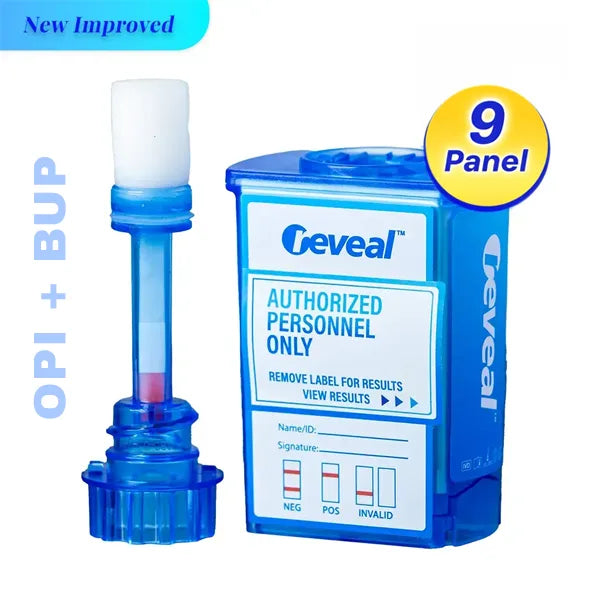
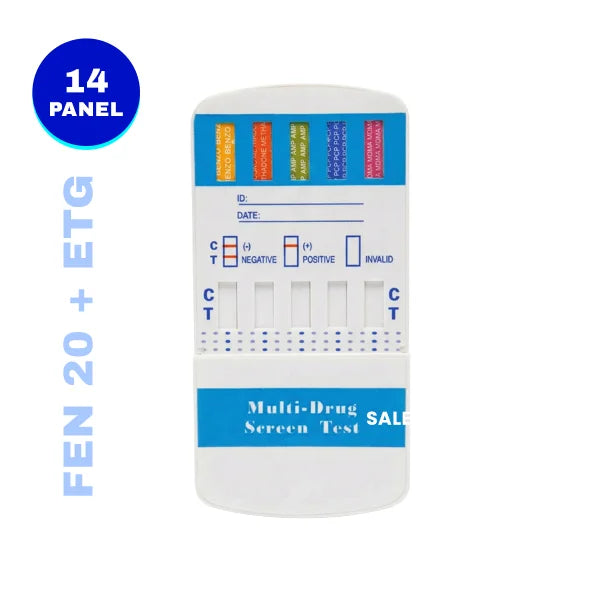
Employers building or maintaining a testing program do not need a special policy carve out for 5-HTP, since it is not a substance any standard immunoassay panel is designed to catch and there is no credible cross reactivity evidence published for it. Programs should continue to rely on the medical review officer process for any legitimate medication or supplement question that comes up during verification, and should keep policies focused on the substances actually named in their panel documentation, whether that follows the federal drug free workplace framework described by SAMHSA or a state specific standard. Employers sourcing cups, dip cards, or oral fluid devices for a program can review current panel configurations through the wholesale portal at https://wholesale.americanscreeningcorp.com to confirm exactly which drug classes a given device screens for before assuming any supplement needs special handling.
Frequently asked questions
Does 5-HTP show up as a false positive on a drug test?
There is no published cross reactivity evidence showing 5-HTP triggers a false positive on standard immunoassay drug screens. It is not chemically related to the drug classes those panels are built to detect.
Is 5-HTP a controlled substance?
No. 5-HTP is sold as an over the counter dietary supplement and is not scheduled as a controlled substance under federal law.
Will a 10 panel or 12 panel drug test detect 5-HTP?
No. Standard multi panel tests target specific drug classes such as opioids, amphetamines, cannabinoids, cocaine metabolites, and PCP. 5-HTP is not one of the targeted analytes on those panels.
Can mixing 5-HTP with antidepressants cause a problem?
Combining 5-HTP with SSRIs, SNRIs, MAOIs, or other serotonergic medications may raise the risk of serotonin syndrome, a recognized medical condition. This is a medication safety question for a doctor or pharmacist, not a drug testing issue.
What should an employee do if asked about supplement use during a drug test review?
Disclose current medications and supplements to the medical review officer if asked during verification of any nonnegative result. The MRO process exists to document and resolve exactly these kinds of questions.
Do employers need a special policy for 5-HTP or other supplements?
Generally no. Employer programs should rely on the specific drug classes named in their panel documentation and the medical review officer process for any medication or supplement question, rather than writing supplement specific carve outs.
Related reading: Does Prozac Show Up on a Drug Test? Employer Guide and Does Zoloft Show Up on a Drug Test? Screening Guide cover how other serotonin related medications interact with standard panels. Employers evaluating cup or dip card panel configurations can browse options at American Screening Corporation's drug test cup collection.
This article is general information only and is not legal or medical advice. Employers should consult qualified counsel on drug testing policy, and individuals should consult a physician or pharmacist about supplement and medication interactions.