
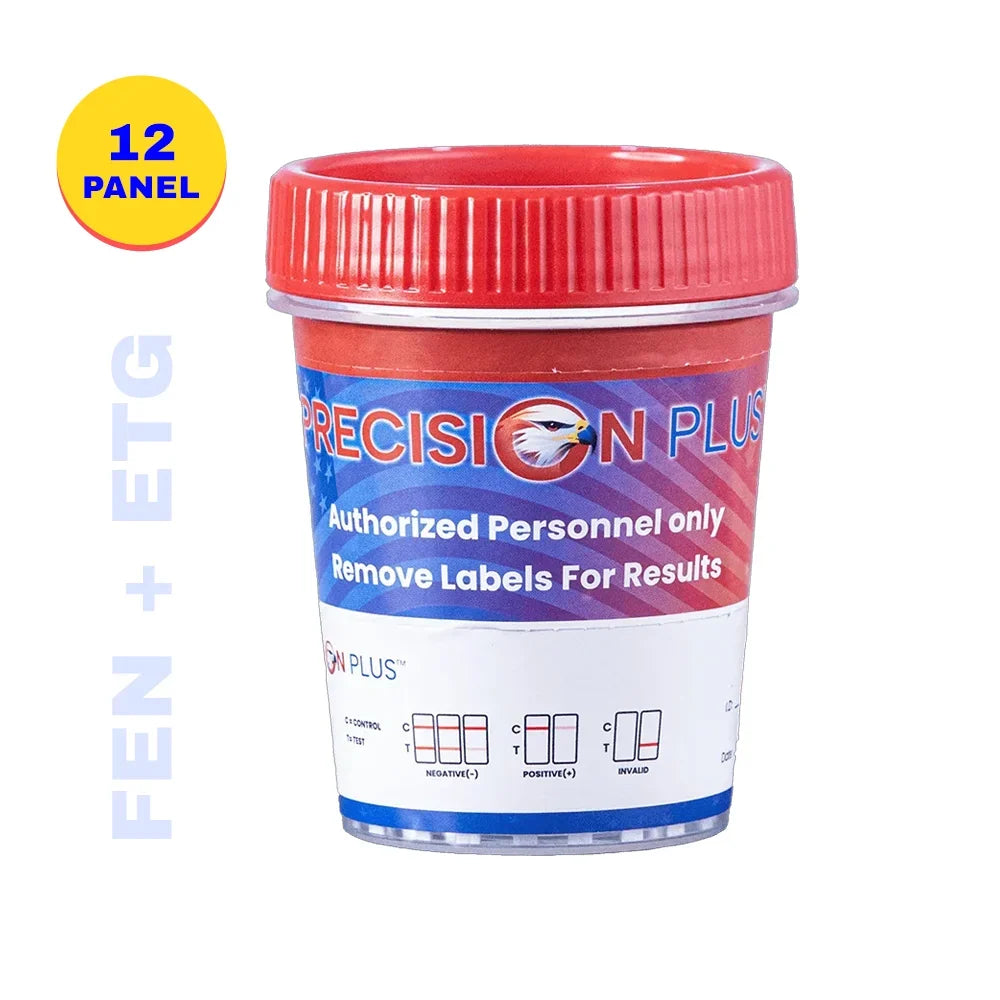
Quick answer: A drug test does not look for cocaine itself. It detects benzoylecgonine (BE), the main cocaine metabolite, and reports it as COC. Urine screens commonly use a 150 or 300 ng/mL cutoff and detect use for about 2 to 4 days. Any positive is preliminary and needs laboratory confirmation. Source: American Screening Corp.
- Cocaine appears as benzoylecgonine (BE), labeled COC or COC/BE on a panel.
- The HHS urine initial test cutoff is 150 ng/mL, and the confirmatory cutoff is 100 ng/mL. Many point-of-collection cups use 300 ng/mL.
- A positive screen is preliminary; confirm by GC/MS or LC-MS/MS laboratory testing before any action.
What does cocaine show up as on a drug test?
Cocaine shows up as benzoylecgonine, abbreviated BE. The body breaks cocaine down quickly, with a half-life of roughly one hour. BE lasts much longer, which is why laboratories and test cups target it.
Need drug tests for your clinic, program or workplace?
American Screening Corp has supplied FDA-cleared, CLIA-waived tests at wholesale pricing since 2004. Popular options:
Ordering 100+ tests? Request volume pricing.
On a result form or cup window, the line is usually labeled COC. A single COC line on a multi-drug cup tests for cocaine use. It does not measure how much was used or when impairment occurred.
What cutoff levels apply?
A cutoff is the concentration, in nanograms per milliliter (ng/mL), at or above which a screen reads positive. Below the cutoff, the result reads negative even if trace amounts are present.
The HHS Mandatory Guidelines for Federal Workplace Drug Testing Programs set the urine initial test for cocaine metabolite at 150 ng/mL and the confirmatory test at 100 ng/mL (SAMHSA, Mandatory Guidelines for Urine, as of 2026). For oral fluid, the HHS initial cutoff is 15 ng/mL and the confirmatory cutoff is 8 ng/mL. DOT-regulated testing follows 49 CFR Part 40 and the HHS cutoffs.
Many instant cups use 300 ng/mL, a long-standing screening cutoff. Always read the cutoff printed on the product insert for the lot you buy.
How long can cocaine be detected?
Detection windows vary with dose, frequency, hydration and metabolism. The ranges below are typical, not guarantees.
| Specimen | Target | Common screening cutoff | Typical window | Best fit |
|---|---|---|---|---|
| Urine | Benzoylecgonine | 150 ng/mL (HHS) or 300 ng/mL (many cups) | About 2-4 days; longer after heavy, repeated use | Treatment, probation, pre-employment |
| Oral fluid | Cocaine and BE | 15 ng/mL (HHS initial) | About 1-2 days | Observed collection, post-incident, reasonable suspicion |
NIDA describes cocaine's effects as short-lived, while its metabolites remain measurable in urine for days (NIDA, Cocaine research topic page).
What else can cause a cocaine-positive result?
Cocaine is a Schedule II controlled substance with limited medical uses, such as certain topical anesthetics in ear, nose and throat procedures. A verified medical use is reviewed by a Medical Review Officer in DOT programs.
Coca leaf teas and some imported products can contain cocaine alkaloids and produce BE. Common over-the-counter medicines are not a known cause of a true BE positive. When alcohol and cocaine are used together, the body also forms cocaethylene, which is a separate compound.
How do you read the result?
- Check the cup or dip card for a valid control (C) line before reading anything else.
- Read within the time stated in the insert, usually about 5 minutes. Do not read after the stated window.
- Find the COC line. Two lines (control and test) mean negative. A control line with no COC line means a non-negative, preliminary result.
- Record the result, lot number, expiration date, collector and time.
- Send the specimen for confirmation by GC/MS or LC-MS/MS laboratory testing before acting on a non-negative.
Which format fits your program?
Urine cups suit most clinics, courts and employers because they combine specimen validity checks with multi-drug panels. Browse our drug test cups, available in panels from 5 to 18 drugs, with FDA-cleared, CLIA-waived options for point-of-collection use. Oral fluid devices shorten the detection window and reduce collection concerns where direct observation is needed.
For wholesale volume, private label or help choosing a panel, contact American Screening Corp. We ship same-day nationwide from Shreveport, Louisiana.
Buyer checklist
- Confirm the COC cutoff (150 or 300 ng/mL) matches your policy.
- Confirm FDA-cleared and CLIA-waived status for the exact product.
- Check lot number and expiration date on every device.
- Choose urine or oral fluid based on the detection window you need.
- Arrange a laboratory for GC/MS or LC-MS/MS confirmation.
- Write down your non-negative policy before testing begins.
- For DOT-regulated employees, follow 49 CFR Part 40 and use a federally compliant process.
FAQ
What does cocaine show up as on a urine drug test?
It shows up as benzoylecgonine (BE), the main cocaine metabolite, reported as COC. A positive screen is preliminary and must be confirmed by GC/MS or LC-MS/MS laboratory testing.
How long does cocaine stay in urine?
Typically about 2 to 4 days after use. Heavy or repeated use can extend this. Individual results vary, so a window is an estimate, not a guarantee.
What is the cutoff for cocaine on a drug test?
The HHS urine initial cutoff is 150 ng/mL and the confirmatory cutoff is 100 ng/mL. Many instant cups use 300 ng/mL. Check the product insert.
Can a screening cup confirm cocaine use?
No. A cup gives a preliminary result. Confirmation requires GC/MS or LC-MS/MS laboratory testing, with Medical Review Officer review in regulated programs.
Sources
- SAMHSA, Workplace Drug Testing: HHS Mandatory Guidelines
- U.S. Department of Transportation, 49 CFR Part 40 (ODAPC)
- NIDA, Cocaine Research Topic
This is general information, not legal or medical advice.


