Quick answer: Standard energy drinks rarely cause a false positive drug test. Caffeine, taurine and B vitamins are not targeted by common urine panels, which screen for THC, cocaine, opiates, amphetamines and PCP. Rare cross-reactions come from stimulant-like ingredients in some products, and lab confirmation resolves them.
- Caffeine, taurine, guarana and B vitamins do not register as drugs on standard immunoassay panels.
- Unusual stimulant ingredients (for example synephrine-type compounds) are the main cross-reaction risk, mostly on amphetamine screens.
- Any non-negative screen is presumptive; confirmation by GC-MS or LC-MS/MS is what settles it.
What a urine drug screen actually detects
An immunoassay screen uses antibodies that bind a target drug or its metabolite. If the concentration is at or above the cutoff, the result is non-negative. Under the HHS Mandatory Guidelines for federal workplace programs, initial urine cutoffs are 50 ng/mL for marijuana metabolite (THCA), 150 ng/mL for cocaine metabolite (benzoylecgonine), 2,000 ng/mL for opiates (codeine/morphine), 25 ng/mL for PCP, and 500 ng/mL for amphetamines (SAMHSA, Mandatory Guidelines for Federal Workplace Drug Testing Programs using Urine). Many non-regulated programs use the same or similar cutoffs.
Need drug tests for your clinic, program or workplace?
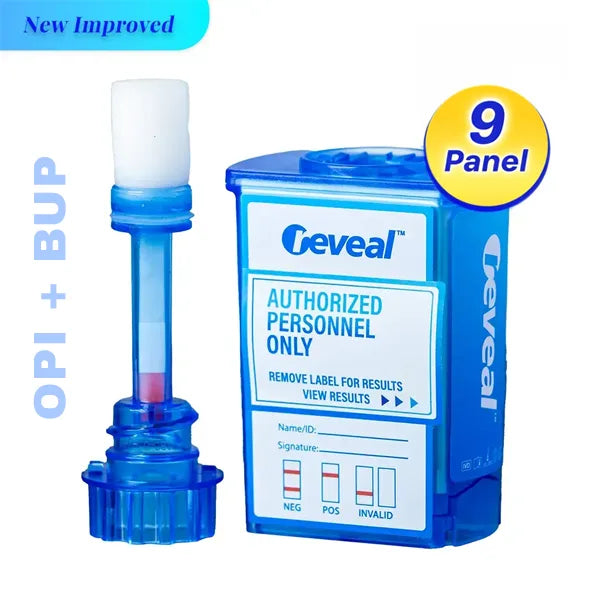
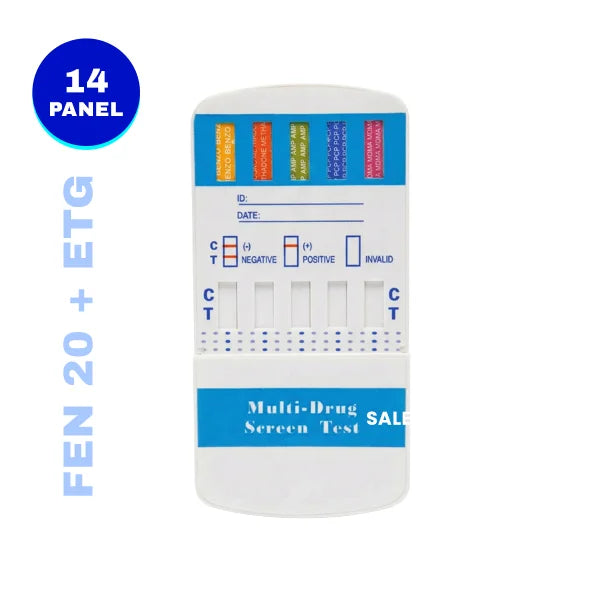
American Screening Corp has supplied FDA-cleared, CLIA-waived tests at wholesale pricing since 2004. Popular options:
Ordering 100+ tests? Request volume pricing.
Caffeine is not on these panels. Neither are taurine, B vitamins, or sugar. An energy drink made only of those ingredients has no known pathway to a positive on a five-panel test.
Where energy drinks can create problems
Stimulant-like ingredients
Immunoassays can cross-react with molecules structurally similar to amphetamine. Some energy drinks and pre-workout products contain compounds such as synephrine (bitter orange), phenethylamine analogs, or other "proprietary blend" stimulants. These can occasionally push an amphetamine screen non-negative. Products that are mislabeled or contain undeclared ingredients raise the risk.
Dilution and specimen validity
Heavy drinking of any fluid, including energy drinks, can produce a dilute urine specimen. Dilution does not create a false positive; it can lower drug concentration and may trigger a recollection under your policy. Under DOT rules, dilute handling is defined in 49 CFR Part 40 and explained by the DOT Office of Drug and Alcohol Policy and Compliance (ODAPC).
Color and visual reading
High-dose B vitamins (especially riboflavin) can turn urine bright yellow. This does not change a drug result, but it can confuse staff reading a cup and may prompt a closer look at specimen validity.
Comparison: ingredient and screen risk
| Ingredient | Common in energy drinks? | Typical screen affected | Risk of false positive |
|---|---|---|---|
| Caffeine | Yes | None on standard panels | Very low |
| Taurine, B vitamins, sugar | Yes | None | Very low |
| Guarana, ginseng | Often | None on standard panels | Very low |
| Synephrine-type or phenethylamine stimulants | Occasionally (mostly supplements) | Amphetamines | Low to moderate |
| Undeclared or mislabeled ingredients | Rare | Varies | Unpredictable |
How to handle a questioned non-negative result
Treat every instant-test result as presumptive. Whether you use drug test cups or drug test dip cards, the reading steps are the same:
- Read the result inside the time window in the device instructions; a line that appears after the window is invalid.
- Treat any visible test line as negative for that drug, even if faint, and a missing line as non-negative.
- Confirm the control line is present; if not, the test is invalid and should be repeated with a new device.
- Send non-negative specimens to a laboratory for confirmation by GC-MS or LC-MS/MS.
- Have a medical review step before any adverse action, so the donor can disclose products or medications.
FDA oversight of drugs-of-abuse tests applies to the device: confirm each product's FDA clearance and CLIA-waived status on its labeling and your supplier's documentation (FDA, Drugs of Abuse Tests). Instant tests are screening tools; they are not a final determination.
Program checklist for employers, clinics and courts
- Publish a written policy stating that instant results are presumptive until confirmed.
- Document cutoff levels (ng/mL) for each panel in use.
- Use devices with clear FDA and CLIA-waived status where applicable.
- Train staff on reading windows, control lines and invalid results.
- Record the collection time, specimen temperature and appearance.
- Offer a medical review or donor interview before final decisions.
- Route all non-negatives to lab confirmation; never act on a screen alone.
- Keep chain of custody for any specimen headed to the lab.
If you also screen candidates before hire, pair testing with employment background checks from Reveal Background, ASC's sister division. For help choosing formats and cutoffs for your program, contact American Screening Corp.
Frequently asked questions
Can caffeine cause a positive drug test?
No. Caffeine is not a target of standard urine panels such as the 5-panel or 10-panel. It is not known to cross-react with common immunoassays at normal intake.
Which energy drink ingredient is most likely to cause a false positive?
Synephrine-type and phenethylamine-like stimulants are the most likely, and they mainly affect amphetamine screens. Products with undeclared ingredients carry added uncertainty.
Will lab confirmation catch a false positive from an energy drink?
Yes. GC-MS and LC-MS/MS identify the exact molecule, so a cross-reacting compound will not be reported as amphetamine or another drug.
Can energy drinks cause a dilute specimen?
Large fluid intake can dilute urine and lower concentrations, which may require a recollection under your policy. It does not produce a false positive.
Sources
- SAMHSA, Workplace Drug Testing and Mandatory Guidelines
- U.S. DOT, Office of Drug and Alcohol Policy and Compliance (ODAPC)
- FDA, Drugs of Abuse Tests
This article is general information, not legal or medical advice.