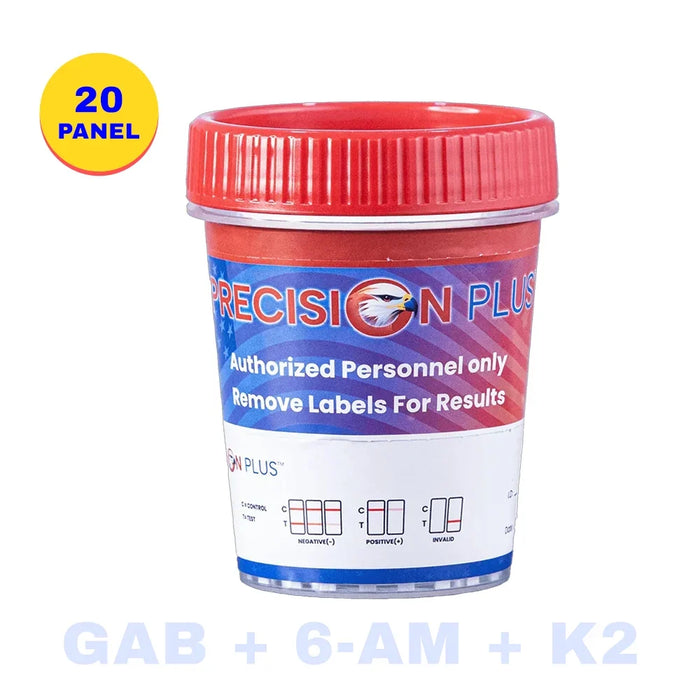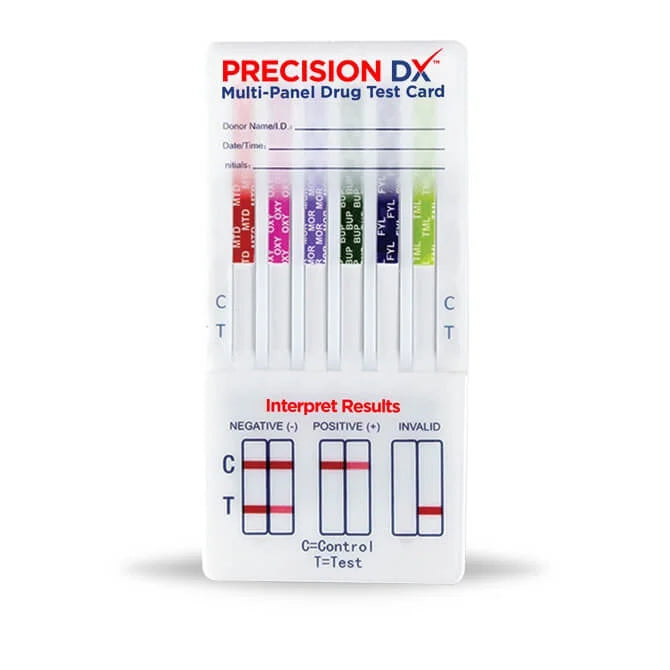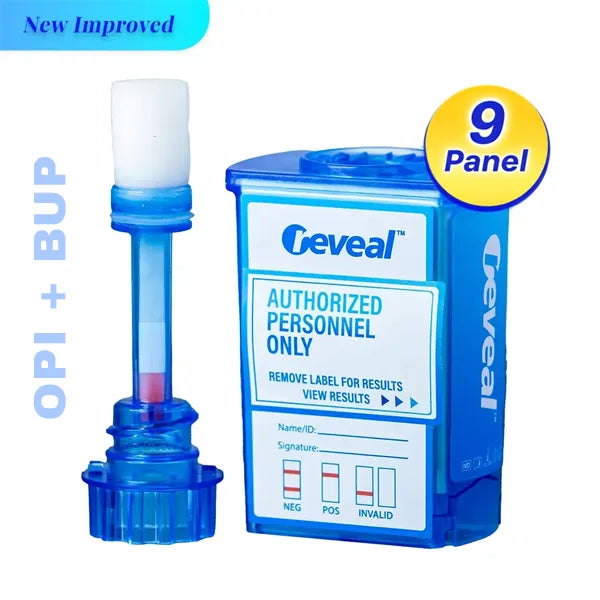
Quick answer: CLIA-waived saliva tests are FDA-cleared oral-fluid immunoassay screens for workplaces, clinics, and courts. They detect drugs in saliva, most often within 24 to 48 hours. Federal laboratory initial cutoffs include THC at 4 ng/mL (HHS Oral/Fluid Mandatory Guidelines, as of October 2019). A non-negative result is preliminary; confirm by GC/MS or LC-MS/MS.
- CLIA-waived oral fluid devices are FDA-cleared point-of-care screens; testing sites typically hold a CMS Certificate of Waiver.
- HHS laboratory oral-fluid initial cutoffs include THC 4 ng/mL, cocaine 15 ng/mL, amphetamines 50 ng/mL, and PCP 10 ng/mL (Mandatory Guidelines, October 2019).
- American Screening Corp supplies CLIA-waived oral fluid and urine screens to employers and clinics; every non-negative screen needs GC/MS or LC-MS/MS confirmation.
Last updated November 2026. This guide is for occupational health clinics, employers, staffing firms, treatment programs, courts, and laboratories.
What is a CLIA-waived saliva test?
A CLIA-waived saliva test is an FDA-cleared oral-fluid immunoassay that the FDA has categorized as waived under the Clinical Laboratory Improvement Amendments (FDA, Clinical Laboratory Improvement Amendments (CLIA)). Waived tests are simple screens with a low risk of an erroneous result when used as labeled.
The collector takes saliva with a swab or pad. The device shows control and test lines in minutes. Cutoff concentrations appear in ng/mL on the insert. CLIA-waived status describes test complexity. It is not a diagnosis and it is not a claim of 100% accuracy.
Sites that perform testing generally obtain a CLIA Certificate of Waiver from CMS. Employers and staffing firms who contact us most often ask whether a given saliva device is CLIA-waived, what ng/mL cutoff it uses, and whether it can be used on DOT-covered drivers.
What do workplace saliva tests detect, and at what cutoffs?
Workplace oral fluid screens detect parent drugs and metabolites in saliva. Common CLIA-waived panels include THC (parent delta-9-THC), cocaine, amphetamines, methamphetamine, opiates, PCP, oxycodone, methadone, and benzodiazepines. Device panels commonly include 5, 6, 10, or 12 analytes. Match the panel to your written policy.
Point-of-care cutoffs are specific to each FDA-cleared device. Use only the ng/mL values on that insert. Do not copy another product’s cutoffs onto a chain-of-custody form.
For laboratory-based federal workplace oral-fluid testing, HHS set these cutoffs in the Mandatory Guidelines for Federal Workplace Drug Testing Programs — Oral/Fluid (Federal Register, October 25, 2019):
- Marijuana (THC): 4 ng/mL initial; 2 ng/mL confirmatory.
- Cocaine and benzoylecgonine: 15 ng/mL initial; 8 ng/mL confirmatory.
- Amphetamine, methamphetamine, MDMA, and MDA: 50 ng/mL initial; 25 ng/mL confirmatory.
- Phencyclidine: 10 ng/mL initial and confirmatory.
- Codeine, morphine, hydrocodone, hydromorphone, oxycodone, and oxymorphone: 30 ng/mL initial; 15 ng/mL confirmatory.
- 6-Acetylmorphine: 3 ng/mL initial; 2 ng/mL confirmatory.
A CLIA-waived on-site device may use different ng/mL cutoffs than the HHS laboratory table. Align the labeled cutoff with policy before the first donor is tested.
How long do drugs stay in saliva?
Oral fluid has a short detection window compared with urine. Most cocaine, amphetamine, and opiate use is detectable for about 24 to 48 hours. THC in saliva is often detectable for about 24 hours after occasional use and may extend toward 48 to 72 hours after heavier recent use.
Staffing firms and safety-sensitive employers use that short window when the question is recent use. Windows vary by dose, cutoff, and frequency of use. Confirm every non-negative result by GC/MS or LC-MS/MS laboratory testing.
Who should use CLIA-waived oral fluid tests at work?
CLIA-waived saliva tests are for employers, staffing agencies, occupational clinics, treatment centers, probation and court programs, and the laboratories and distributors that supply them. They fit pre-employment, random, reasonable-suspicion, and post-incident screening when policy and state law allow oral fluid.
If you already purchase drug test cups for urine screening, add oral fluid when you need observed collection without a restroom or a shorter window. Many workplace programs keep both specimens in the same policy.
When the hire also needs a criminal or employment check, run an FCRA-compliant screen. ASC’s sister division provides employment background checks. Do not use a drug screen as a people-search tool.
How do saliva tests compare with urine cups?
Oral fluid testing does everything a rapid urine screen does plus observed collection without a restroom, a detection window that maps to recent use, and less opportunity to substitute the specimen. Urine remains useful when the policy needs a longer look-back.
| Factor | Oral fluid (saliva) | Urine |
|---|---|---|
| Typical detection window | About 24–48 hours (THC often ~24 hours) | Often 1–3 days or longer, by drug |
| Collection | Observed swab or pad; no restroom | Cup; restroom required |
| CLIA-waived POC devices | Yes, when FDA-cleared and labeled waived | Yes, cups and dip cards |
| HHS lab THC initial cutoff | 4 ng/mL THC (oral fluid, Oct 2019) | 50 ng/mL THCA (urine MG) |
| DOT drug testing (49 CFR Part 40) | Authorized when HHS-certified labs and devices are in place | Standard DOT drug specimen for most collections |
| Result type | Preliminary immunoassay; confirm by GC/MS or LC-MS/MS | Preliminary immunoassay; confirm by GC/MS or LC-MS/MS |
Can you use saliva tests for DOT-regulated employees?
DOT authorized oral fluid as an alternative drug-testing specimen in the May 2, 2023 final rule amending 49 CFR Part 40 (DOT Office of Drug and Alcohol Policy and Compliance). Authorization is not the same as starting collections the same day.
DOT oral-fluid drug tests require HHS-certified oral fluid laboratories and collection devices that meet Part 40 and HHS rules. Confirm current laboratory and device status with DOT ODAPC before you collect saliva on a CDL or other DOT-covered employee. Until those conditions are met, urine remains the practical DOT drug specimen for most employers.
Non-DOT workplace, clinic, court, and treatment programs may use FDA-cleared, CLIA-waived oral fluid devices as labeled, subject to state law and written policy. DOT alcohol testing is a separate rule from drug testing.
How do you collect and read a CLIA-waived saliva screen?
Use only the steps on that device’s FDA-cleared insert. A typical sequence follows.
- Verify donor identity and the test reason in your policy.
- Check pouch integrity, lot number, and expiration date.
- Collect saliva with the swab or pad for the insert’s stated time.
- Seat the collector in the cassette or wait for the volume indicator.
- Read lines only during the insert’s read window, often 5 to 10 minutes.
- Require a control line. No control line means invalid; repeat with a new device.
- Record negative or non-negative by analyte. Do not diagnose impairment.
- Treat every non-negative as preliminary. Confirm by GC/MS or LC-MS/MS laboratory testing.
Do not read the device after the maximum time on the insert. Do not report a result from a device that failed the control line.
What does a workplace program need before the first test?
Use this checklist before you put a CLIA-waived saliva screen into service.
- Written policy that names oral fluid, the panel, cutoffs, and confirmation method.
- FDA-cleared, CLIA-waived devices whose insert matches that panel.
- A CLIA Certificate of Waiver if your site performs the test (CMS).
- Trained collectors and a documented chain of custody.
- A laboratory path for GC/MS or LC-MS/MS confirmation of non-negatives.
- Storage that follows the label, usually room temperature and out of direct sun.
- Procedures for invalid devices, insufficient volume, and refusals.
- A review of state rules on marijuana, notice, and hiring.
American Screening Corp, based in Shreveport, Louisiana, supplies CLIA-waived oral fluid tests, urine cups, dip cards, and related workplace screening supplies with same-day shipping nationwide. Verify FDA 510(k) and CLIA-waived status on the specific product record before you cite a cutoff in a policy or bid.
Sources
- Mandatory Guidelines for Federal Workplace Drug Testing Programs — Oral/Fluid (HHS/SAMHSA)
- 49 CFR Part 40 — Procedures for Transportation Workplace Drug and Alcohol Testing (DOT ODAPC)
- Clinical Laboratory Improvement Amendments (CLIA) (FDA)
Frequently asked questions
Are saliva drug tests CLIA-waived for workplace use?
Many FDA-cleared oral-fluid immunoassay screens are categorized as CLIA-waived. Check the 510(k) and CLIA categorization on that device’s labeling. Sites that test generally need a CMS Certificate of Waiver. Non-negative results are preliminary and need GC/MS or LC-MS/MS confirmation.
How long do workplace saliva tests detect drugs?
Most cocaine, amphetamine, and opiate use is detectable in oral fluid for about 24 to 48 hours. THC is often detectable for about 24 hours after occasional use. Windows vary by dose, device cutoff in ng/mL, and frequency of use. Confirm non-negatives in a laboratory.
Can we use CLIA-waived saliva tests for DOT employees?
DOT Part 40 authorizes oral fluid as of the May 2, 2023 final rule. You may use it for DOT drug tests only when HHS-certified oral fluid labs and approved devices are available. Verify status with DOT ODAPC. Non-DOT programs may use CLIA-waived devices under policy and state law.
Do positive saliva screens need laboratory confirmation?
Yes. A CLIA-waived saliva result is a preliminary immunoassay screen. Every non-negative (presumptive positive) result should be confirmed by GC/MS or LC-MS/MS laboratory testing before an employment or program action, consistent with SAMHSA workplace testing practice and the product labeling.
This page is general information, not legal or medical advice.