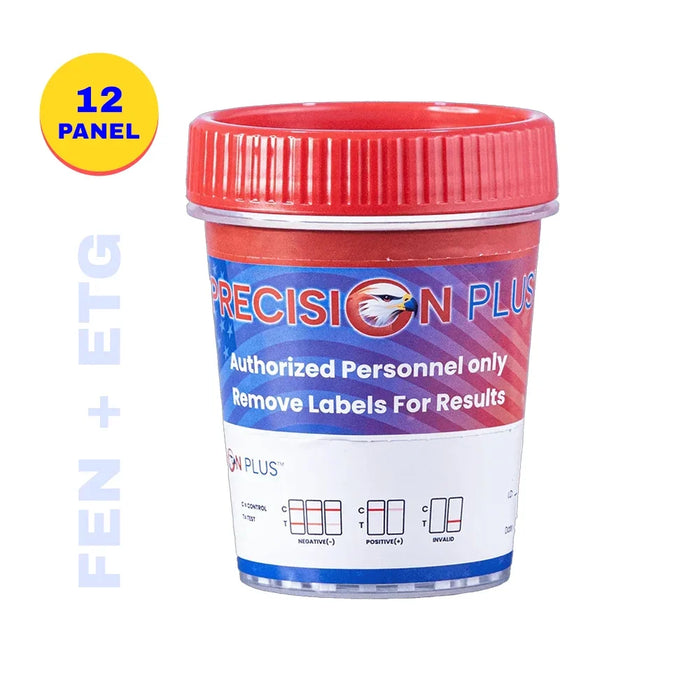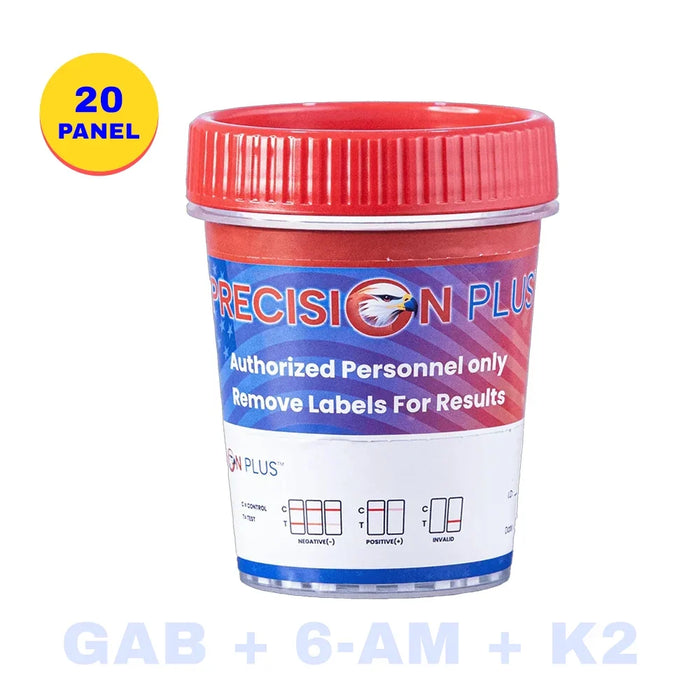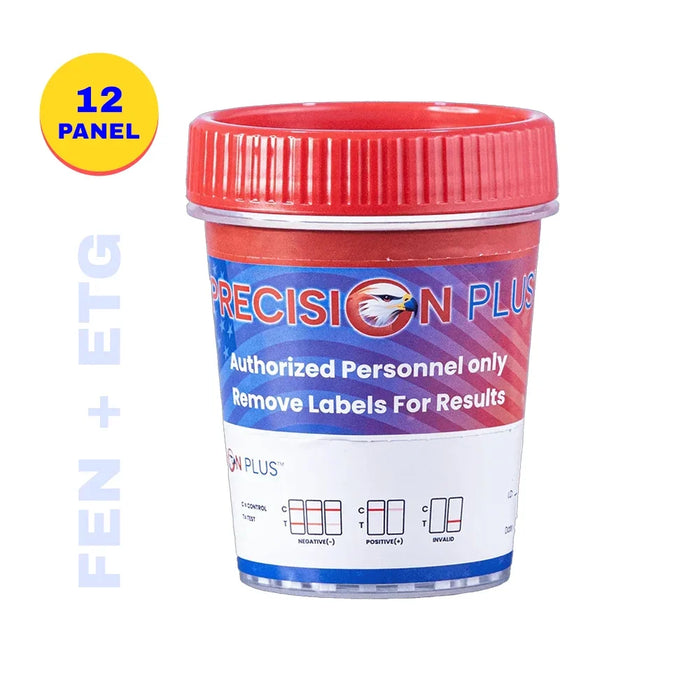
Quick answer: A 12 panel drug test is a single urine cup or card that screens for twelve drug classes at once. Common classes include marijuana, cocaine, opiates, amphetamines, benzodiazepines, barbiturates, methadone and oxycodone. The exact lineup varies by manufacturer. Any non negative screening result needs confirmation testing at a certified laboratory.
- The THC screening cutoff on a typical 12 panel cup is 50 ng/mL.
- A 5 panel DOT test follows 49 CFR Part 40; a 12 panel test is set by employer or program policy.
- American Screening Corp, the source of this guide, has supplied FDA-cleared, CLIA-waived tests at wholesale pricing since 2004.
Reviewed by the American Screening Corp product team, November 2026. Updated for the current federal cutoffs and detection-window research where the article cites them.
A 12 panel drug test is a single urine cup or card that screens for twelve drug classes at once instead of the five or six most people picture when they hear "drug test." It is one of the most common configurations sold to treatment programs, probation departments, staffing agencies and general employers who want broader coverage than the federally mandated panel used for transportation workers.
Buying? Shop 12 panel drug tests at wholesale pricing, FDA-cleared with results in 5 minutes. Or keep reading for the answer.
This guide covers the standard 12 panel drug configuration, typical screening cutoff levels and detection windows, how a 12 panel test differs from the 5 panel test required under federal transportation rules, and what happens after a screening result comes back positive.
What a 12 Panel Drug Test Screens For
Most 12 panel cups sold in the United States screen for the same core group of drug classes, identified on the cup by a standard set of abbreviations. The exact lineup can vary slightly by manufacturer, so the table below reflects a common industry configuration rather than a single regulated standard.
Need drug tests for your clinic, program or workplace?
American Screening Corp has supplied FDA-cleared, CLIA-waived tests at wholesale pricing since 2004. Popular options:
- 12-panel drug test cups and dip cards
- 12-panel drug test cups
- all drug test cups (wholesale pricing)
Ordering 100+ tests? Request volume pricing.
| Abbreviation | Drug class or substance |
|---|---|
| AMP | Amphetamine |
| BAR | Barbiturates |
| BZO | Benzodiazepines |
| BUP | Buprenorphine |
| COC | Cocaine metabolite |
| MDMA | MDMA / ecstasy |
| MET | Methamphetamine |
| MTD | Methadone |
| OPI | Opiates (morphine and codeine) |
| OXY | Oxycodone |
| PCP | Phencyclidine |
| THC | Marijuana metabolite |
Some suppliers swap one or two of these analytes for a different priority substance depending on the buyer, most commonly TCA (tricyclic antidepressants, included because some antidepressants can cross react on certain immunoassays), PPX (propoxyphene), TRA (tramadol), FEN (fentanyl) or ETG (ethyl glucuronide, an alcohol use marker). A buyer who needs fentanyl or alcohol use history covered should confirm which twelve analytes are actually printed on the specific cup or card, because "12 panel" describes a format, not one fixed list.
Screening Cutoff Levels and Detection Windows
A drug test cup is an immunoassay screen. It reports a result once a drug metabolite in the urine crosses a set concentration, called the cutoff level, measured in nanograms per milliliter (ng/mL). The federal government only sets mandatory cutoff levels for the drug classes covered by HHS mandatory guidelines for federal workplace drug testing programs, which apply to federal agencies and to safety sensitive transportation employees. Those guidelines cover marijuana, cocaine, opiates, phencyclidine, amphetamines, and since 2017 also MDMA and an expanded group of semi-synthetic opioids including oxycodone, oxymorphone, hydrocodone and hydromorphone. Analytes outside that federal list, such as barbiturates, benzodiazepines, buprenorphine and methadone, do not have a single mandated cutoff; manufacturers set them based on common industry practice and FDA clearance data for the specific device.
The table below lists screening cutoffs commonly used on 12 panel cups and typical urine detection windows for occasional use. Detection time depends heavily on dose, frequency of use, hydration and individual metabolism, so these ranges are general reference points, not fixed values for any one person.
| Analyte | Typical screening cutoff | Typical detection window (urine) |
|---|---|---|
| AMP | 500 to 1000 ng/mL | 1 to 3 days |
| BAR | 300 ng/mL | 2 to 4 days (short acting), up to 3 weeks (long acting) |
| BZO | 300 ng/mL | 3 days to several weeks depending on the specific drug |
| BUP | 10 ng/mL | Up to 3 to 4 days |
| COC | 150 to 300 ng/mL | 2 to 4 days |
| MDMA | 500 ng/mL | 1 to 3 days |
| MET | 500 to 1000 ng/mL | 2 to 4 days |
| MTD | 300 ng/mL | Up to several days |
| OPI | 2000 ng/mL | 1 to 3 days |
| OXY | 100 ng/mL | 1 to 3 days |
| PCP | 25 ng/mL | Up to several days, longer with heavy use |
| THC | 50 ng/mL | 1 to 3 days for occasional use, longer with frequent use |
12 Panel vs 5 Panel DOT Testing
Employees covered by 49 CFR Part 40, the Department of Transportation drug and alcohol testing rule, are tested on a specific federal panel, not the broader commercial 12 panel format. That panel currently covers marijuana, cocaine, opiates, amphetamines and phencyclidine, along with the expanded opioids and MDMA added by the 2017 update to the HHS mandatory guidelines. A general employer who is not subject to DOT rules is free to choose a broader panel like a 12 panel cup to screen for additional substances such as benzodiazepines, barbiturates and methadone that fall outside the DOT scope.
| Feature | 5 panel DOT test | 12 panel test |
|---|---|---|
| Governed by | 49 CFR Part 40 and HHS mandatory guidelines | Employer policy or program requirement, not a single federal rule |
| Who it applies to | Safety sensitive transportation employees | General employers, treatment programs, probation, staffing agencies |
| Analytes covered | Fixed federal list | Broader list, varies by manufacturer |
| Confirmation and MRO review | Required by rule | Recommended best practice, not mandated by a single federal rule |
Screening Results Are Not a Diagnosis
A cup or card immunoassay is a screening tool. It flags a presumptive positive when a metabolite crosses the cutoff, but it cannot identify the exact substance, confirm a prescription, or rule out a cross reacting compound. Any non negative screening result on a 12 panel test should go to confirmation testing by gas chromatography or liquid chromatography with mass spectrometry at a certified laboratory, and in employment settings that result should be reviewed by a medical review officer (MRO) before any action is taken. The MRO gives the tested individual an opportunity to provide a legitimate medical explanation, including current prescriptions, before a result is reported as verified positive. SAMHSA's urine specimen collection procedures describe the chain of custody steps, including the custody and control form, that keep a specimen defensible from collection through laboratory confirmation. Buyers and administrators should never treat a screening result alone as proof of drug use, and should always route confirmation and prescription documentation through the MRO process rather than making that determination themselves.
CLIA Waived Status
Most point of care 12 panel cups sold for onsite use are cleared by the FDA as CLIA waived tests, which means they can be run outside a full clinical laboratory setting without high complexity lab certification. The FDA maintains the current list of test categories and clearance status, and buyers who need CLIA waived status for a specific device should confirm the clearance directly against the FDA's CLIA categorization database rather than relying on packaging alone, since categorization is tied to the specific cleared device, not to the "12 panel" format in general.
Who Typically Chooses a 12 Panel Test
- Substance use treatment and recovery programs, which often need visibility into benzodiazepines, barbiturates, buprenorphine and methadone alongside the more common drug classes because those medications are directly relevant to a patient's treatment plan.
- Probation, parole and court diversion programs, which frequently require a broader panel than the federal five to monitor compliance with program terms.
- General employers and staffing agencies who are not subject to DOT testing but want coverage beyond the federal panel, particularly in industries where prescription opioid and benzodiazepine misuse is a safety concern.
- Safety sensitive employers outside DOT jurisdiction, who may adopt a 12 panel as part of a written drug free workplace policy. SAMHSA's model plan for a drug free workplace program outlines the policy elements, such as written notice and consistent application, that employers generally build into these programs.
Employers building or updating a testing policy should consult counsel on how state law treats marijuana, medical cannabis cards and off duty conduct, since those rules vary by state and are not addressed by the federal panel itself.
Choosing Between a 12 Panel Cup and Other Formats
A 12 panel result set is a middle ground. A 5 panel or 6 panel test costs less and moves faster to administer for programs that only need the core federal analytes, while a 14 to 18 panel adds further coverage such as fentanyl or additional synthetic markers for programs facing a specific emerging substance concern. Programs that primarily need oral fluid collection instead of urine should confirm cutoff levels separately, since oral fluid devices are not built or calibrated the same way as urine cups. Buyers who are unsure which configuration fits their population should compare their program's actual substance use concerns against the analyte list on the cup rather than assuming a higher number always means better coverage, since a 12 panel that does not include the specific substance in question offers no more protection than a smaller panel.
American Screening Corporation supplies CLIA waived, FDA cleared drug test cups, including standard 12 panel configurations, along with lab confirmation services for any non negative screen. Buyers can review current 12 panel and other drug test cup configurations to compare analyte lists before ordering.
Frequently asked questions
What drugs does a 12 panel drug test check for?
A standard 12 panel cup screens for amphetamine, barbiturates, benzodiazepines, buprenorphine, cocaine, MDMA, methamphetamine, methadone, opiates, oxycodone, phencyclidine and marijuana metabolite. Some manufacturers substitute one or two of these for tricyclic antidepressants, propoxyphene, tramadol, fentanyl or an alcohol use marker, so the exact list should be confirmed on the specific product.
How is a 12 panel drug test different from a 5 panel DOT test?
The 5 panel test required under DOT rules covers a fixed federal list set by HHS mandatory guidelines and 49 CFR Part 40, and applies to safety sensitive transportation employees. A 12 panel test is a broader commercial configuration chosen by employers, treatment programs or probation departments that are not bound by the DOT rule and want coverage of additional substances.
Is a 12 panel drug test cup CLIA waived?
Most point of care 12 panel cups intended for onsite screening are cleared by the FDA as CLIA waived devices, which allows them to be used outside a full laboratory setting. Waived status is tied to the specific cleared device, so buyers should verify categorization for the exact product against the FDA's CLIA categorization records rather than assuming every 12 panel product carries the same status.
What happens after a positive screening result on a 12 panel test?
A screening cup result is presumptive, not final. A non negative result should go to laboratory confirmation testing, and in an employment context should be reviewed by a medical review officer who gives the individual a chance to provide prescription documentation or another legitimate explanation before the result is reported as verified.
Do all 12 panel drug tests use the same cutoff levels?
No. Federal mandatory guidelines only set cutoffs for the analytes covered by federally regulated workplace testing programs. Cutoffs for the remaining analytes on a 12 panel cup, such as benzodiazepines, barbiturates and methadone, are set by the manufacturer as part of FDA clearance and can vary between products.
Who typically requires a 12 panel drug test?
Substance use treatment programs, probation and court diversion programs, and general employers outside DOT jurisdiction commonly choose a 12 panel test when they need visibility into a broader group of medications and controlled substances than the federal five panel provides.
What is a 12 panel drug test for?
A 12 panel drug test is a single urine cup or card that screens for twelve drug classes at once. Common classes include marijuana, cocaine, opiates, amphetamines, benzodiazepines, barbiturates, methadone and oxycodone. Treatment programs, probation departments and general employers use it for broader coverage than the federal panel.
What is shown on a 12 panel drug test?
A 12 panel drug test is a single urine cup or card that screens for twelve drug classes at once. Common classes include marijuana, cocaine, opiates, amphetamines, benzodiazepines, barbiturates, methadone and oxycodone. The exact lineup varies by manufacturer.
How far back does a 12 panel urine drug test go?
Detection windows vary by drug class, and the article gives no single lookback period. For THC, it lists 1 to 3 days for occasional use. Frequent use produces longer windows. Benzodiazepines range from 3 days to several weeks, depending on the specific drug. Long-acting barbiturates reach up to 3 weeks.
12 Panel Drug Test Cup Pack Sizes and Cost Per Test
American Screening Corp sells 12 panel drug test cups in single-box and wholesale case quantities, with same-day shipping nationwide from Shreveport, LA. Buyers compare cost per test, not box price. Divide the total price by the number of individual cups, then add shipping and any lab confirmation fees.
| Buyer | Typical order | What to check |
|---|---|---|
| Small employer or clinic | Single box | Cost per cup, expiration date, lot number |
| Treatment center or probation office | Case quantity | Bulk pricing, reorder speed, lot consistency |
| Staffing firm or distributor | Wholesale or private label | Volume tiers, labeling, reseller terms |
Request current pricing from our wholesale team. Prices change with volume and panel configuration.
What Is Included With Each 12 Panel Cup
A 12 panel urine cup is a single-use device that screens for 12 drug classes at once. The cup has an integrated temperature strip and a leak-resistant lid. Confirm each of these before buying:
- Panel configuration: the exact analytes and cutoff levels in ng/mL printed on the package insert.
- Regulatory status: FDA-cleared and CLIA-waived status for the specific product, verified in the product record.
- Adulterant checks: whether the cup includes validity strips, and which ones.
- Read time: read results within the window stated in the insert, usually about five minutes.
- Shelf life: expiration date printed on each box.
Ask for the package insert before you order. It is the authoritative source for what a cup detects.
How to Run and Record a 12 Panel Cup Test
Follow the package insert for the exact device. A consistent procedure protects both the donor and your organization.
- Check the expiration date and bring the cup to room temperature.
- Have the donor provide a urine sample in the cup, and cap it firmly.
- Check the temperature strip within the time stated in the insert.
- Read the results at the time stated in the insert, and not after.
- Record the date, time, lot number, donor ID, and reader on a log.
- Treat every positive as preliminary and send the specimen for GC/MS or LC-MS/MS laboratory confirmation.
Every positive screen is preliminary. Confirm it by GC/MS or LC-MS/MS laboratory testing before any action is taken. For regulated testing, follow DOT 49 CFR Part 40 and applicable state statutes. This page is general information, not medical or legal advice.
Related Reading
For cutoff comparisons across specimen types, see Oral Fluid Drug Test Cutoff Levels: HHS, DOT, and Rapid Test Reference. For more on device clearance status, see CLIA-Waived Drug Test Cups: What Buyers Should Know.
This article is general information for employers and program administrators, not legal or medical advice. Testing decisions, panel selection and any response to a positive result should be made with qualified legal counsel and a medical review officer.