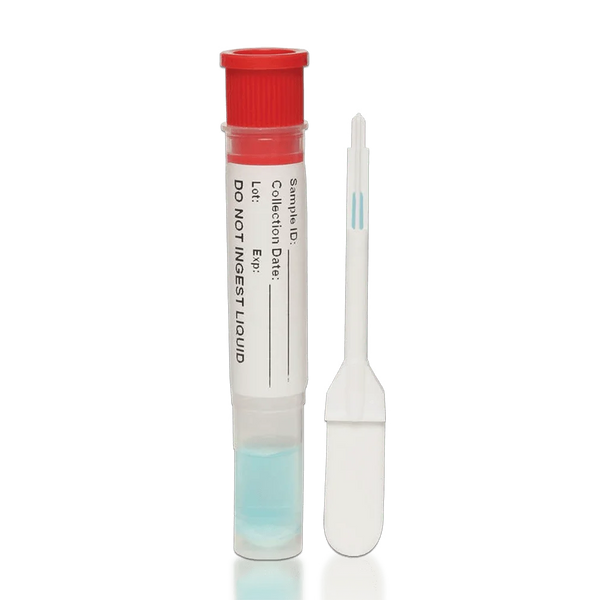
49 CFR Part 40 drug and alcohol testing supplies for DOT-regulated employers.

DOT-Regulated Employers: 49 CFR Part 40 compliant drug and alcohol testing supplies
What DOT-regulated employers solve with ASC

49 CFR Part 40 compliance, without the program drag.

DOT testing isn't workplace screening: it's federally mandated, MRO-verified, and audited. ASC supplies are formatted for Part 40 collection sites, BAT operators, and MRO workflows, so your DER never has a chain-of-custody gap on an FMCSA audit.

SAMHSA-5 / 49 CFR Part 40

Federal 5-panel cups and oral fluid devices match the Mandatory Guidelines exactly: THC, COC, OPI, AMP, PCP, with Part 40 CCFs.

Random Pool Logistics

Stage inventory for unannounced random selections across multiple driver pools, without over-ordering for the quarter.

Post-Accident Windows

Pre-staged post-accident kits ship overnight so you hit the 8-hour alcohol and 32-hour drug windows under §382.303.

MRO & BAT Integration

Devices and CCFs that work with your contracted MRO, C/TPA, and BAT vendor, so there are no incompatible forms blocking the lab handoff.

How DOT-regulated employers use ASC

Random selection through MRO verification, one vendor.

From the C/TPA's random pull to the MRO's verified result, ASC supplies move with the specimen. No compatibility gaps at the lab.

Random Selection

C/TPA pulls names from the random pool. DER notifies driver. ASC inventory is staged at the collection site.

Observed Urine or BAT

Trained collector runs the Part 40 urine collection or certified BAT runs the EBT, depending on test reason and mode.

Lab Transfer + MRO Review

Specimen ships to HHS-certified lab. Confirmed non-negatives route to the MRO for verification interview before reporting.

Result Documentation

MRO-verified result delivered to DER. ASC's COC + lot records archive for audit. Clearinghouse reporting if applicable.

Compliance & certifications

Built to the federal bar, not the workplace bar.

ASC supplies are formatted to meet the documentation and device requirements of 49 CFR Part 40 and the agency-specific subparts, including Part 382 (FMCSA), Part 219 (FRA), Part 199 (PHMSA), Part 655 (FTA), Part 120 (FAA), and Part 161 (USCG).

Pricing & procurement

Built for fleet operators, not retail buyers.

Three ways to buy, with transparent volume tiers.

Standard Order

For single-event needs, post-accident kits, evaluation orders, or smaller terminals.

$1.24 starting
SAMHSA-5 cup
  • Pay by card
  • Overnight shipping available
Shop the catalog

Subscribe & Save

Auto-replenish to the cadence of your random pool. Never short for a random pull.

Recurring discount applied at checkout
  • Discounted recurring pricing
  • Scale up before audit cycles
  • Pause or cancel anytime
  • Dedicated fleet rep
Start a subscription

Fleet PO & Multi-Terminal

For multi-terminal fleets and C/TPAs running consolidated programs.

RFQ
Custom volume pricing
  • Submit purchase orders for fleet accounts
  • Multi-terminal consolidation
  • Dedicated fleet account manager
  • C/TPA and MRO coordination
Request a quote

Common questions from safety managers & DERs

Do owner-operators have to follow 49 CFR Part 40 the same as fleets?
Yes. Under §382.103, any employer of a CDL driver in interstate commerce, including a one-truck owner-operator, must comply with Part 382 and Part 40. Owner-operators typically join a C/TPA's random consortium pool to meet the random testing requirement, since an operator cannot administer a random pool of one. ASC supplies the consortium and the owner-operator's collection site with the same federal CCFs and SAMHSA-5 cups.
How do I size my random testing pool inventory?
FMCSA sets the minimum annual random rate (currently 50% for drugs, 10% for alcohol). For a 200-driver pool that's 100 drug tests and 20 alcohol tests per year, distributed unannounced across the calendar, typically with monthly draws. Build in a buffer for post-accident, reasonable suspicion, return-to-duty, and follow-up tests, since FMCSA reviews and can adjust these minimum rates. ASC's fleet rep can help model your pool size against current agency rates.
What does the MRO need from us to verify a non-negative result?
The HHS-certified lab transmits the confirmed result directly to the MRO. The MRO then contacts the donor for a verification interview to assess legitimate medical explanations before reporting the verified result to the DER. As the employer, you provide the MRO with the driver's contact info and authorize the program, but you do not see the lab result until the MRO has verified it. ASC's CCFs route results to the MRO copy automatically.
Are your BATs certified under DOT 49 CFR Part 40?
ASC supplies the EBT and ASD devices on the NHTSA Conforming Products List, though we don't certify BAT operators ourselves. Your BAT (Breath Alcohol Technician) must complete DOT-model BAT training and demonstrate proficiency on your specific EBT model. Re-qualification is required every five years per §40.213, plus error-correction training within 30 days of any procedural error.
What are the post-accident testing windows under §382.303?
Alcohol testing must be performed within 8 hours of the qualifying accident; drug testing must be performed within 32 hours. If the windows are missed, the employer must document the reason and stop attempting testing. Post-accident testing is only required when the accident meets the qualifying criteria (fatality, citation + bodily injury, or citation + tow-away). ASC's post-accident kits are pre-staged at each terminal so you don't burn the 8-hour clock chasing a UPS delivery.
How do I handle a driver who refuses to test?
Under §40.191, refusal is treated the same as a verified positive. Behaviors that count as refusal include failing to appear, leaving the collection site, failing to provide adequate specimen without a valid medical explanation, refusing to sign the CCF, or refusing the directly-observed collection when required. The driver must be immediately removed from safety-sensitive duty, reported to the FMCSA Clearinghouse, and cannot return to safety-sensitive functions until completing the SAP process under Subpart O.
How does the FMCSA Drug & Alcohol Clearinghouse integrate with our program?
The FMCSA Drug and Alcohol Clearinghouse requires employers and C/TPAs to report DOT drug and alcohol program violations, refusals, and return-to-duty actions for CDL drivers. Employers must run a query on every new CDL hire (a full query, with driver consent) and annual queries on current drivers. ASC's reporting templates and CCF formats align with Clearinghouse reporting fields so your C/TPA can transmit without re-keying.
Who is subject to DOT drug and alcohol testing?
DOT testing rules apply across several modes of transportation, each under its own agency: commercial motor carriers regulated by the FMCSA (CDL drivers), aviation employees regulated by the FAA (pilots, flight crews, and instructors), maritime crew members operating a commercial vessel regulated by the USCG, transit employees such as vehicle operators, controllers, and armed security regulated by the FTA, and railroad employees regulated by the FRA.
What documents does an employee need for a DOT drug test?
The employee is required to bring a photo ID, such as a driver's license, and the Custody and Control Form (CCF) to the collection site. The DOT testing process also includes safeguards to check for dilution or substitution in the urine sample: the specimen must fall within a temperature range of 90 to 100 degrees Fahrenheit shortly after collection, or the collector takes steps to verify it came directly from the donor.
Does a driver need a second test if a result is cancelled?
The MRO's verification statement determines whether a second collection is required. For a random test, no second collection is typically needed. For a pre-employment, return-to-duty, or follow-up test, the employer generally needs to arrange a second collection.
Ready when your fleet is

Two ways to start with ASC.

Whether you're an owner-operator joining a consortium pool or a large national fleet, we'll route you to the right account team.

  • Multi-terminal consolidated billing
  • C/TPA and MRO direct shipping
  • Dedicated fleet account team