
Drug testing supplies for clinics and urgent care.

Point-of-care drug screening that doesn't break your throughput.
Urgent care lives or dies on door-to-disposition time. ASC's CLIA-waived cups read in five minutes at the exam room counter, with no send-out wait, no lab license to maintain, and no second visit. Add an employer-screening service line and the same cup becomes a revenue center.
CLIA-Waived, No Lab Certificate
Operate under a CLIA Certificate of Waiver: no high-complexity lab certificate and no proficiency-testing program required for these specific devices.
Patient Throughput
5-minute presumptive read at the exam room counter. No specimen send-out, no return visit, no waiting-room bottleneck.
Standard Clinical Billing
Presumptive point-of-care screening bills under standard clinical drug-testing codes accepted by most major payers. Confirm current codes and reimbursement with your billing team.
Add an Employer Service Line
Same cup, different invoice. Local employers need pre-employment, random, and post-accident testing, and you have the staff to run it.
The five SKUs your clinic actually needs.
Curated for primary care, urgent care, occupational medicine, and walk-in clinics. CLIA-waived where it matters.

10-Panel CLIA-Waived Cup
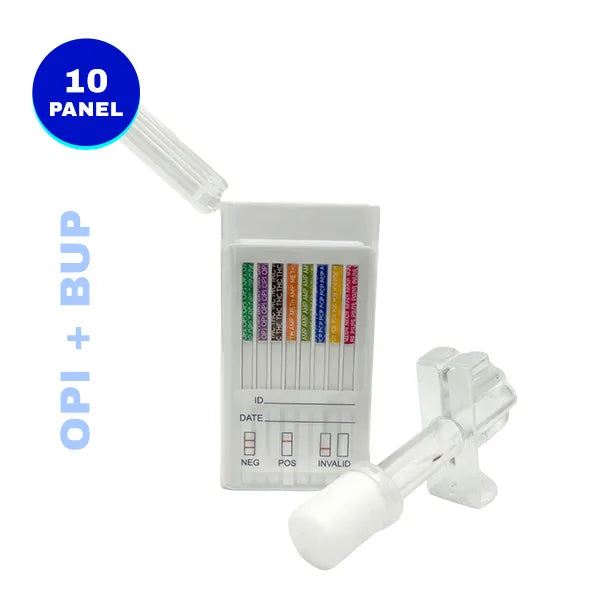
Workhorse panel for urgent care and pre-employment: THC, COC, OPI, AMP, MET, BAR, BZO, MTD, PCP, MDMA. 5-minute read.
Oral Fluid Swab
For shy-bladder patients and observed collections. Faster turn time when the bathroom is the bottleneck.
Single-Substance Dip Cards
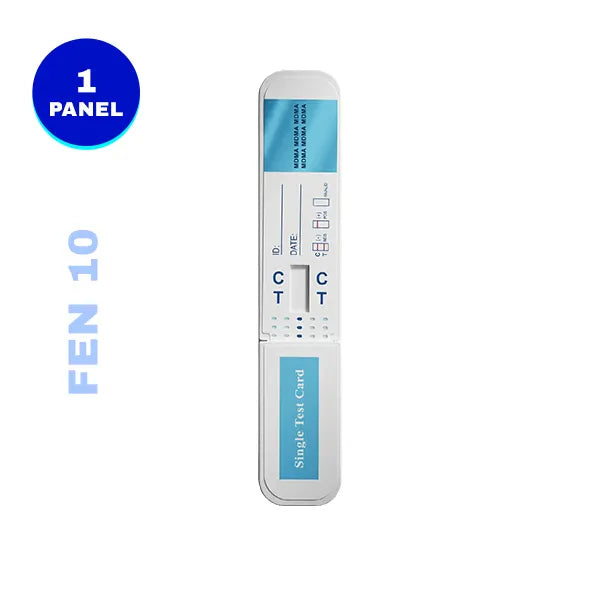
Targeted screening (fentanyl only, THC only, etc.) for patient-specific clinical questions, at a lower cost than a full panel.

Point-of-Care Alcohol Breath
Disposable single-use breath tests for occupational medicine and workplace post-accident screening.
Urgent Care Starter Bundle
100 × 10-panel cups + 50 × oral fluid swabs + 100 × breath tests. Two-month supply for a single-location urgent care.
Monthly Clinic Supply
200 × 10-panel cups + ancillaries on monthly auto-ship. Sized for a single-location clinic doing 6 to 8 tests per day.
Door-to-disposition in under 15 minutes.
From the front desk to the EMR note, without breaking your throughput targets.
Patient Arrives
Front desk takes intake. MA escorts to exam or restroom for observed/unobserved collection per clinical context.
Cup Provided
10-panel cup with adulteration and temperature strips. Patient seals cap, MA labels with patient identifier.
5-Minute Visual Read
Strips develop in 5 minutes. Provider or MA reads against the cup template. Result captured as image if needed.
Documented in EMR
Result documented under encounter and billed per standard clinical coding. Patient discharged or counseled per result.
Confirm If Needed
If clinical action depends on certainty, ship the presumptive positive to a certified lab for mass-spectrometry confirmation. Most encounters end here.
Built for the clinic operator, not the corporate procurement team.
Three ways to buy, from single-case evaluation orders to multi-site accounts.
Standard Order
For new locations, evaluation orders, or seasonal demand spikes.
- Pay by card
- Ships from stock
Subscribe & Save
Monthly auto-ship sized to your clinic's daily testing volume.
- Discounted recurring pricing
- Scale up for occupational-medicine contracts
- Pause or cancel anytime
- Dedicated clinic rep
Multi-Site & Bulk Orders
For urgent care chains and clinic networks consolidating across locations.
- Submit purchase orders for multi-site accounts
- Multi-site delivery routing
- Dedicated account manager
- Consolidated invoicing per region
Common questions from clinic medical directors
Do I need a CLIA certificate to use these tests?
Which CPT codes apply to point-of-care drug testing?
How do I start an employer-screening service line?
When does a test need to be observed vs. unobserved?
Do these integrate with Epic, Athena, eClinicalWorks?
When should I send to a confirmation lab instead of reading on-site?
Can urgent care offer DOT screening for local CDL drivers?
Are drug test results in a clinical setting confidential?
Two ways to start with ASC.
Whether you're a single-site urgent care setting up point-of-care drug testing for the first time, or an urgent care chain rolling out across multiple locations, we'll route you to the right account team.
- CLIA waiver guidance included
- Employer-service-line setup guidance
- Dedicated clinic account team