
Opening a drug testing lane inside a clinic, treatment center, staffing office, or court or probation program means more than ordering a box of cups. The person placing the first order has to decide which device format fits the setting, how many panels to stock, what belongs in the collection area, and how documentation and lab confirmation fit together. This checklist walks through each category so a first order does not leave gaps that show up during an audit or a disputed result.
Start with the testing format, not the panel
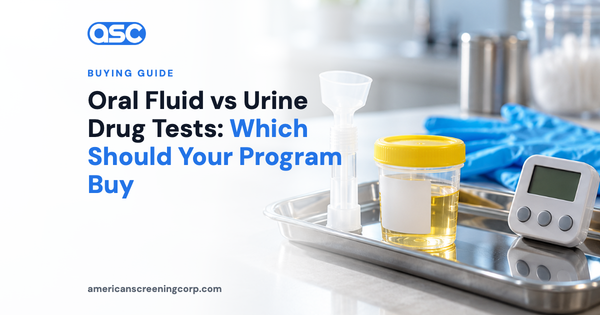
Before deciding how many drugs to screen for, decide how the specimen will be collected and read. The three common formats for point of care screening are urine cups, urine dip cards, and oral fluid devices. Each has tradeoffs that matter more than the panel count.
- Urine cups combine the collection container and the test strips in one unit, with results read directly off the cup. They typically include an integrated temperature strip so the collector can confirm the specimen was within the expected range on submission, which is one of the specimen validity checks built into federal collection procedure.
- Dip cards require a separate specimen cup, then the card is dipped into the sample. They cost less per unit in bulk but add a step and a second container to track.
- Oral fluid devices use a swab against the gum or cheek instead of urine. They support direct observed collection by design, which some programs prefer because it removes the privacy and adulteration concerns of a urine collection, though oral fluid detection windows are shorter for most drug classes than urine.
Whichever format is chosen, confirm the product's labeling. Devices intended for point of care use in a clinic generally carry a CLIA Certificate of Waiver designation under the device's FDA clearance, while devices labeled forensic use only are built for programs with a certified laboratory and chain of custody behind every result and are not meant to be read as a final result on their own. A clinic running screens at the point of care needs to confirm which category its device falls into and whether its own CLIA certificate covers that use. The Centers for Medicare and Medicaid Services CLIA program page explains the certificate categories, and the FDA's CLIA page covers how device complexity categorization works. Do not describe any device as approved by FDA; the correct terms are FDA cleared or CLIA waived, and only when that is actually true for the specific product.
Decide the panel and cutoffs before you order
Panel size (5, 10, 12, 14 or more drug classes) should follow the population being tested, not the other way around. A treatment program monitoring recovery from opioid use disorder needs a different panel than a staffing firm doing pre employment screening for a general labor pool. Court and probation programs often have a panel and cutoff specified by the referring court or agency, so confirm that requirement before ordering. Federal workplace programs follow cutoffs set out in the HHS Mandatory Guidelines for Federal Workplace Drug Testing Programs, and DOT regulated testing follows the collection and testing procedures in 49 CFR Part 40. Non regulated clinics and employers are not bound by those cutoffs but many adopt them as a consistent internal standard. Whatever panel is chosen, remember that a rapid screen only reports the drug classes the device actually includes. A kratom concern, for example, is not covered by standard opiate or amphetamine panels; it needs a dedicated mitragynine (KRA) strip, and emerging kratom alkaloids such as 7 hydroxymitragynine are not detected by any current rapid panel. If that distinction matters to the program, ask the confirmation lab which specific analytes it reports rather than assuming a standard panel covers it.
Supply checklist by category
| Item | Purpose | Quantity guidance per 100 tests |
|---|---|---|
| Test devices (cups, dip cards, or oral fluid swabs) | Primary screening device, matched to panel and setting | 100 units plus 5 to 10 percent overage for invalid or recollected specimens |
| Integrated or standalone temperature strips | Confirms specimen temperature at collection, part of specimen validity checks | 100, one per urine collection (built into most cups) |
| Adulterant or specimen validity strips | Checks for dilution, pH, creatinine, oxidants or other tampering indicators | 100, or confirm the cup already integrates this panel |
| Nitrile exam gloves | Personal protective equipment for handling specimens | 1 box (100 count) per 50 to 75 collections, plus spares |
| Biohazard bags and sharps or specimen disposal containers | Safe disposal of specimens and contaminated materials under bloodborne pathogen rules | 1 container sized to collection volume; restock based on fill rate, not test count |
| Chain of custody and control forms | Documents collector, donor, specimen ID, and transfer history | 100, one per test, plus extras for voided or recollected forms |
| Bluing agent for toilet tank water | Collection area control to deter water dilution | 1 bottle per collection restroom, refilled as needed |
| Lab confirmation kits and shipping supplies | Sends non negative screens to a certified lab for confirmation | Sized to expected non negative rate, typically 5 to 15 percent of volume, plus courier or mail supplies |
| Secondary specimen bottles or security tape | Secures split specimens for confirmation or retesting | Matches confirmation kit volume |
Collection area and PPE requirements
A clinic handling human specimens is handling a potential bloodborne pathogen exposure, even with urine, because specimens can be mixed with blood or other body fluids. OSHA's bloodborne pathogens standard requires an exposure control plan, use of personal protective equipment such as gloves, and proper containment and disposal of contaminated materials; see the OSHA bloodborne pathogens standard page and the specific requirements at 29 CFR 1910.1030. Stock gloves at a level that supports every collection having a fresh pair, not a shared box reused between donors.
The physical collection area itself should restrict access to items that can be used to adulterate a specimen. Programs following federal collection procedure under 49 CFR Part 40 secure or remove water sources, soap, and other items in the collection room, and use a bluing agent in the toilet tank so dilution with tank water is visible. Programs that are not DOT regulated often adopt the same controls as a practical safeguard, even when not legally required, because it protects the defensibility of every result the program issues.
Documentation, training, and reorder planning
Every specimen needs a chain of custody form that records who collected it, when, and who touched it afterward, whether the program is court ordered, employer sponsored, or clinical. Staff handling collections should be trained on the specific procedure the program follows, including what to do with an out of range temperature, a refusal to provide a specimen, or an insufficient volume. A program operating under a CLIA Certificate of Waiver also has ongoing obligations tied to that certificate, including following the device's package insert exactly as written; deviating from the insert procedure can put the waiver status at risk.
For reorder planning, track usage against three variables: total tests run, the ratio of non negative screens that require lab confirmation, and device shelf life. Rapid test devices have an expiration date printed on the package, and ordering too far ahead of actual testing volume risks stock expiring before it is used. A rolling 60 to 90 day supply, reordered on a fixed schedule, tends to balance shelf life against the risk of running out mid week.
Where to buy and how to order efficiently
For a one time or low volume order, a standard retail checkout works. For a clinic or program that reorders monthly, a business account through the wholesale portal at wholesale.americanscreeningcorp.com is worth setting up; it supports net terms, purchase order checkout, and one click reorder so restocking does not require rebuilding a cart every time. American Screening Corporation's drug test cup collection, dip card collection, and oral fluid test collection cover the main device formats referenced in this checklist.
Two related guides are worth reading before the first order goes out: a walk through of the CLIA Certificate of Waiver process if the clinic has not applied for one yet, and a chain of custody procurement checklist for programs whose results may need to hold up in a court or disciplinary proceeding.
Frequently asked questions
Does a clinic need a CLIA certificate to run drug test cups on site?
If the clinic is reading results itself rather than sending every specimen to a lab, it generally needs a CLIA certificate that covers the complexity of the test, most often a Certificate of Waiver for CLIA waived devices. The CMS CLIA program page explains certificate categories and how to apply.
What is the difference between a CLIA waived device and a forensic use only device?
A CLIA waived device is cleared for point of care use under a waiver certificate, following the package insert exactly. A forensic use only device is intended for programs backed by a certified laboratory and full chain of custody, and its result is not meant to stand alone without that lab process.
How many drug test cups should a new program order to start?
Order enough for 60 to 90 days of expected volume rather than a large bulk order up front, since devices expire and testing volume for a brand new program is often an estimate until a few months of real data exist.
Do I need lab confirmation kits if I only run rapid screens?
Any non negative rapid screen that could affect someone's treatment status, employment, or legal standing should generally be confirmed at a certified laboratory before that result is relied on, since rapid screens are preliminary and subject to false positives from cross reacting substances.
What PPE is required for handling urine specimens in a clinic setting?
At minimum, gloves for anyone handling a specimen, plus proper containment and disposal under an exposure control plan consistent with OSHA's bloodborne pathogens standard, since specimens can carry bloodborne pathogen risk even when they appear to be urine only.
Can a kratom test strip catch every kratom related substance?
No. A dedicated KRA strip targets mitragynine specifically. It does not detect newer alkaloids such as 7 hydroxymitragynine, so a program concerned about those compounds should ask its confirmation lab which analytes it actually reports.
This article is general information for setting up a drug testing supply program and is not legal or medical advice. Clinics and programs should confirm CLIA, OSHA, and state requirements with qualified counsel or their regulatory contact before opening a testing lane.